
Start your seedlings
Start your sowing early and quickly get mature plants.
Start sowingDuring cycling, you can start your first sowing. The greenhouse was delivered with substrates (rockwool cubes) and a selection of organic seeds.
Starting your sowing quickly will allow you to obtain mature plants at the right time to plant your greenhouse.
1. Key concepts for successful sowing
Sowing consists of germinating seeds to obtain a plant and growing it in the greenhouse.
-
You cannot sow seeds directly in place in the Aerospring or the towers. Sowing must be done outside the growing system. Once you have obtained a mature plant, it can be transplanted and grown.
-
To germinate and develop, a seed needs specific conditions of light, temperature and irrigation.
-
The germination time depends on the plant species you want to grow. It can take between 48 hours and 3 weeks for the seeds to germinate and emerge.
-
The first 2 leaves are called cotyledons, and they are reserve leaves that allow the plant to develop roots and then its true leaves.
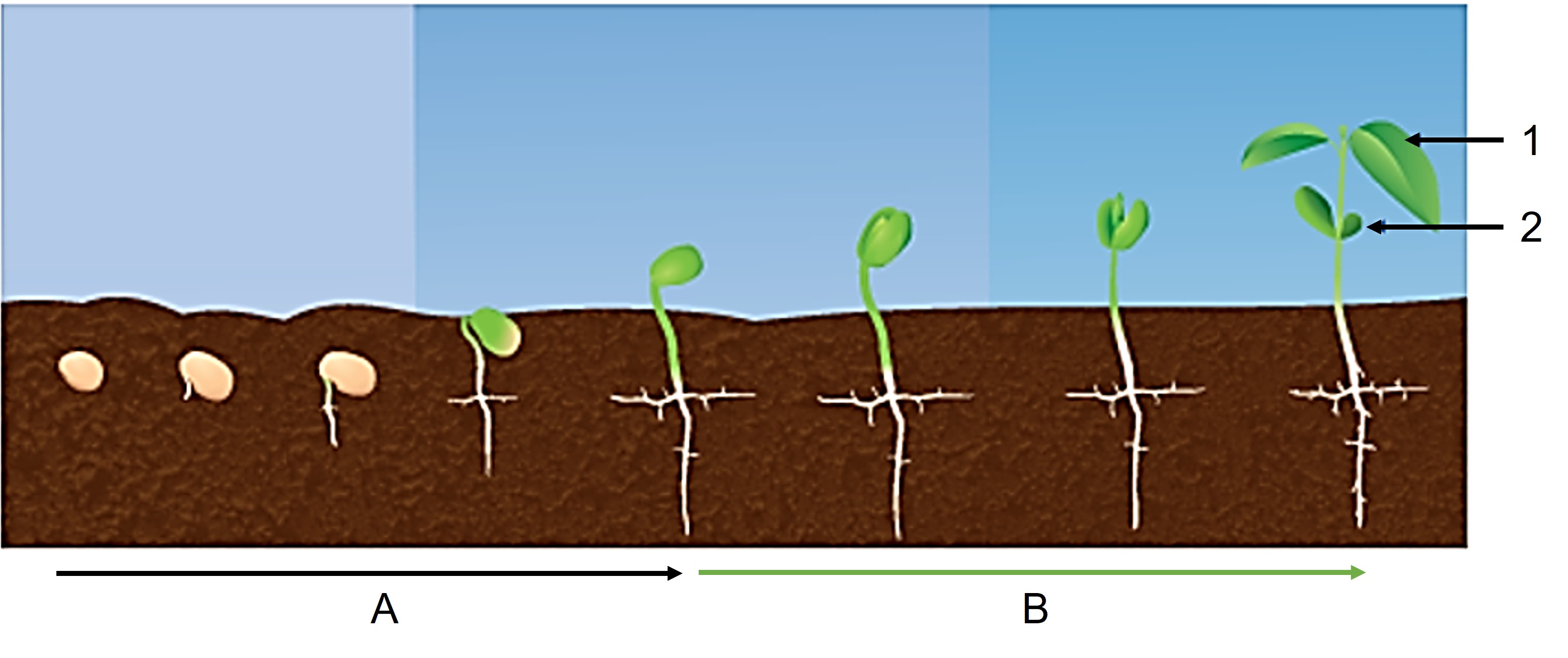
Illustration showing the development of the seed after sowing.
A - Seed germination = formation of the stem and cotyledons (storage leaves)
B - Plant growth = formation of the true leaves thanks to photosynthesis
1 - True leaves, 2 - Cotyledons
After germination, each plant will develop over several weeks. The growth duration varies depending on the plant species.
| Plant species | Time between sowing and obtaining a mature plant |
|---|---|
| Lettuces, chicories, spinach, chard, cabbages, Chinese mustard, sorrel, chives, basil, mint, lemon balm… | About 2 to 3 weeks (1) |
| Melon, gherkin, cucumber, courgette, celery, fennel, parsley… | About 3 to 4 weeks (1) |
| Tomato | About 7 to 8 weeks (1) |
| Pepper, aubergine | About 8 to 10 weeks (1) |
Table showing the growth time in a propagator before transplanting into the growing system.
(1) Under optimal growing conditions.
Tip: When transplanting your plants into the growing system, remember to use the root activator. It promotes denser root development and improves plant establishment in their new environment.
Sowing must be done in a substrate such as soil, rockwool, peat, etc.
- In your permaculture beds, you can sow directly in place, especially for root vegetables (carrots, beets radishes, turnips, onions) but also for legumes (beans, peas, broad beans).
When is the plant ready to be put into cultivation?
- The plant is between 5 and 10 cm tall.
- The true leaves are well developed.
- The roots are dense and visible around the substrate.
Importance of lightYou will need to make sure that the sowing receives enough light after emergence. During seed germination, the plant will seek out light. To prevent the stem from becoming leggy, we recommend placing your sowing under artificial light. This allows the plant to form vigorous leaves, stems and roots.
How many seeds are needed to obtain one plant?
The number of seeds varies depending on the species sown.
| Plant species | |
|---|---|
| Lettuces, chicories, cabbages, fennel, fruiting vegetables (aubergine, tomato, pepper, cucumber, courgette, etc.) | 1 seed |
| Spinach, chard, sorrel, celery, cress, rocket | 5 to 6 seeds |
| Herbs (Parsley, basil, dill, salad burnet, etc.) | 5 to 10 seeds |
| Herbs (mint, thyme, lemon balm, chamomile, etc.) | A pinch |
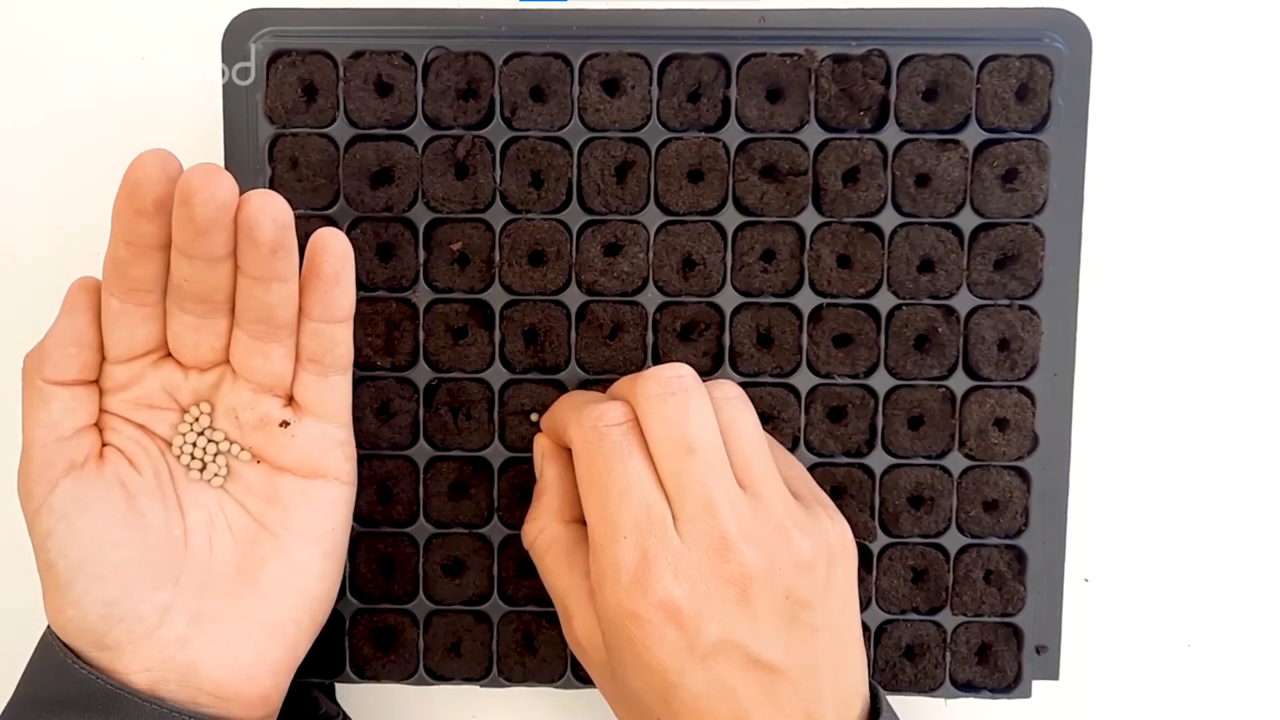
Preparing sowing with the LED seed propagator
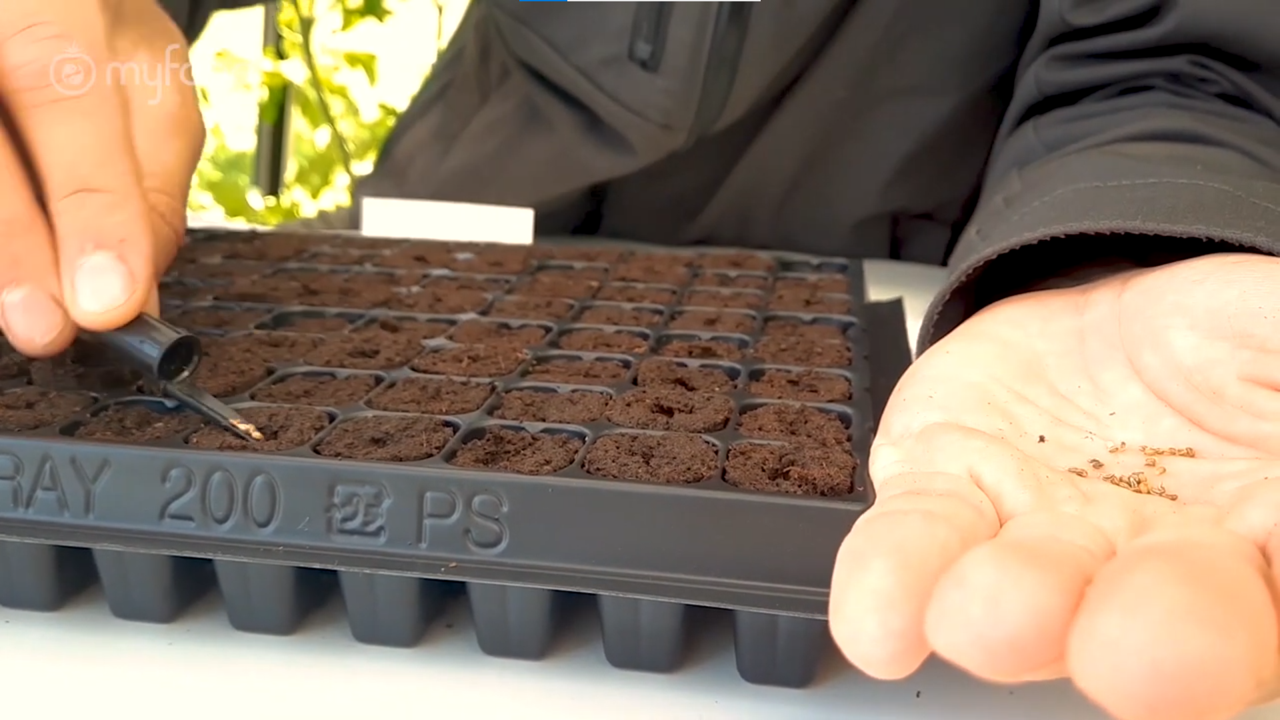
Using a pen cap to place the seeds at the bottom of the plug
TipAfter sowing, sprinkle your plugs with a thin layer of vermiculite. It keeps moisture and warmth close to the seed while limiting algae on the surface of the substrate. Emergence is therefore more even, with less damping-off.
You can also use it for your sowing in potting compost cups.
Direct sowing in a permaculture bed
For some plants, germination and production are better with direct sowing. This means sowing the seeds directly into the soil of the permaculture beds.
Direct sowing in a tower is not recommended: germination happens from the soil upwards. In the case of direct sowing in a tower, the seed would not germinate in the right direction.
Which species should be direct sown?
-
Lamb's lettuce, purslane or spinach.
How should they be sown? Broadcast over a defined area, namely a quarter or half of a permaculture bed, or in rows with seeds every centimetre. -
Legumes: broad beans, peas, beans.
How should they be sown? In rows, with one seed every centimetre or still in rows, 7 to 8 seeds per cluster spaced 10 cm apart. -
Root vegetables: carrots, beets, turnips, parsnips, etc.
How should they be sown? In rows, one seed every 2-3 cm. 3 to 4 weeks after sowing, remember to thin properly, that is, remove young shoots so that there is 5 cm spacing between each plant.
2. Sowing with the LED seed propagator
See our wiki page dedicated to preparing your sowing with the LED seed propagator.
The LED seed propagator is available on our shop.
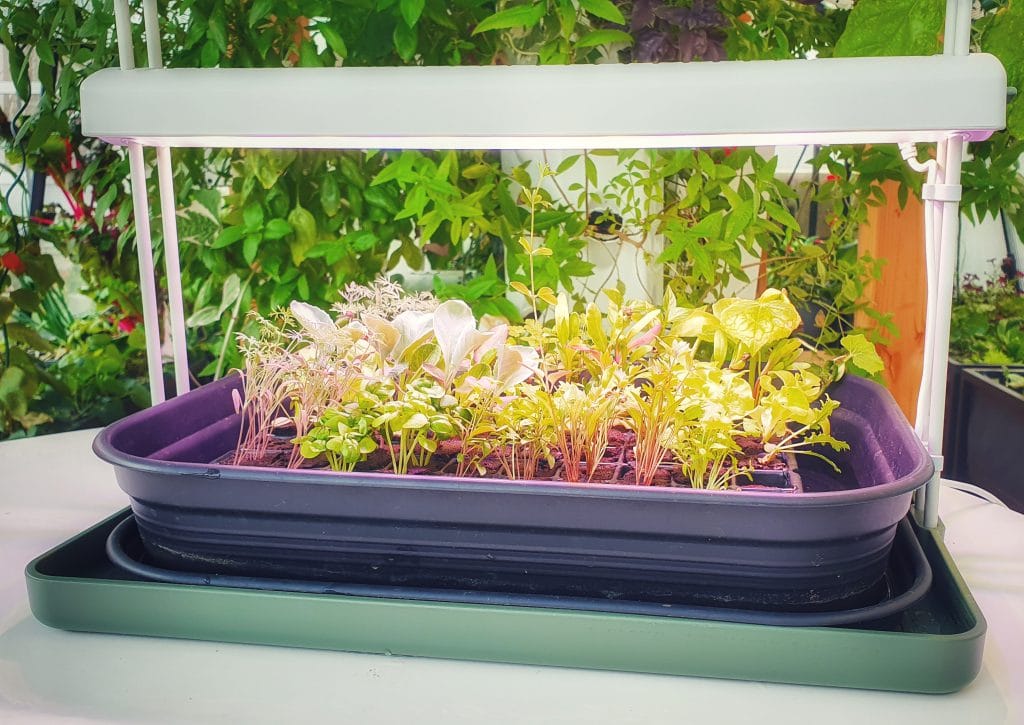
Seed propagator
Label and dateSo you do not forget what you have sown, add labels with the plant species and the date.
3. Sowing during the cold season
If you choose to start your sowing when temperatures are below 15°C, it is recommended to do your sowing indoors or in your greenhouse by adding a heating mat.
Make sure to place your sowing under LED light or near a window. To maintain heat and humidity during the development of your sowing, you can add a transparent dome.
Water the sowing regularly, but be careful not to flood them so as not to suffocate the roots.
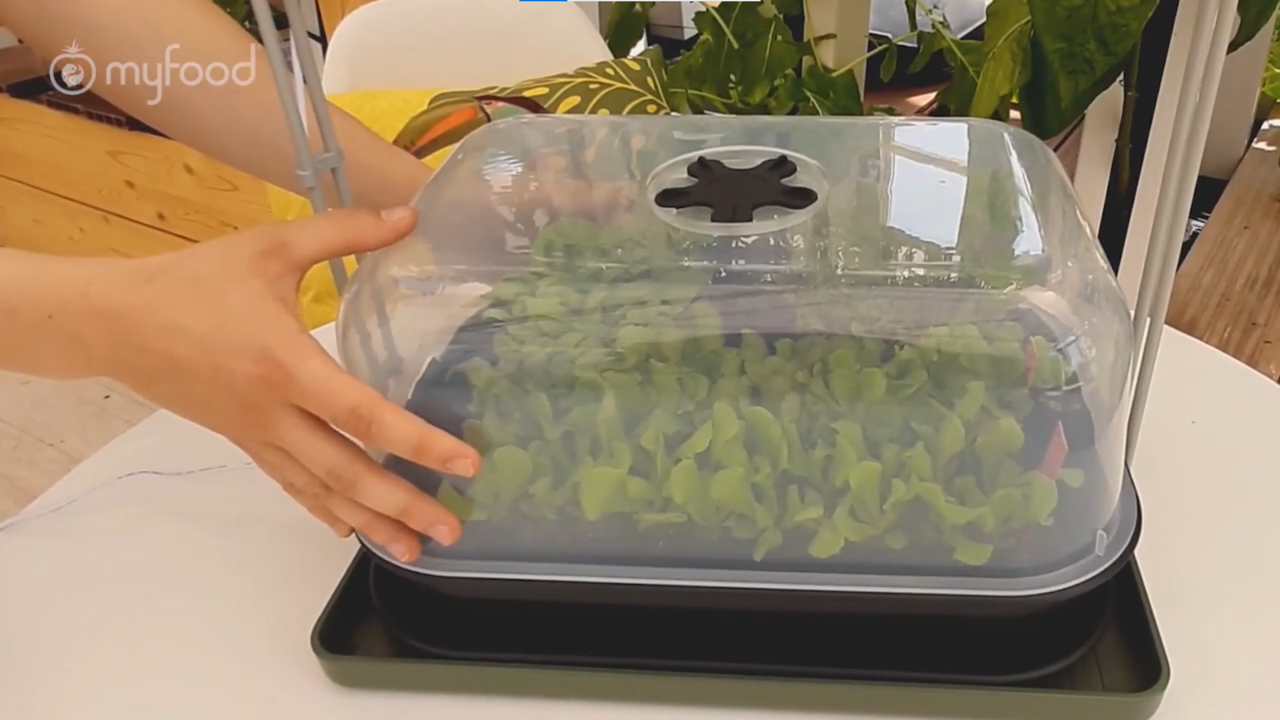
Placing a cloche when outdoor temperatures are below 15°C.
Adding the heating matWhen temperatures are below 15°C and you start sowing, germination is difficult. Add the heating mat to increase the germination rate of the plants.
4. Sowing during the warm season
As soon as night-time temperatures are above 15°C, you can do your sowing in the greenhouse without a dome. You will no longer need a heating mat.
Also make sure that the plugs stay properly moist by watering regularly so the plants do not dry out.
5. Order plants ready to be transplanted
Do you not have the time or do you not want to do your own sowing?We offer ready-to-grow plants that you can put straight into cultivation. Order them now from our shop.
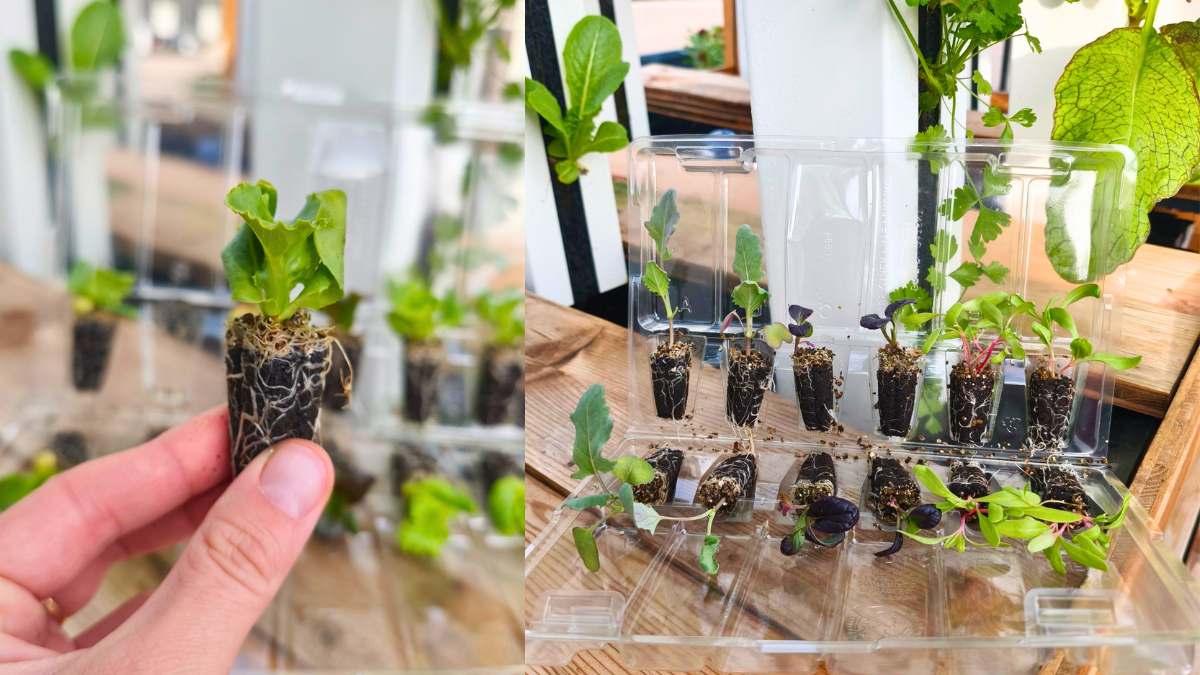
Ready-to-grow seedlings
If you have any other questions about preparing your sowing, contact us directly at [email protected].
Updated 8 days ago