
Consume your spirulina
Spirulina and its benefitsThis cyanobacterium, more commonly called a microalga, is rich in:
- Proteins, used by athletes or vegetarians. They make up between 60 and 70 % of its composition!
- Iron, for people with anemia
- Vitamins: E, B1, B2, B6, B12,…
- Trace elements: magnesium, potassium, calcium,…
- Fatty acids: omega 6
- Pigments: chlorophyll, phycocyanin, and beta-carotene, which have antioxidant properties.
A few rare medical contraindications...Spirulina consumption is not recommended in the following cases:
- People with phenylketonuria or hemochromatosis
- People prone to gout attacks
- People receiving medical treatments that include anticoagulants
If in doubt, consult a healthcare professional.
Consuming fresh spirulina
Why consume fresh spirulina?Fresh spirulina helps preserve the vitamins it contains as much as possible.
Vitamins are molecules that degrade quickly in the light.
The harvested spirulina can be consumed directly while fresh at the end of harvesting.
A maximum daily intake of 10 grams fresh per day is recommended.
Fresh spirulina can be kept in an airtight container in the refrigerator for up to 24h after harvesting.
Recipe ideas?
- On toast, on its own or mixed with a spread or fresh cheese
- Mixed into sauces or other preparations
- In fresh smoothies, fruit juices, sorbets, gazpacho,…
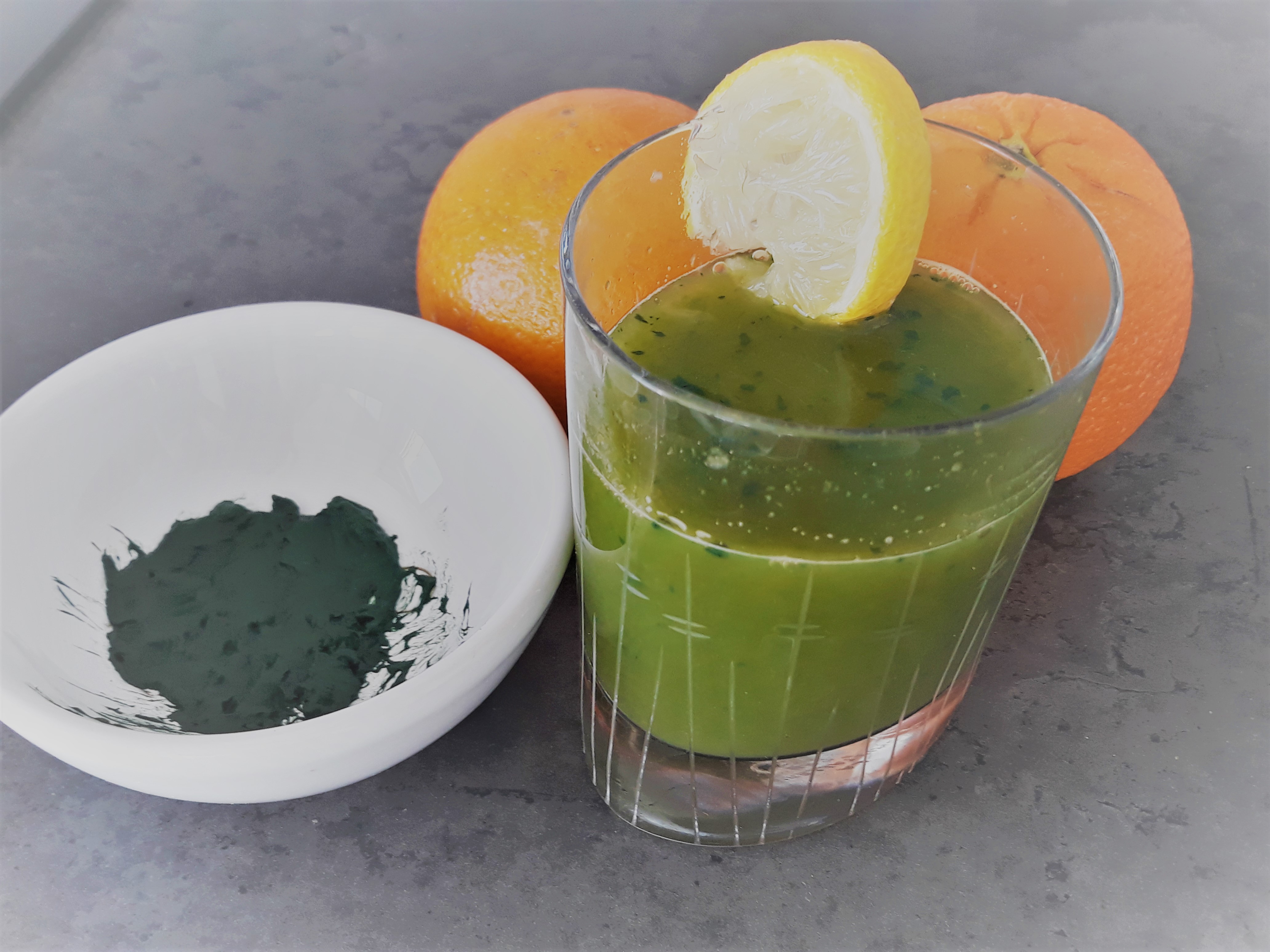
Recipe idea for consuming fresh spirulina
Consuming dried spirulina – in flakes
The harvested fresh spirulina can also be dried to be consumed later.
Dried spirulina can be used in human food as well as in fish feed.
Heating spirulinaHeating spirulina to high temperatures - above 40 °C - degrades the proteins.
How do you consume dried spirulina?
- In smoothies, soups, salads or yogurts,…
- The recommended daily intake of dried spirulina is 3 to 5 g per day. It is advisable to start with low doses and then increase gradually.
Drying harvested fresh spirulina
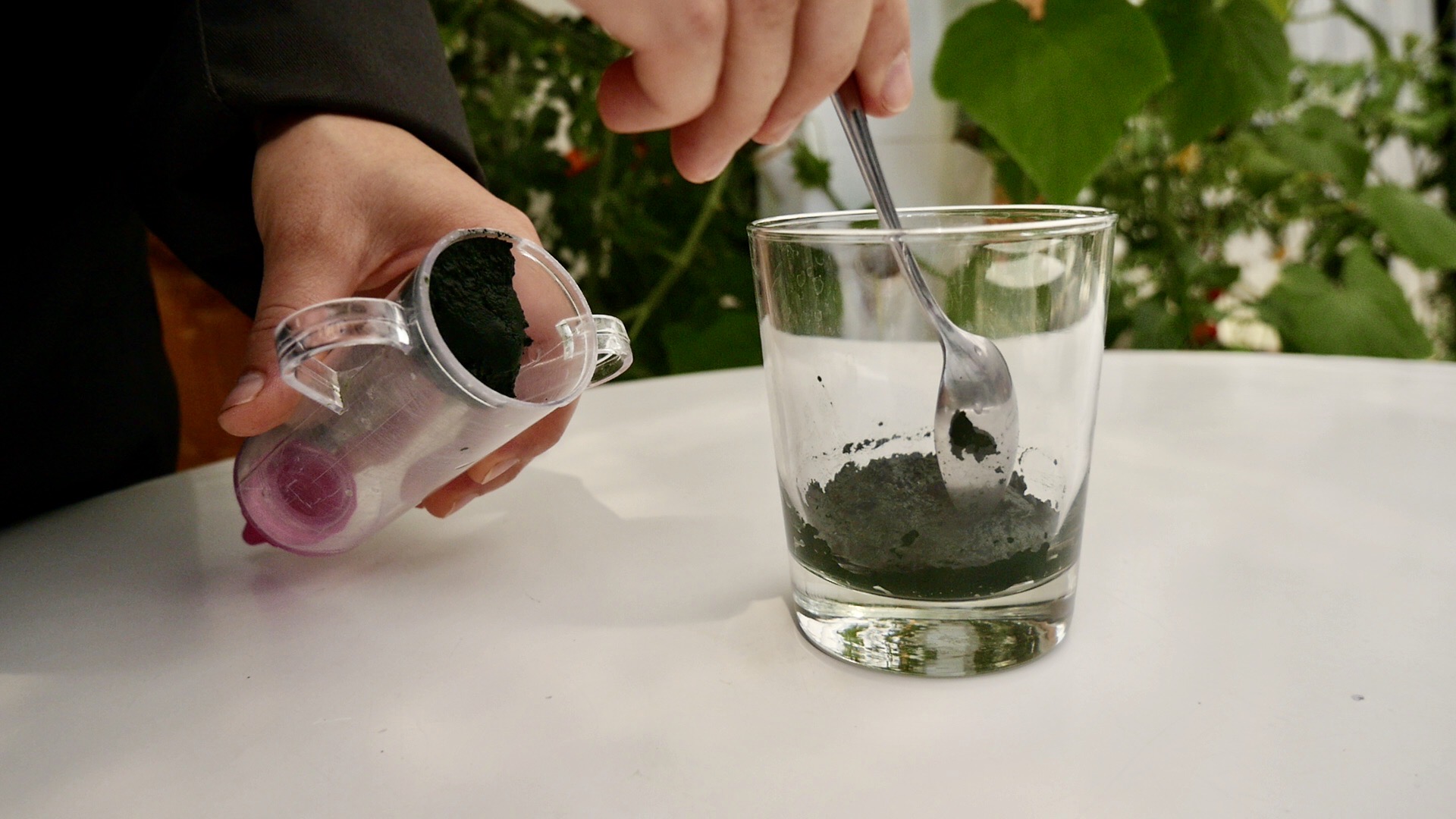
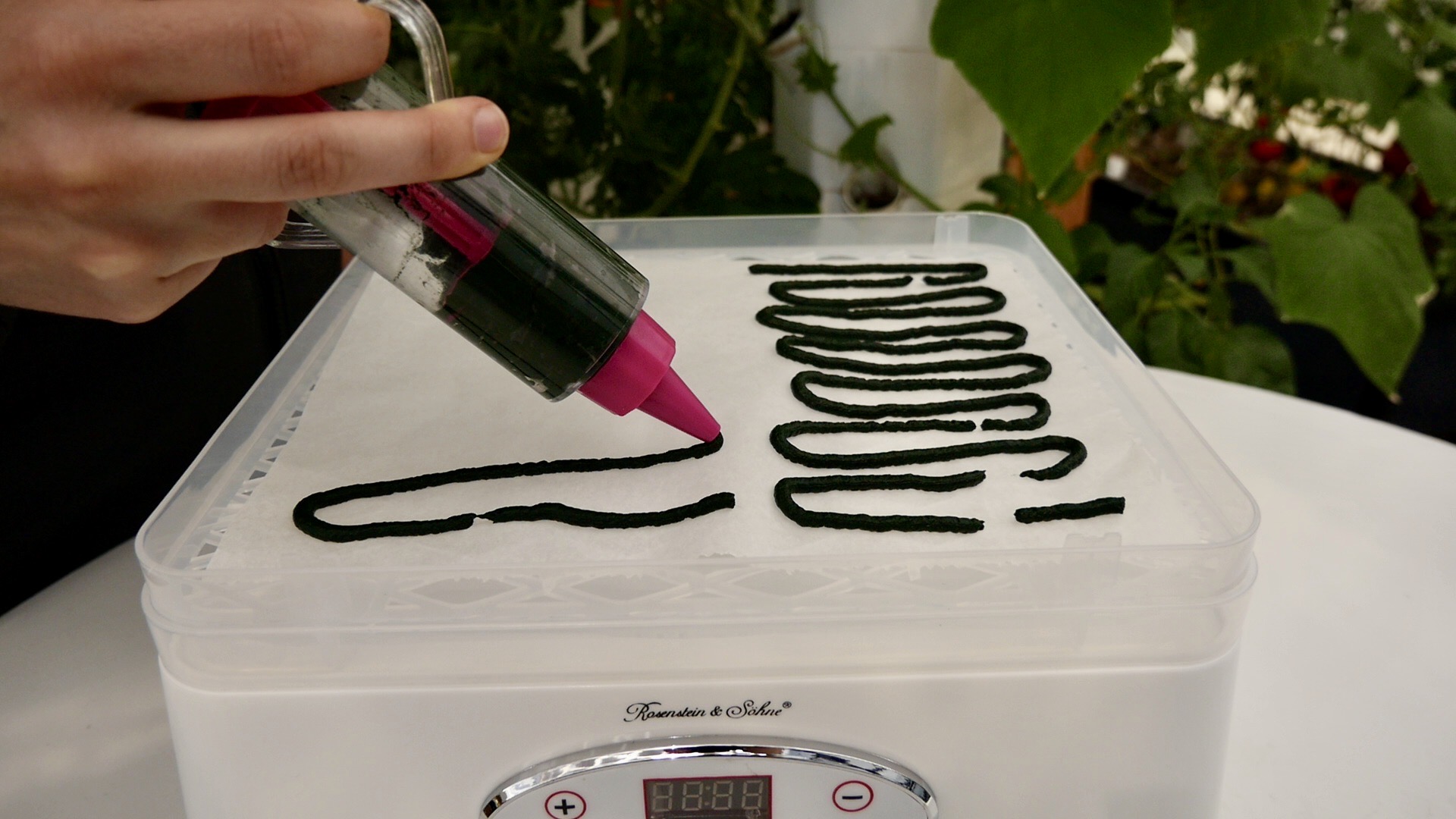
Place the fresh spirulina into a plunger or a piping bag.
On a sheet of baking paper, spread the spirulina out into spaghetti-like strands.
A nozzle with a diameter of 2 to 3 mm makes it possible to obtain spaghetti-like strands with an optimal diameter for heating.
A diameter that is too large can lead to poor drying of the spirulina and bacterial growth that may pose a risk when consuming the spirulina.
Place the sheet in a dehydrator and start drying at 40 °C for 8h.
Pay attention to the drying temperature< 40 °C = poor drying
> 40 °C = denaturation of the spirulina
At the end of drying, weigh the mass of harvested spirulina (to feed the tanks).
Packaging dried spirulina
As soon as drying is complete, store the spirulina in flake form in a kraft bag sealed airtight and placed in a dry place away from light.
Write the harvest date on the bag, for consumption within the year.