Crop renewal
The secrets of effective crop rotation
How should you manage crop rotation?
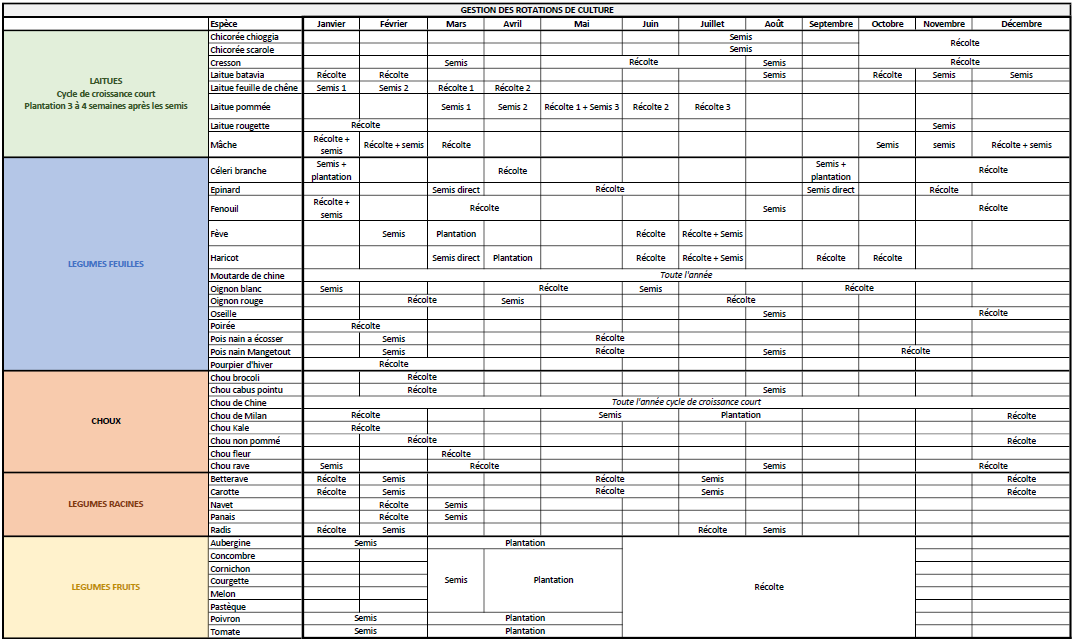
When you plant up your greenhouse, you have crops with a short growth cycle and crops with a longer growth cycle.
- Short growth cycle crops:
- lettuce, young leaves (mesclun, lamb's lettuce),
- summer cabbages such as Chinese cabbage and kohlrabi between 50 and 70 days.
- fennel
- legumes (broad beans, peas, beans): 3 months - Long growth cycle crops: in other words, several months in cultivation
- summer vegetables: between 6 and 8 months
- Swiss chard, sorrel, winter cabbages, celery, root vegetables: between 4 and 6 months
During the year, there are two major seasonal changes that each last around two months: March/April and September/October.
• 1st seasonal change:
March, progressively plant crops such as tomatoes, aubergines, sweet peppers, chillies. Use a mix of varieties, especially tomatoes, to have so-called early or late crops and spread out the harvests.
April, progressively plant cucumbers, gherkins, courgettes, melons and watermelons.
At the same time, do not forget vegetables with a short growth cycle. In particular lettuce, to ensure good rotation and always have some available.
• 2nd seasonal change:
September, start removing fruiting vegetables that are beginning to produce less, such as early tomatoes or cucurbits.
Replace them with cabbages, root vegetables, or start another series of legumes before the cold weather arrives.
Late October to early November: finish removing all summer vegetables to plant other types of cabbage and leafy vegetables.
This information remains general and should be adapted according to the climate: in colder regions, summer vegetables should only be planted at the beginning of April. In regions with a milder climate, these crops can be planted from the 2nd or 3rd week of March. Adjust according to the weather and the greenhouse equipment (heating, insulation module, etc.)
The same applies in autumn: summer crops will remain in the greenhouse 2 weeks to 1 month longer in more southern regions.
To harvest vegetables throughout the year in your greenhouse, it is important to plan your planting strategically and choose crops suited to each season.
Tips for a continuous harvest• Plan successive sowings: Sow small quantities of seeds every two to three weeks to spread out the harvests.
• Use fast-growing varieties: Some vegetable varieties grow faster than others, which allows for more frequent harvests.
• Crop rotation: Change the location of your crops each year to reduce the risk of disease.
• Improve the quality of your growing medium:
Permaculture bed: Add compost, manure or vermicompost and other amendments to maintain soil fertility.
Fish tank:
In aquaponics: add fish, 1 to 3 meals per day
In bioponics: follow the recommendations for the current season