
gerer-acidite
1. Definition
Once the correct carbonate hardness value has been obtained, that is, a KH between 4 and 5°d, acidity management can begin.
KH and pH are linkedAn action to modify the KH will also affect the pH value at the same time.
The opposite is not true: acting on the pH will not influence the KH.
pH is a parameter to control in order to:
- Ensure fish health and well-being
- Promote root absorption of minerals by plants
- Maintain a viable bacterial population that enables the nitrogen cycle
The right compromise to satisfy these 3 populations is a pH between 6.5 and 6.8.
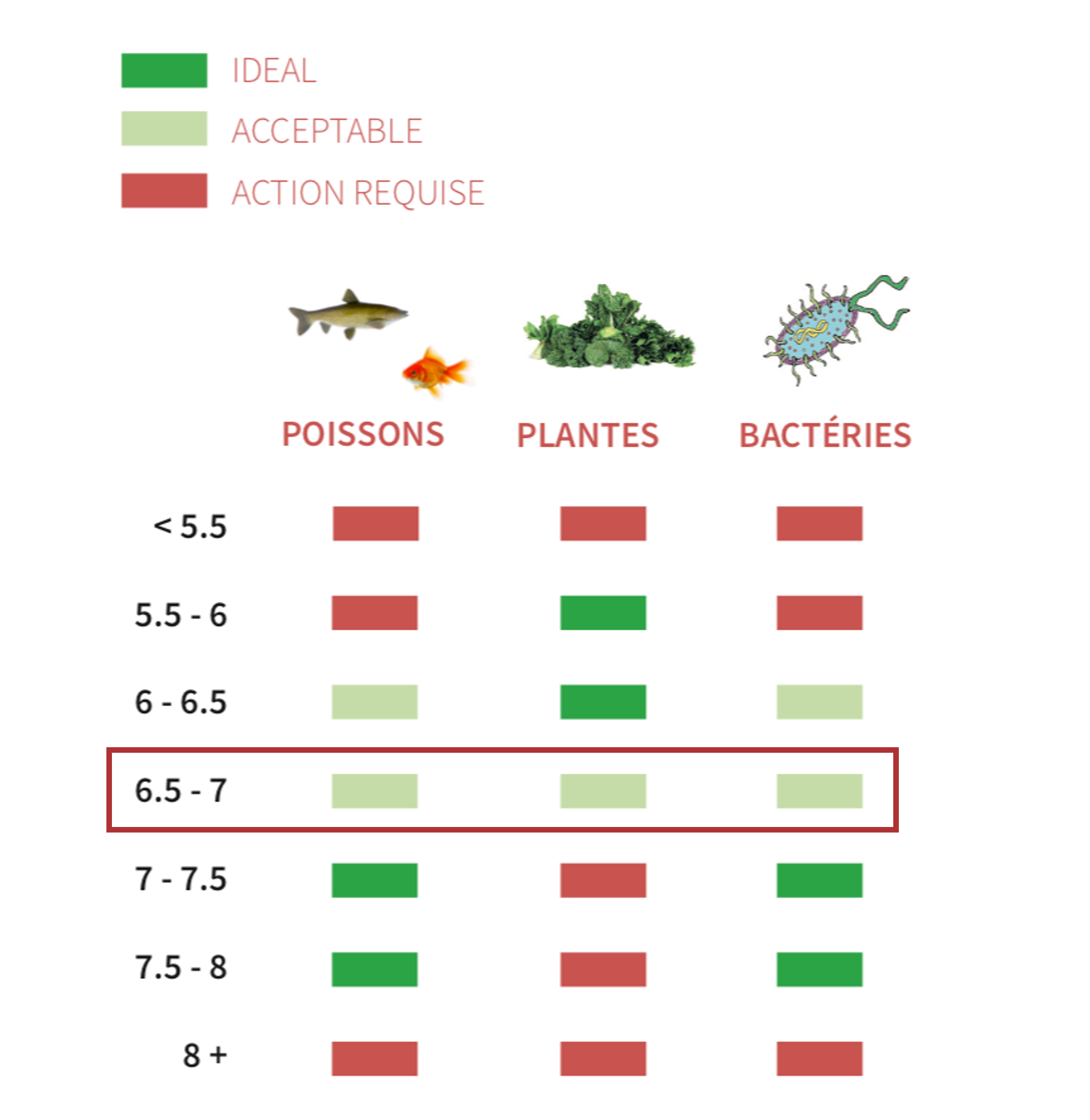
Range of ideal pH values in aquaponics and bioponics
2. Measure the pH of the water
pH is measured in real time using a probe immersed in the water of the fish tanks. The pH value indicated on test strips is not reliable; it is important to rely on the values indicated by the probe.
Storing the probeOn delivery, the pH probe is stored in a vial with a storage solution. Remember to remove this cap before immersing the probe in the water of the fish tanks.
3. Adjust the pH value between 6.5 and 6.8
In aquaponics: the pH must be adjusted and stabilised between 6.5 and 6.8.
In bioponics: the pH is slightly more acidic and must be adjusted between 5.5 and 6.
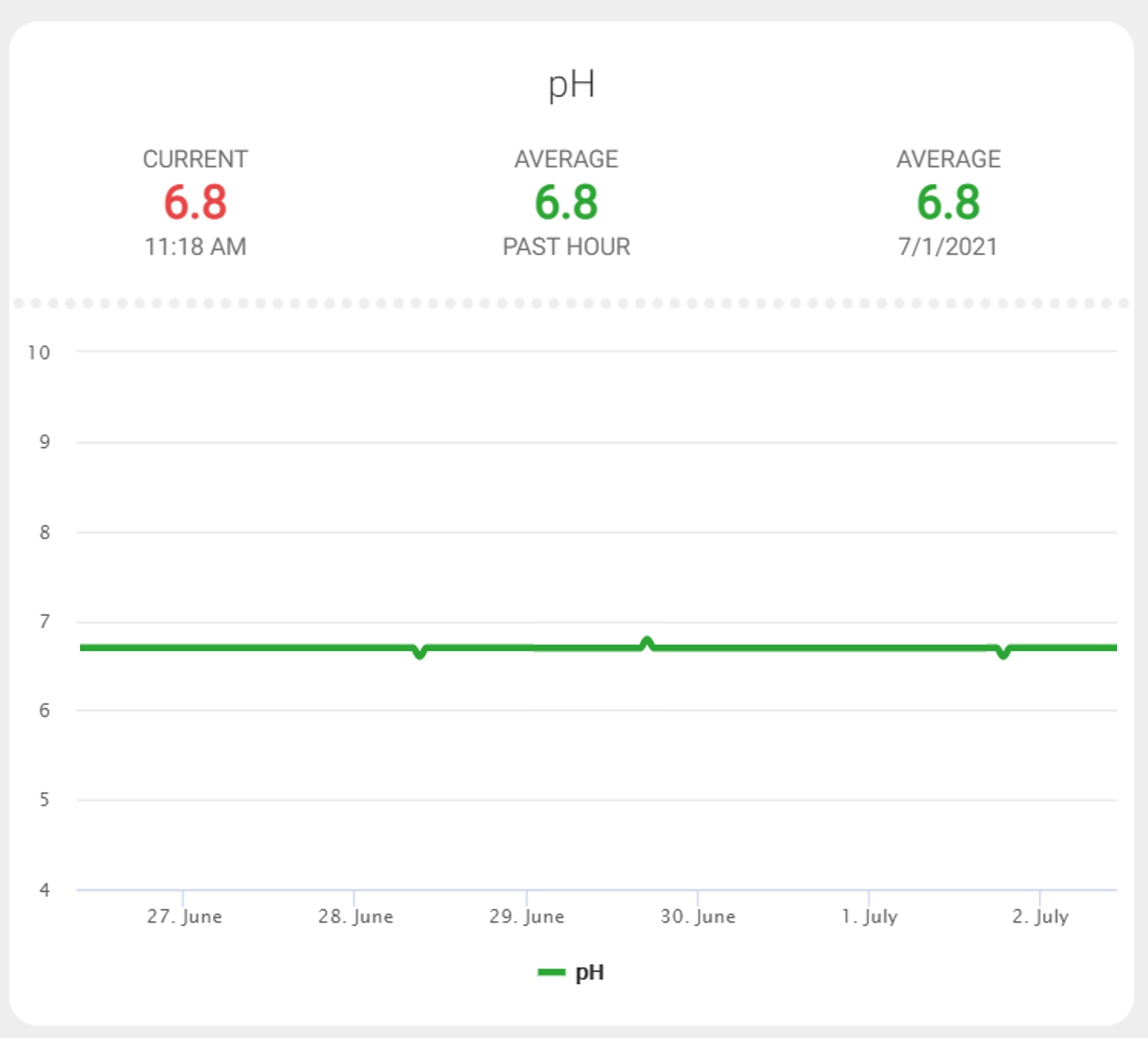
Change in pH on the hub interface and stabilisation around 6.8.
4. Increase the pH
Based on the same principle as KH management, here are the two ways to increase the pH; if needed, they can be applied in parallel:
- Adding tap water (KH>6°d) increases the pH in the fish tank water.
- If you do not have hard water available or if the addition has no impact on the pH, add potassium bicarbonate to the water according to the recommendations below. The powder must first be diluted in a bucket filled with 1L of lukewarm water. Make sure to wait 48h between each addition.
| CITY model | FAMILY model - 1 fish tank | FAMILY model - 2 fish tanks | FAMILY model - 3 fish tanks | |
|---|---|---|---|---|
| POTASSIUM BICARBONATE | 1 teaspoon (max. 3 times) | 1.5 teaspoons (max. 3 times) | 2 teaspoons (max. 6 times) | 3 teaspoons (max. 6 times) |
Potassium bicarbonatePotassium bicarbonate contains carbonates that act by neutralising the acids present in the water. Visit our shop to order it.
5. Lower the pH
Here are the two ways to lower the pH; if needed, they can be applied in parallel:
- Adding soft water (rainwater or reverse osmosis water) reduces the carbonate load and therefore the acidity of your system. You can dilute 1/3 of the volume of your fish tanks with rainwater or reverse osmosis water.
- If adding low-hardness water has no impact on the pH, add the "pH down" solution according to the recommendations below to neutralise the carbonates until the desired value is reached. Make sure to wait 48h between each addition.
| PH DOWN | CITY model | FAMILY model - 1 fish tank | FAMILY model - 2 fish tanks | FAMILY model - 3 fish tanks |
|---|---|---|---|---|
| WITHOUT fish | 50 mL | 75 mL | 100 mL | 150 mL |
| WITH fish | 30 mL | 50 mL | 50 mL | 75 mL |
pH down usage table according to the growing mode.
pH downpH down contains phosphoric acids that reduce the carbonate load in the water.
- Its action is gradual and works in stages until the desired value is reached.
- One addition of pH down lowers the pH value by about 0.3 points.
Visit our shop to order it.
Warning
If carbonate hardness is high (> 10°d), adding pH down will have no effect on lowering the pH.
If fish are present, follow the daily dose so as not to create a pH difference greater than 0.3 points in one day, otherwise you risk causing burns to the fishes' gills.
6. Case-by-case management
Case 1: irregular daily variations
Variations that are too large in the pH during the same day mean that there are few carbonates in your system, so there is no buffer effect: the KH is low. Peaks in variation may be linked to changes in air temperature.
- Check the KH with a test strip and correct it by adding tap water or potassium bicarbonate according to these recommendations.
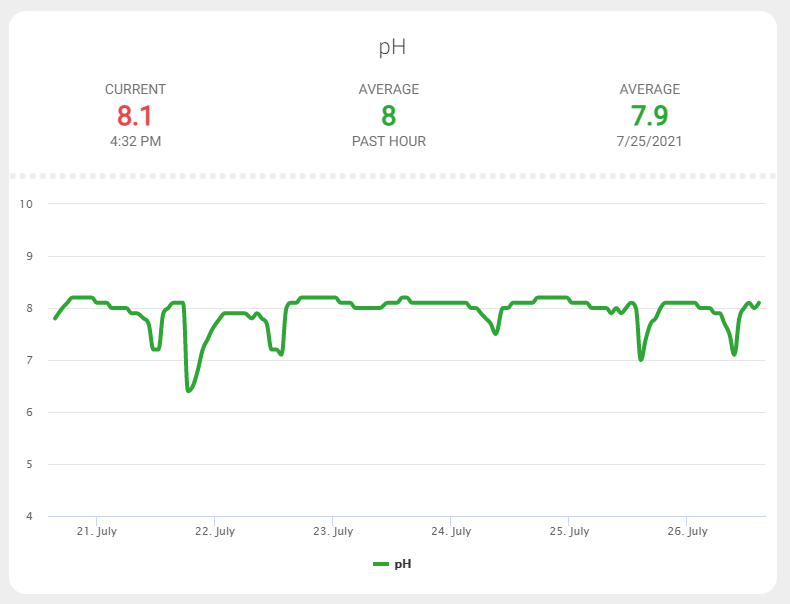
Illustration of Case 1
Case 2: regular daily variations
Daily pH variations—of a sinusoidal type—come from the presence of algae in the fish tank. Your hardness is nevertheless good (approx. 4-5°d), but your pH is high (>8).
- All actions to take to combat algae can be found in this article.
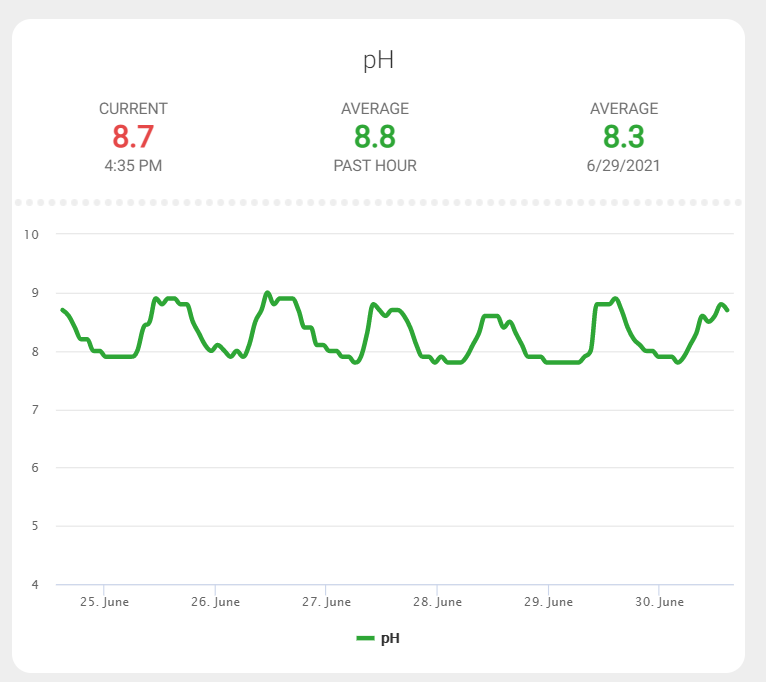
Illustration of Case 2
Case 3: the pH drops sharply
A pH that drops suddenly (a loss of at least 2 points in 2-3 days) indicates a serious problem. The filtration system or the pump may have an issue, the fish may be overfed, or pH down may have been added when the hardness was too low.
- Check that everything is properly connected
- Check that the fish feed container has not fallen into the water.
- Contact the agronomy team.
Case 4: the pH drops slightly over time
The pH naturally tends to decrease gradually over time, since plants release acids as they absorb minerals.
- Top up the fish tanks with tap water.
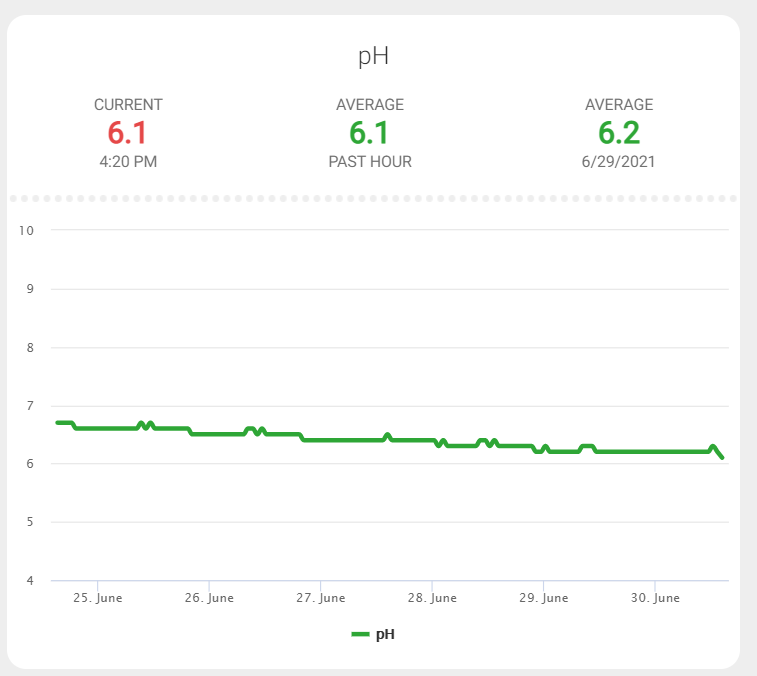
Illustration of Case 4
Case 5: the pH is stable but below 5.5
A pH that is too acidic means that you most likely no longer have enough carbonates in your system.
- Check the carbonates with a test strip and correct if necessary.
- Increase the KH and the pH
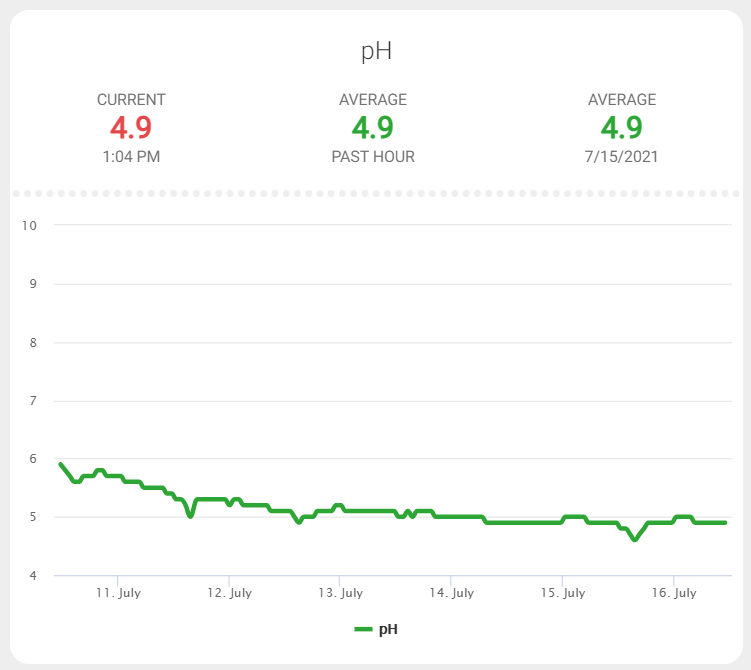
Illustration of Case 5
Case 6: the pH is above 7.5
A pH that is too high means that you have too many carbonates in your system. In this case, you are unable to lower the pH despite additions of pH down.
- Check the carbonates with a test strip and correct by diluting the fish tank volume with soft water.
- Then you can start managing the pH.
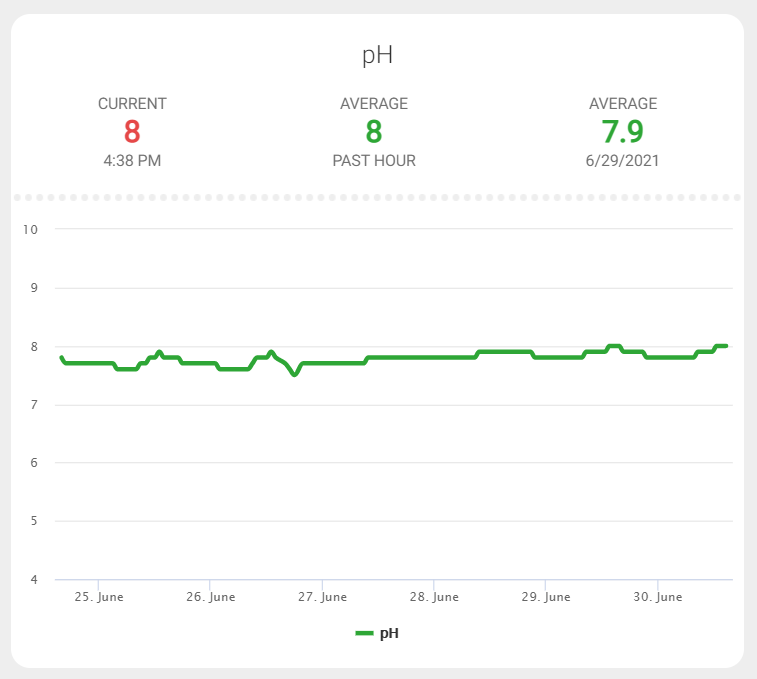
Illustration of Case 6
Case 7: no data
You are not receiving data on the Hub platform.
- Check our Troubleshooting tab
- Contact customer service to resolve your issue at [email protected].*
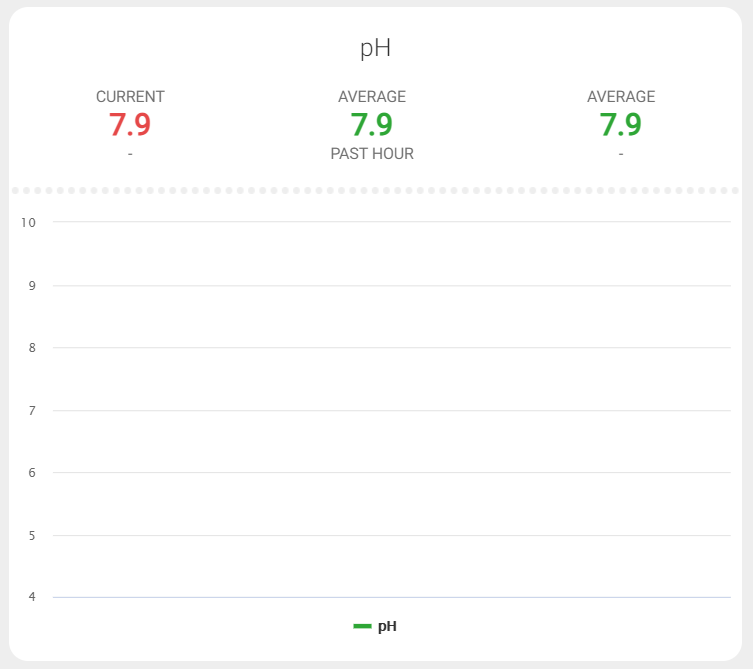
Illustration of Case 7
If you have other questions about acidity management, contact us directly at [email protected].