
Water management
During the off-season and in winter, ensure the system operates properly.
In winter, water loss is minimal. There is no evaporation, but plants consume water during nutrition and some plants may drip outside the tanks.
On the other hand, the drop in outdoor air temperatures affects the water temperature in the tanks. It is recommended to install heaters to maintain a minimum temperature of 5°C.
Please noteDuring winter:
- Plants absorb fewer nutrients from the water than in spring/autumn or summer.
- Fish metabolism slows down, so make sure to reduce the amount of food distributed.
- Water oxygenation is better than in summer.
1. Program water heating: strongly recommended
IN AQUAPONICS: recommended for locations that regularly have temperatures < 0°C
IN BIOPONICS: recommended for locations that regularly have temperatures < -10°C (medium and high mountains, Belgium, Switzerland, Luxembourg...).
To maintain fish and bacterial activity in the water, it is recommended to keep the temperature above 5°C. You can check the temperature ranges suitable for the different types of fish on our dedicated page.
In the middle of winter, temperatures can drop below -10°C depending on the region, and the water temperature can then fall drastically and the water surface can freeze. In this case, it is mandatory to switch off the pump and stop system irrigation to avoid damaging it.
When should they be switched on?
- Use heaters when the outdoor air temperature is below 0°C or when the water temperature drops below 5°C at night.
Heater programming advice
- Set the heater to 24°C to maintain a water temperature of at least 5°C during the winter period.
- The heater must be immersed.
- It is possible to add a timer for non-continuous operation.
- Heating power: 300W
Freezing of the water surfaceIf the water surface freezes, you must absolutely switch off the pump to avoid damaging the equipment (especially the pump). The fish will continue living under this layer of ice. You can break it or wait for it to thaw.
2. Keep the water flow at maximum
To ensure optimal plant growth all year round, it is advisable to keep irrigation of the vertical growing towers at the maximum level. Keep the pump power at 10 on the measurement box.
Avoid the development of mould on your crops
It is important to keep the vertical growing towers tilted to prevent plants from dripping onto each other.
Check that the plants are properly inserted into the vertical growing towers to avoid water stagnation near the crown of the plants and reduce the risk of mould developing.
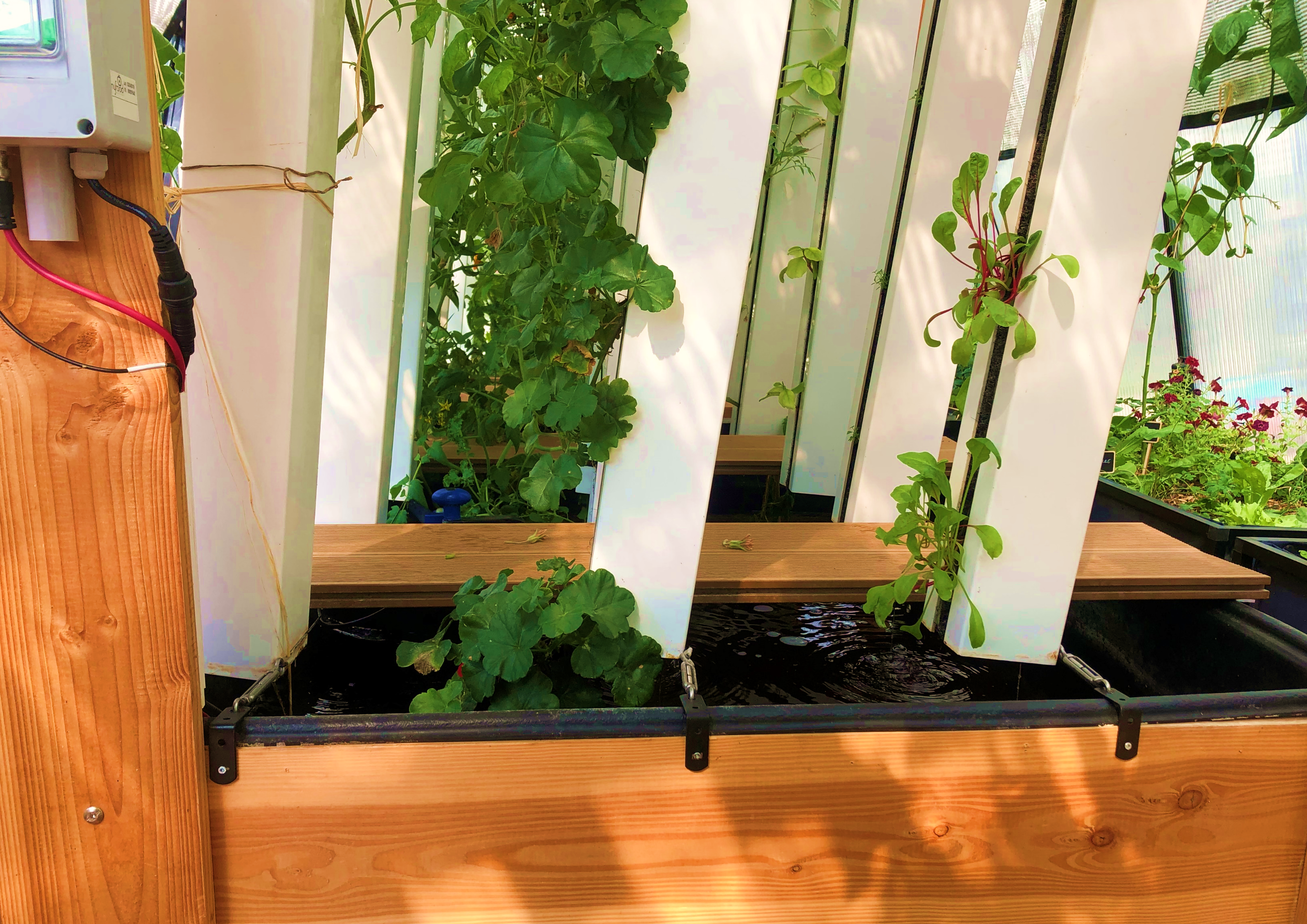
Importance of the plant's position in a tower.
3. Frequency and quantity for water refilling
The tables below indicate the quantities of water to add to the tanks according to the temperatures.
| Outdoor temperatures below 10°C | CITY model | FAMILY model - 1 tank | FAMILY model - 2 tanks | FAMILY model - 3 tanks |
|---|---|---|---|---|
| Top-up frequency | Twice a month | Twice a month | Twice a month | Once a month |
| Quantity of water per addition | 50 L | 50 L | 100 L | 150 L |
If the air temperature is 8°C, on average, for a Family, you will need to add 100 L of water every 2 weeks to maintain the tank level.
Check that your tanks are at the correct level on this wiki page.
4. Permaculture beds
| Filling the reservoir (tap water or rainwater) | Watering the plants from above (aquaponics sludge or tap water or rainwater) | |
|---|---|---|
| From October to March | Once a month | 2 to 3 times a month |
Limit watering in winterExcess watering and humidity encourage the development of fungal diseases and mould.
Reusing aquaponics/bioponics sludge for wateringYou can use the wastewater from filter cleaning to water the permaculture beds from above. The plants will benefit from the nutrients present in the water.
However, it is not recommended to fill the beds' water reservoir with the outgoing sludge.