sondes-et-capteurs
The pH probe must be immersed directly in the water in the fish tanksUpon receipt, the pH probe is stored in a vial with a storage solution.
Remove it before placing the probe directly into the water in the fish tanks.
1. Probes
The surface of sensors and probes is very sensitive and requires proper maintenance to ensure an accurate reading of what is happening in your greenhouse.
Accurate data makes managing your crops easier.
Probes age through normal use and eventually fail. The lifespan of a pH probe depends on the environment in which it is used and how it is maintained.
WarningClean your sensors carefully, they are fragile.
2. Probe maintenance
• ALWAYS loosen the cannula cap before removing or replacing the end of the pH probe.
• DO NOT leave the end of the pH probe exposed to air. If it dries out, it loses its functionality.
• DO NOT bend the probe; this would break the inner glass tube.
• DO NOT knock the probe; this would break the inner glass tube or the outer glass bulb.
• DO NOT pinch the cable or bend it too sharply.
• DO NOT wet the BNC connector at the end of the cable.
3. Cleaning your probes
Regular cleaningCleaning must be done two to three times a year with a microfibre cloth and washing-up liquid.
This maintenance prevents the development of algae or organic compounds. A layer of varying thickness on the surface of the probe would lead to inconsistent collected values.
Organic compounds or a hardened layer must be removed by adding a specific product.
Calibration is required annually.
4. Calibrating the pH probe
- After carefully cleaning the probe, place it in a buffer solution at pH=7.
- Connect locally.
- Go to the local greenhouse application http://192.168.137.1:5000/.
- Go to the "Admin" tab.
- Select "Set pH calibration".
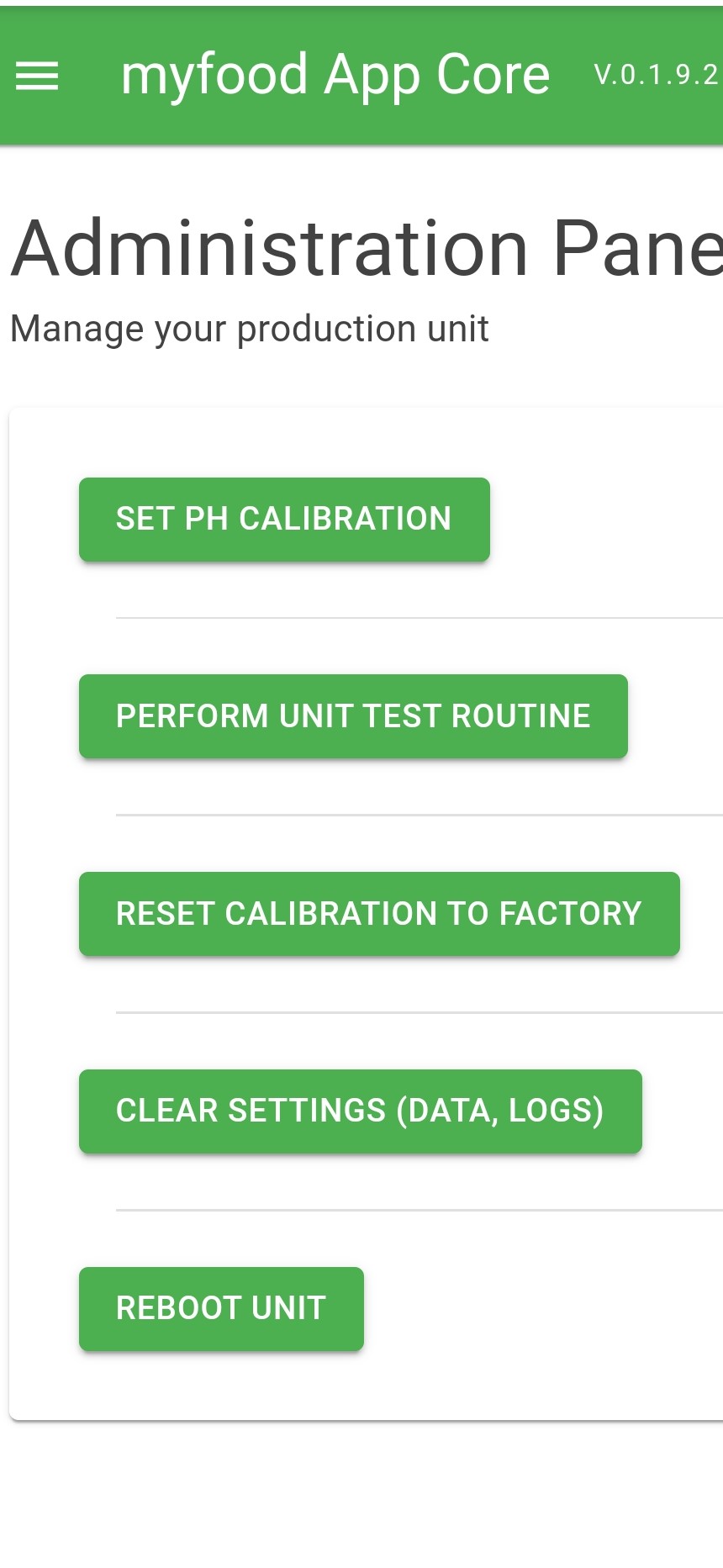
- Once the operation is complete, place the pH probe back in the fish tanks.
5. Test strips and pH probes
pH probe reliability test
More than 30% of all process quality measurements are pH measurements. And in aquaponics, this parameter is crucial and explains a large number of phenomena linked to the behaviour of plants, fish and bacteria. This is why it is extremely important to have reliable sensors and transmitters to optimise ecosystem operation and monitoring quality.
- pH reading over a full range from 0.001 to 14
- Accurate pH readings to the thousandth (+/- 0,02)
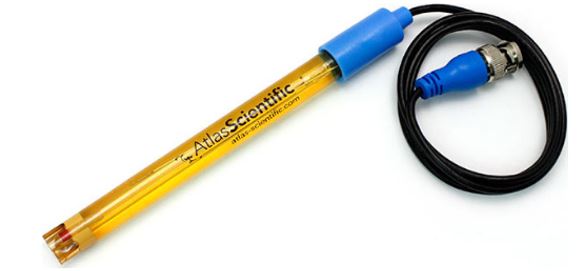
The relationship between voltage and H+ ion concentration (Nernst equation) established for pH forms the physical basis for pH measurement according to the principle of potentiometry. Potentiometric pH measurement is the measurement of a potential difference using a glass electrode (in our case) or a so-called glass-free electrode, with a reference electrode.
Test strips:
Coloured indicators are used to determine the acidic or basic tendency of a given solution, in this case the water in the fish tanks. These indicators change the colour of the solution, here the strip, according to the amount of acid (protons) present in the medium. They change colour imprecisely because the transition range is represented by a sensitive shade and over a pH interval of more than one unit. This transition range corresponds to the moment when the acidic and basic forms of the solution are present in equivalent amounts. Below and beyond the transition range, the colours are saturated and pH variations can no longer be identified. At that point, coloured indicators only show the presence of the acidic or basic form.
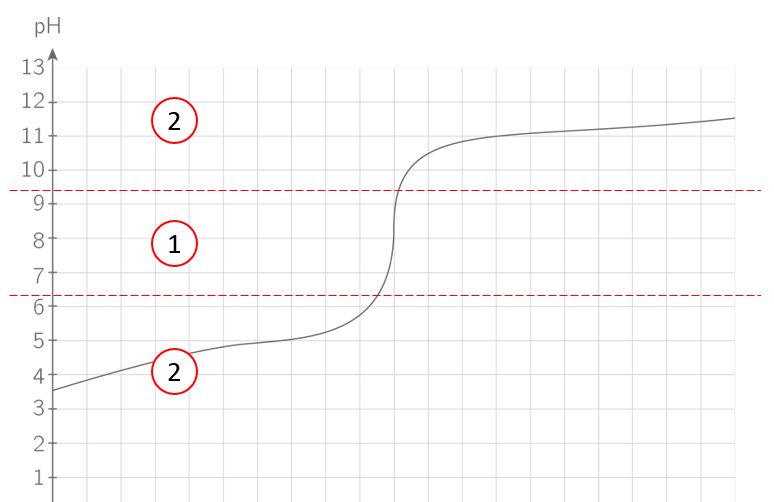
Graph showing pH variation with a coloured indicator:
1 - Indicator transition range
Sensitive shade
pH variation from 1 to 2,5 units
2 - Fixed colour
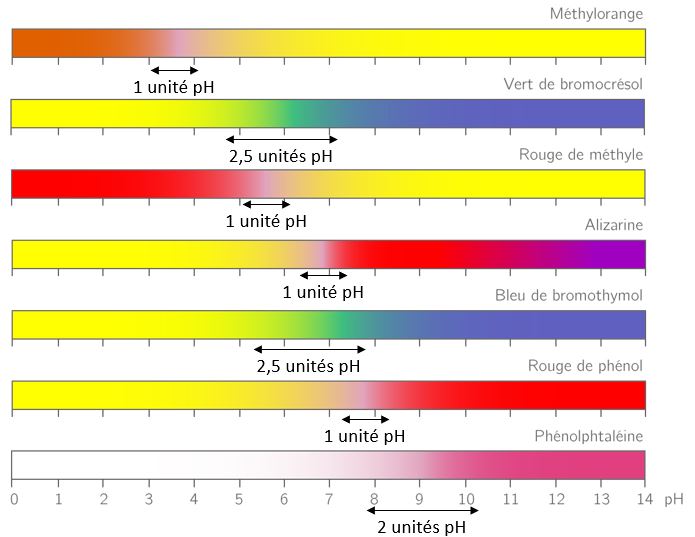
pH transition range varying from 1 to 2,5 units depending on the coloured indicators (Kartable)
Myfood experiment:
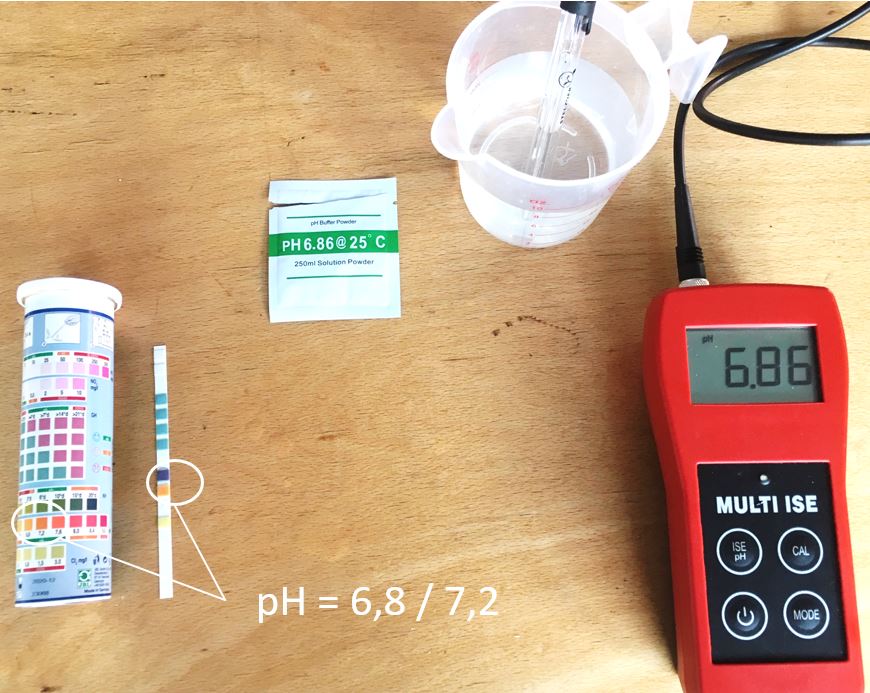
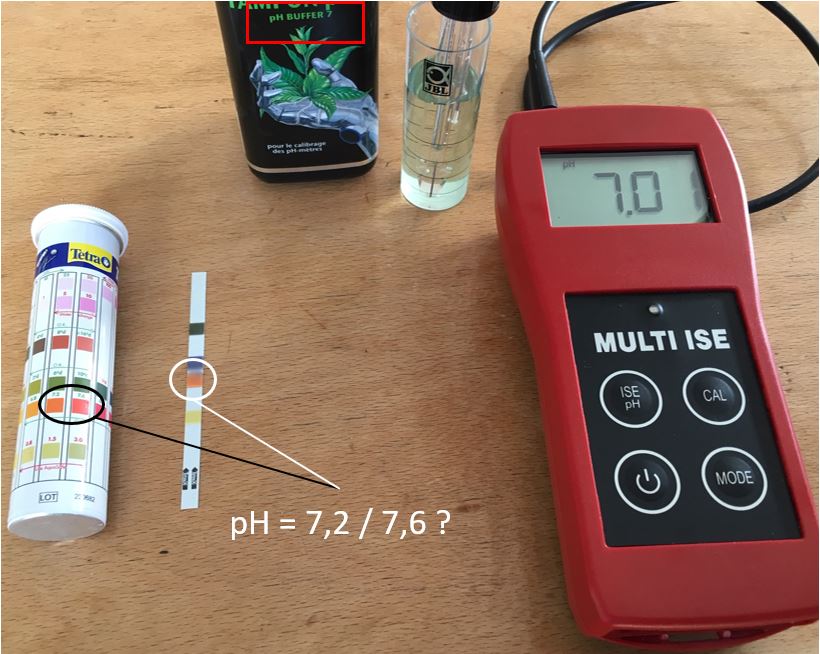
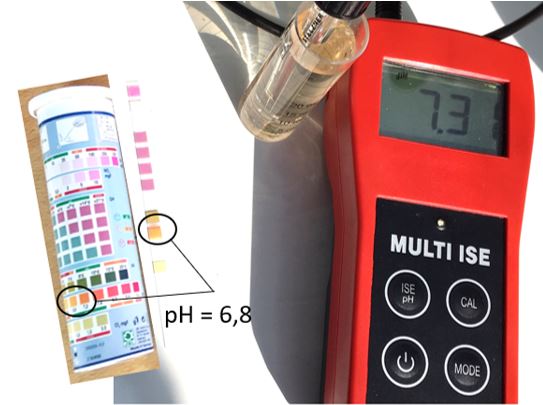
When checking a buffer solution (at pH=7), the digital probe shows precision to two decimal places (0,01), while the other two methods based on chemical reactions (when in contact with the solution to be measured) and visual assessment indicate values differing by about 0,5 to 1 pH unit from the buffer solution. These last two methods are less precise and are subjective.
ConclusionFor the other parameters relating to water quality (nitrites, nitrates, hardness, etc.), rely on strip tests, and for pH, the pH probe is the most reliable!