
Prune the plants
To promote fruit set
Pruning plants promotes better plant development, earlier production and a greater fruit yield. For some species, it helps control plant growth, which can quickly become invasive (tomatoes, squash).
Agricultural glossaryCotyledons : the plant’s first leaves, which serve as nutrient reserves to grow the first true leaves.
Top : cut the top of the plant on the main stem.
Generation (of branches) : each branch that forms after pruning the stem belongs to the next generation. The first branching corresponds to generation 1.
Sucker : a young shoot that forms in the axil between the main stem and a secondary stem.
Pinch : cut a stem using your fingernails, between your thumb and index finger.
Branch : a secondary stem that forms after cutting the main stem.
In general, pruning plants consists of removing suckers and cutting stems to allow the fruits to grow larger. It is best to make the first cut with pruning shears and then pinch the stems with your fingernails (unless the stems are too tough to do it by hand).
Did you know?The more fruits there are, the smaller they will be. If you want fleshy, very sweet fruits, leave only a few flowers or stems on the plant and remove any new ones.
1. Prune summer vegetables
Tomatoes
Which tomatoes should be pruned?Pruning cherry tomatoes is optional, as it is for tomatoes of the roma species. However, if your plants start to become invasive, feel free to prune them like standard plants.
- Remove suckers regularly because they draw a lot of nutrients at the expense of fruit formation.
- Top the main stem above the 5th flower cluster.
- If the fruits stop growing at the end of the season, you can remove the leaves that shade them.
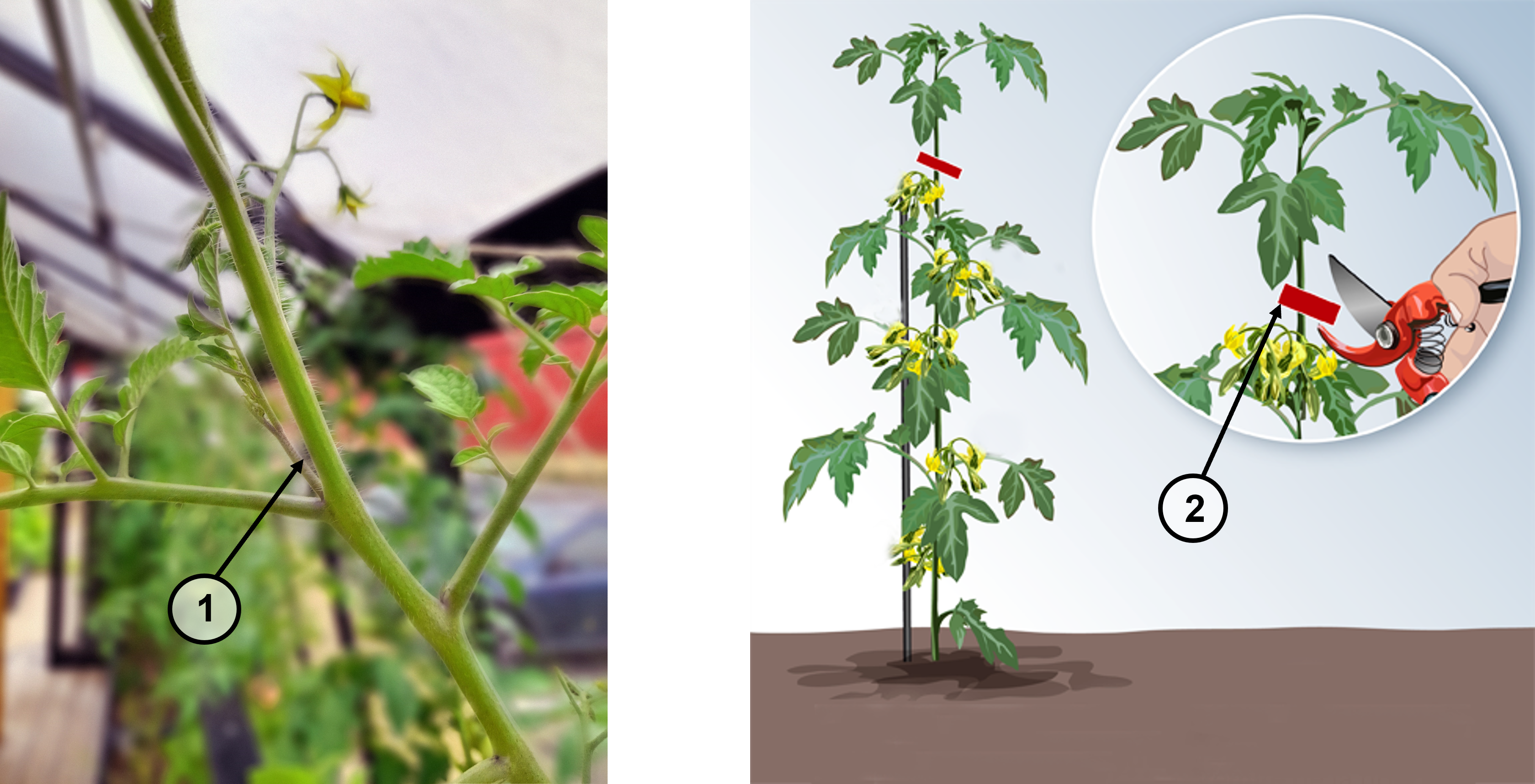
1- Pinch off the sucker
2- Top the plant with pruning shears after 5 flower clusters
Aubergines
- Remove suckers regularly at the bottom of the stem and at the base of the leaves.
- Top the main stem above the first flower.
- After topping, the main stem will split into several branches. Keep only 3 or 4 branches after the 1st flower.
- When flowers grow on the branches, pinch the stems above the 1st leaf after 2 to 3 flowers (depending on the number of fruits you want).
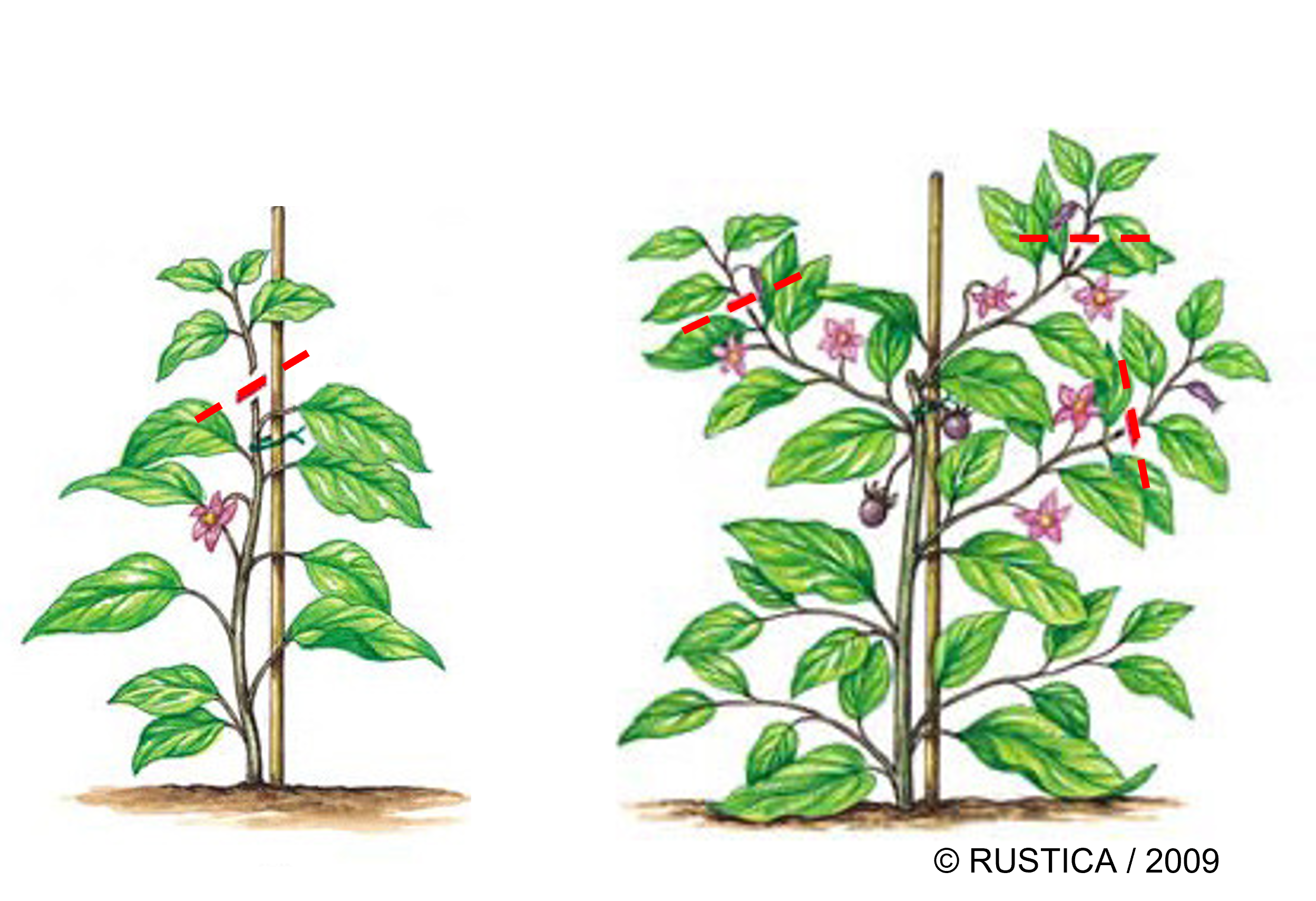
Top above the 1st flower - Pinch the branches one leaf after 2 to 3 flowers
Peppers/chillies
- Let the fruits grow and when they are well formed, cut the stems carrying them one leaf after the last fruit (keep only 2-3 fruits per branch).
- When the plant carries about fifteen fruits, top the main stem after the last fruit you want to keep.
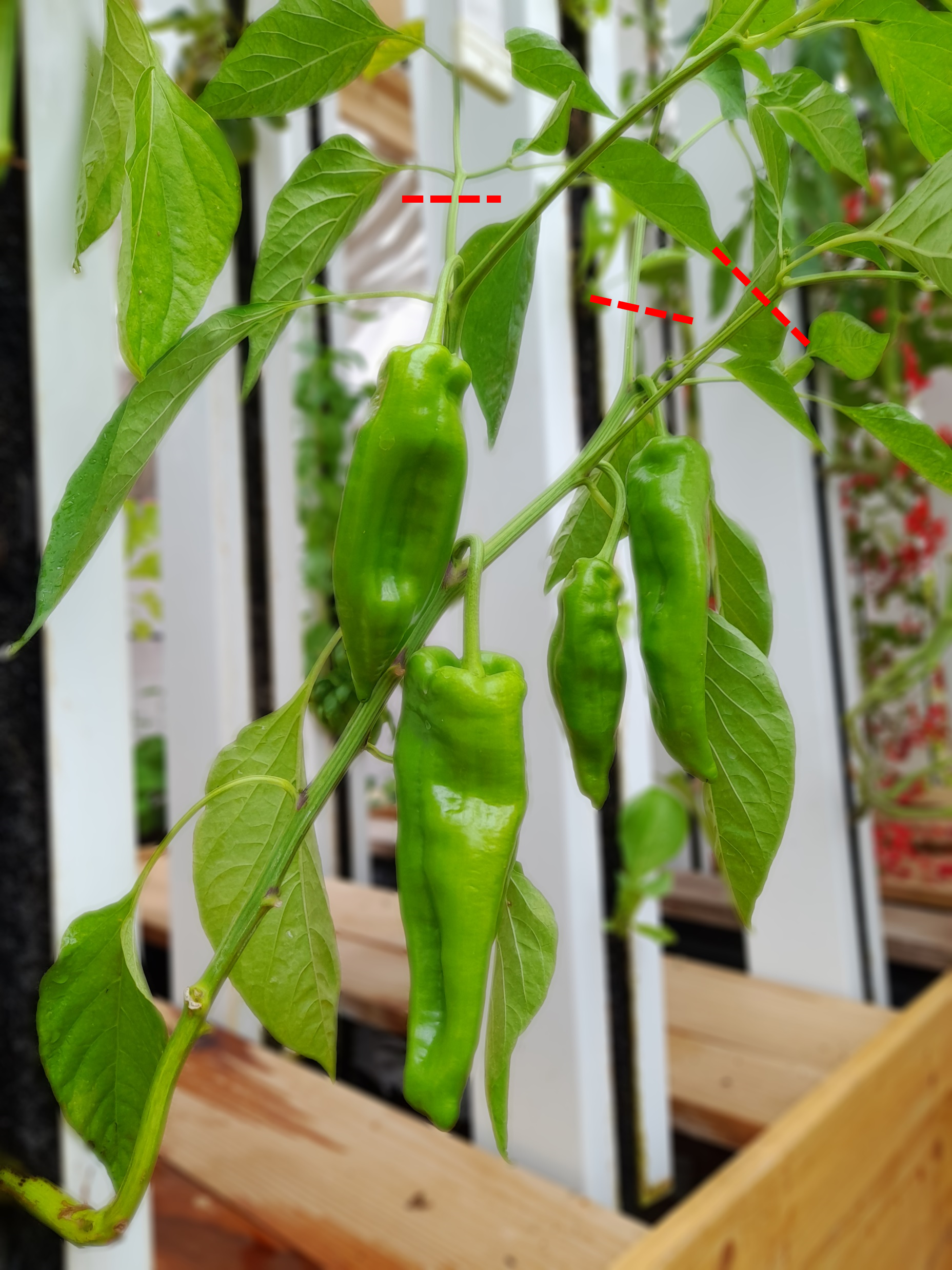
Cut the stems one leaf after the last fruit
2. Prune cucurbits
Only prune trailing plants (that spread out and grow low).
Squash
- When the main stem has 4 to 5 true leaves (not the cotyledons), top the stem after the 2nd leaf.
- The main stem then splits into 2 branches and so on. When the branches have 8 leaves, prune after the 5th leaf. Also prune non-fruiting branches.
- When the branch bears a fruit, prune 2 leaves after the fruit.
Keep at most 8 to 10 fruits for mini squash and only 5 to 6 fruits for large squash (pumpkin type).
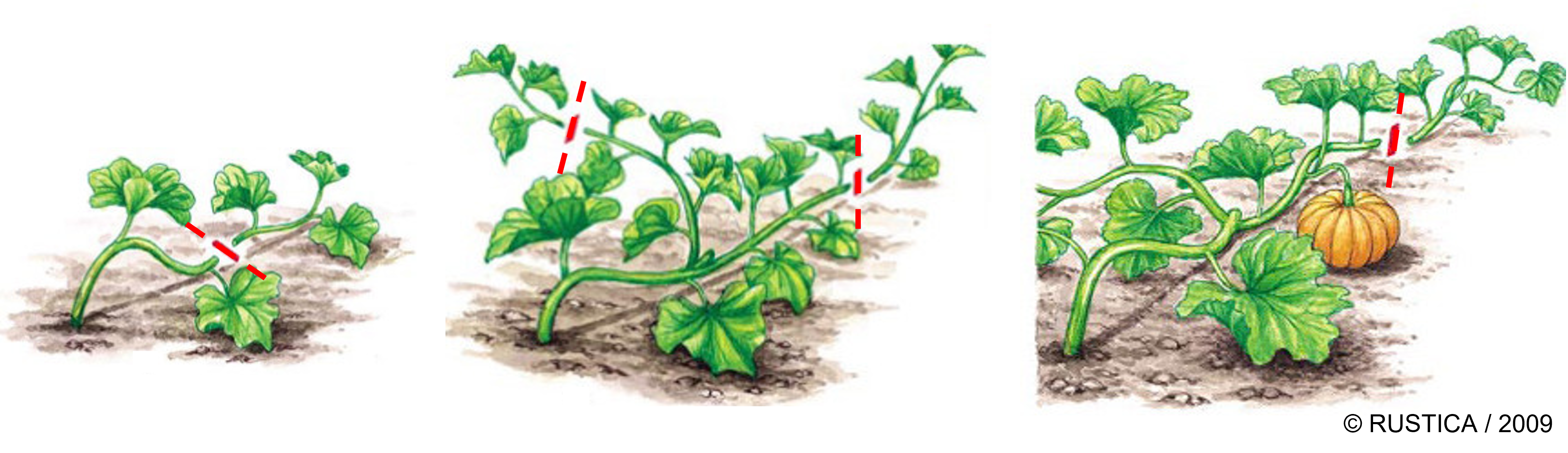
Top after the 2nd leaf - Prune the branches after the 5th leaf - Prune 2 leaves after the fruit
Courgettes
- Top the main stem when the plant has 4 to 5 leaves, after the 2nd leaf.
- Once the first fruits have appeared, decide how many fruits to keep and pinch each branch 2 leaves after the last fruit you want to keep.
Melons
Fruits only grow from the 3rd or 4th generation of branches.
- Top the main stem after the 2nd leaf when it has 4 to 5 leaves.
- When the branches reach 5 leaves, cut after the 3rd leaf.
- For branches of the following generations (2nd, 3rd, 4th...), always prune after the 3rd leaf. The 3rd-generation branches will bear the first female flowers.
Flower appearanceFlowers may appear from the 2nd generation of branches. In this case, do not prune the 2nd-generation branches, but let the flowers turn into fruit.
- When melons the size of a walnut have formed, keep one fruit per branch and pinch 2 leaves above it.
- Keep 4 to 6 melons per plant.
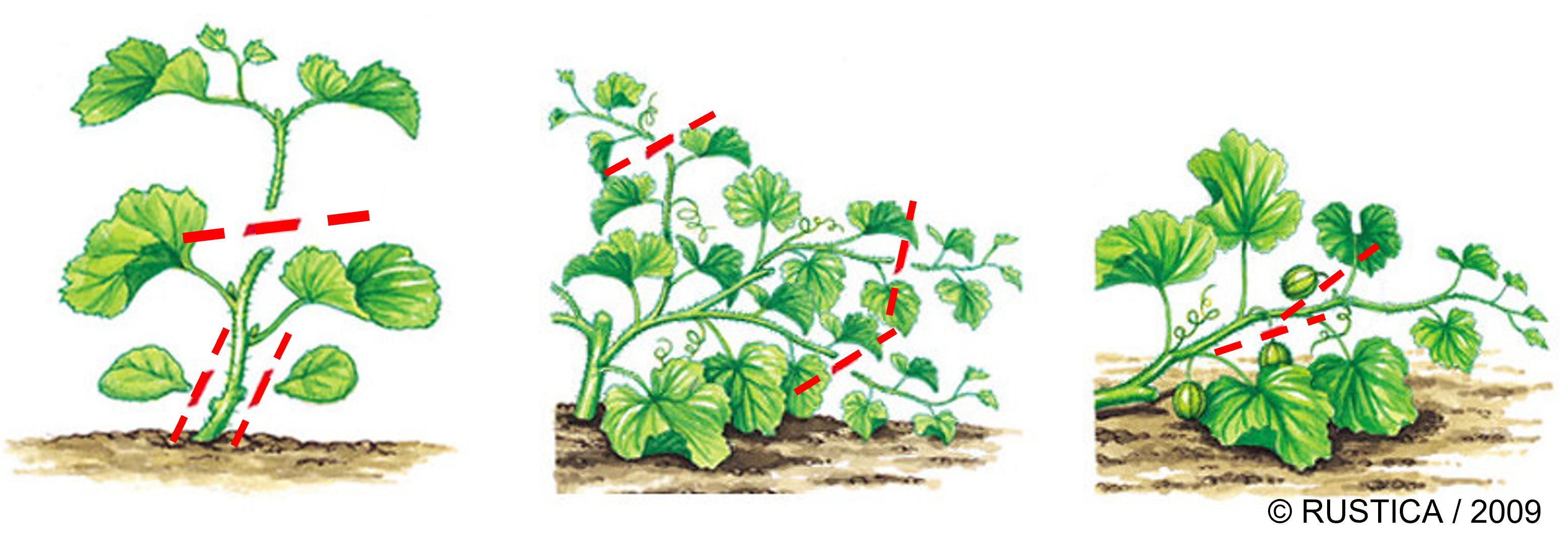
Top after the 2nd leaf - Prune the branches after the 3rd leaf - Keep one fruit and pinch 2 leaves above it
Cucumbers/gherkins
- Top the main stem after the 2nd leaf when the plant has 4 to 5.
- When the branches have 6 leaves, cut after the 4th leaf.
- Keep only 4 cucumbers per plant by pinching one leaf after the cucumber you want to keep.
Increase the harvestWhen the first fruits reach one third of their size, you can let others grow if your plant is doing well. Gradually, let another cucumber grow, then two, three and so on.
3. Prune the roots
As the plants grow, the roots also grow and end up in the tank.
As long as the roots stay under the tower, they can remain there. Once they start invading the water, it is essential to cut them back to prevent them from growing inside the irrigation system.
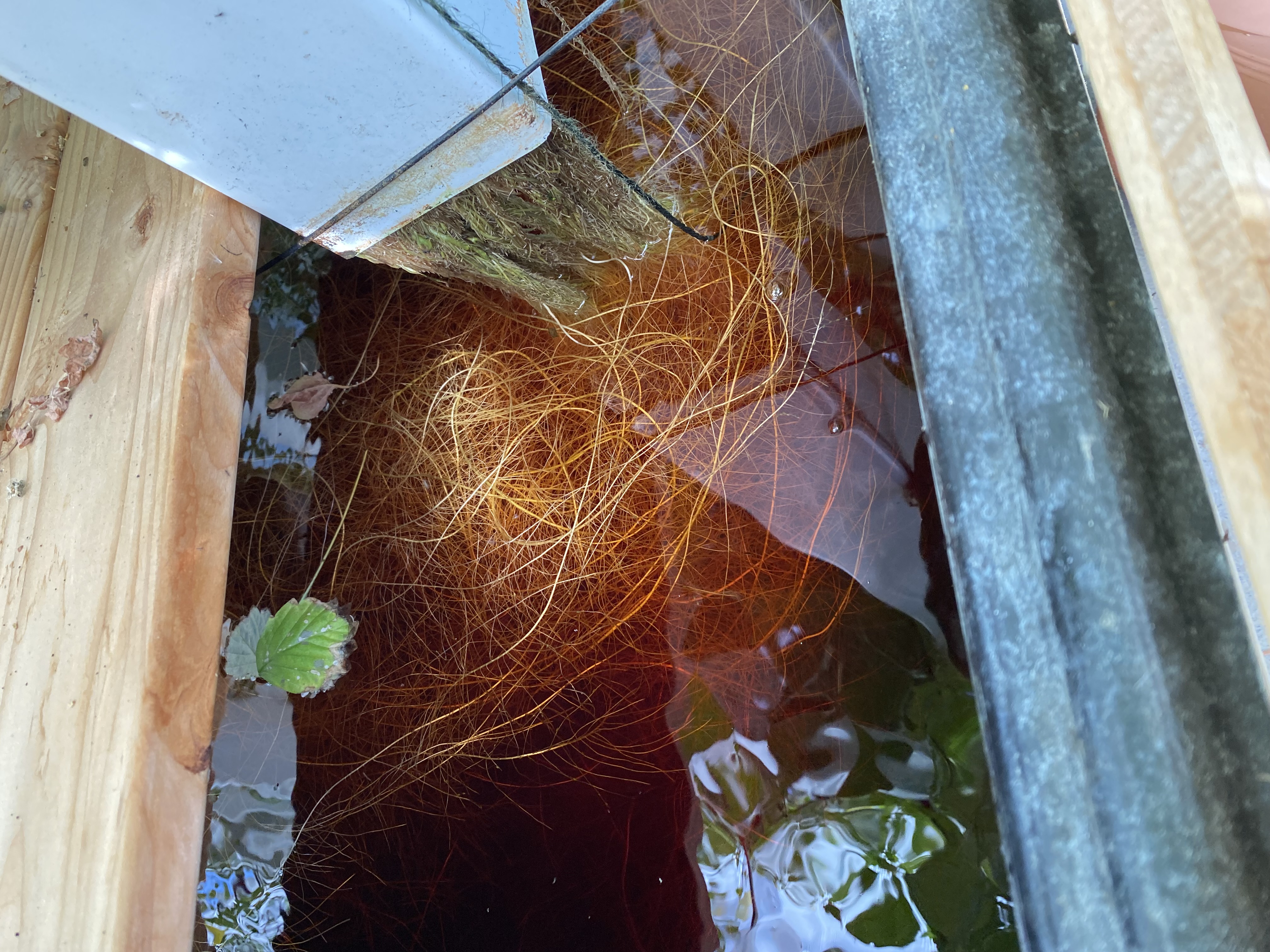
Well-developed roots in the water that must be cut back.
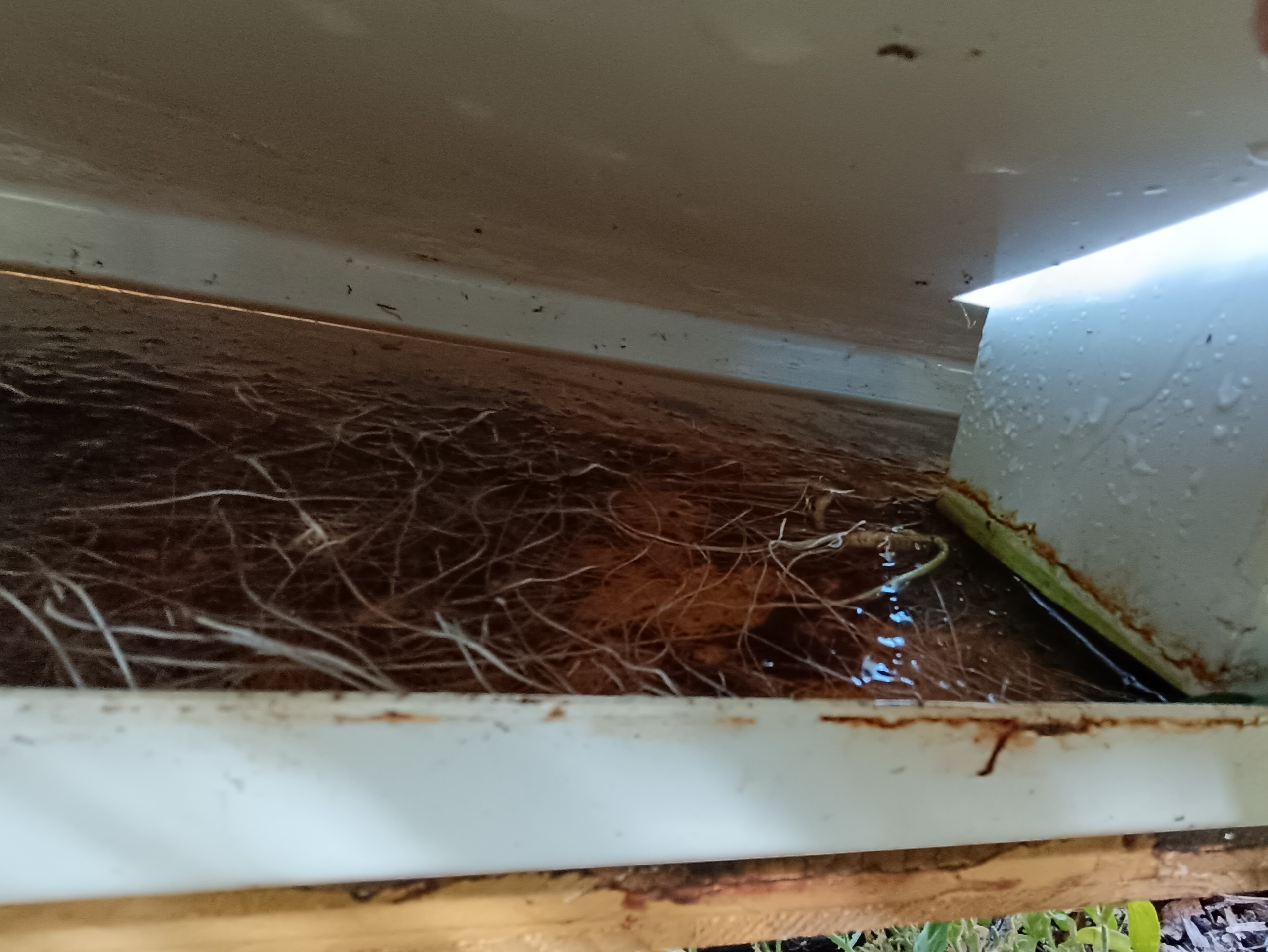
In the CityMonitor root development in the gutters. If the roots are abundant, they form a root mat and carry the water over the top of the gutter instead of letting it flow into the tank. It is also essential to cut them back.
4. Stake your tomato plants
Staking tomatoes
- In the vertical growing tower :
o First, select varieties with determinate growth, meaning plants that stop growing beyond 1m-1m20 in height.
o For standard plants, you can add staking systems using metal chains, support strings and yoyos. - In the permaculture bed
o Install stakes used in conventional gardens
o For example, with bamboo, you can make a tipi-like structure
o Use mesh (rigid or flexible) positioned along the windows
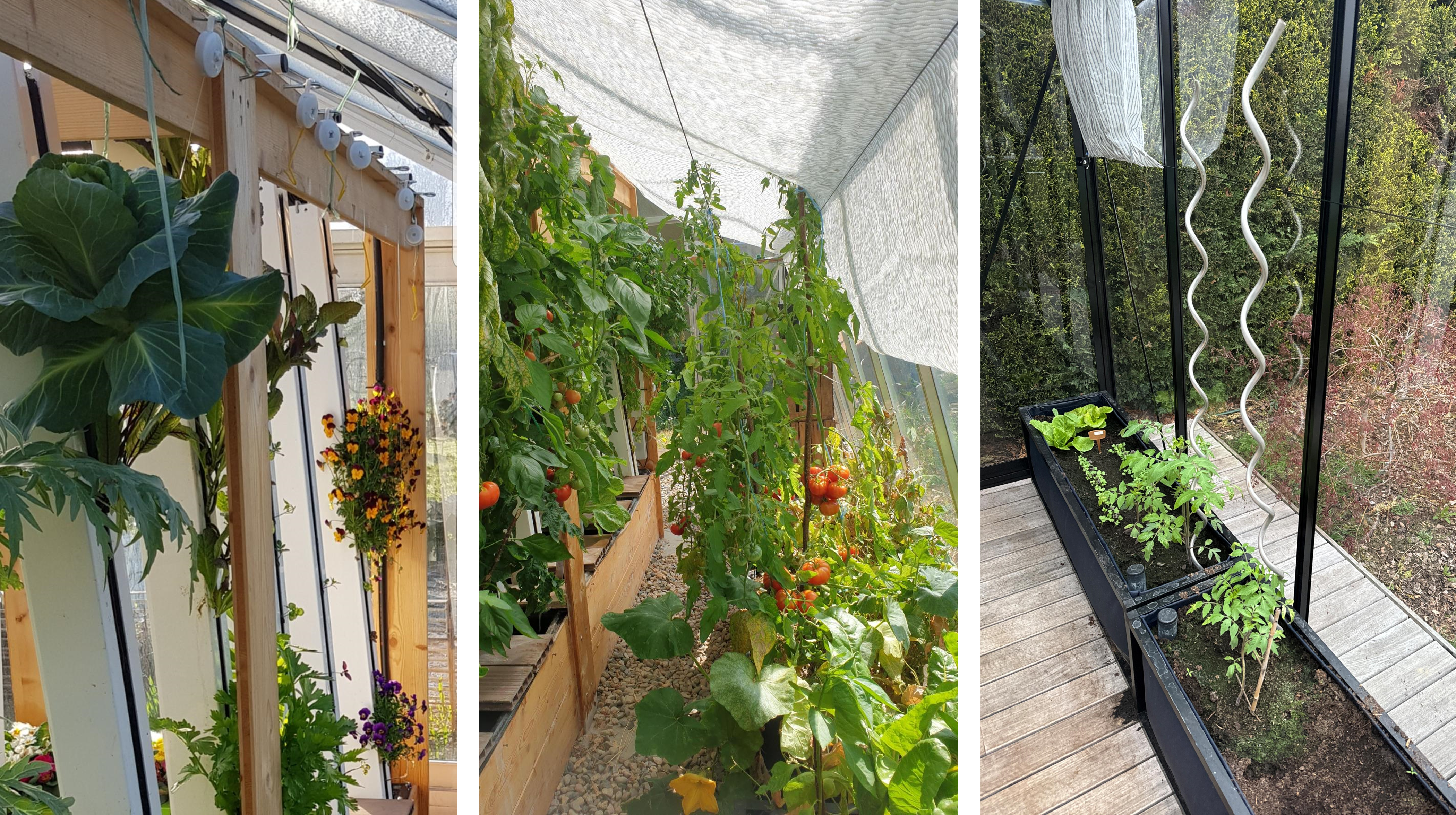
Example of staking with yoyos in the vertical growing tower and stakes installed in the permaculture beds.
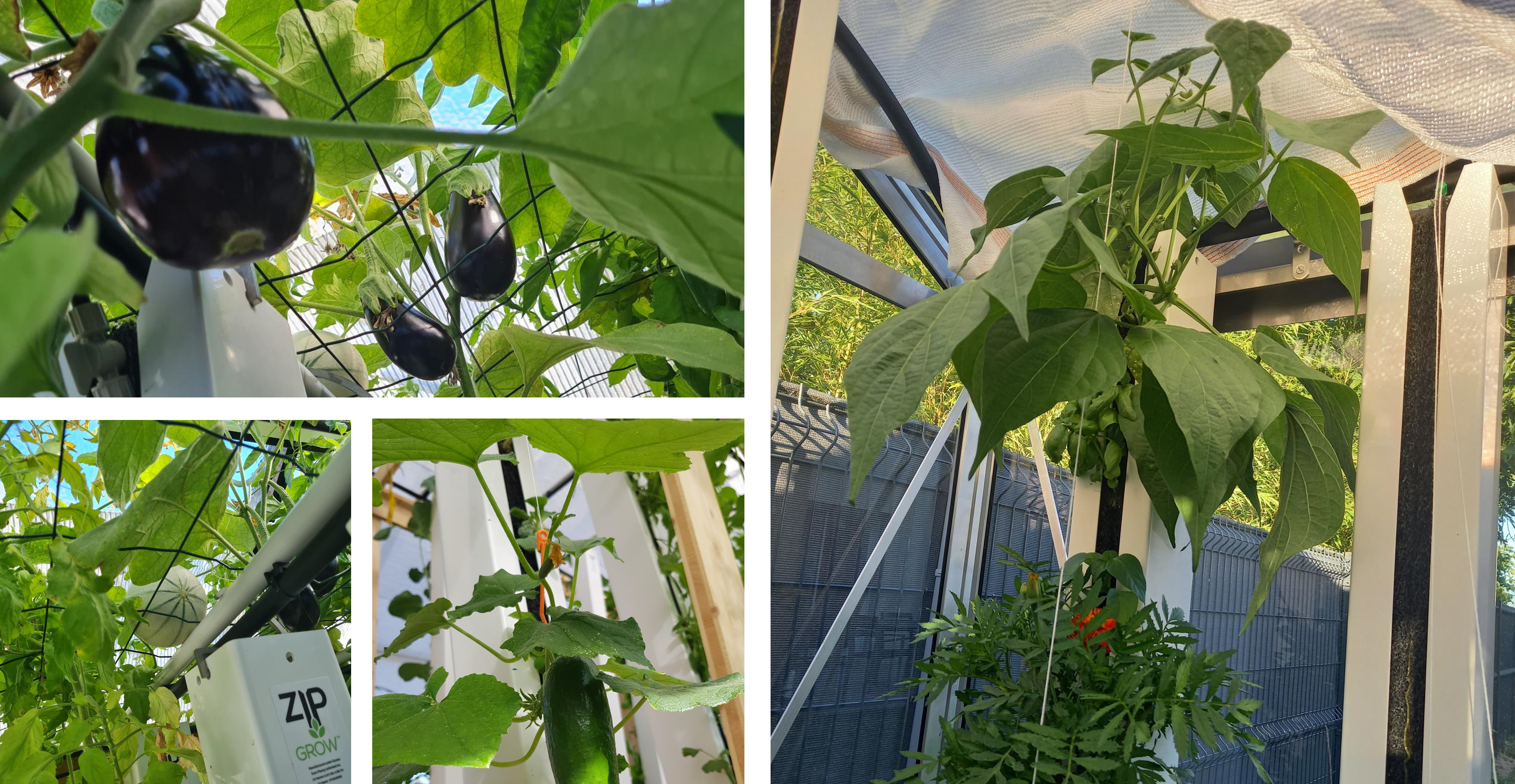
Supporting plants in the vertical growing tower with mesh positioned above the towers and with support string.
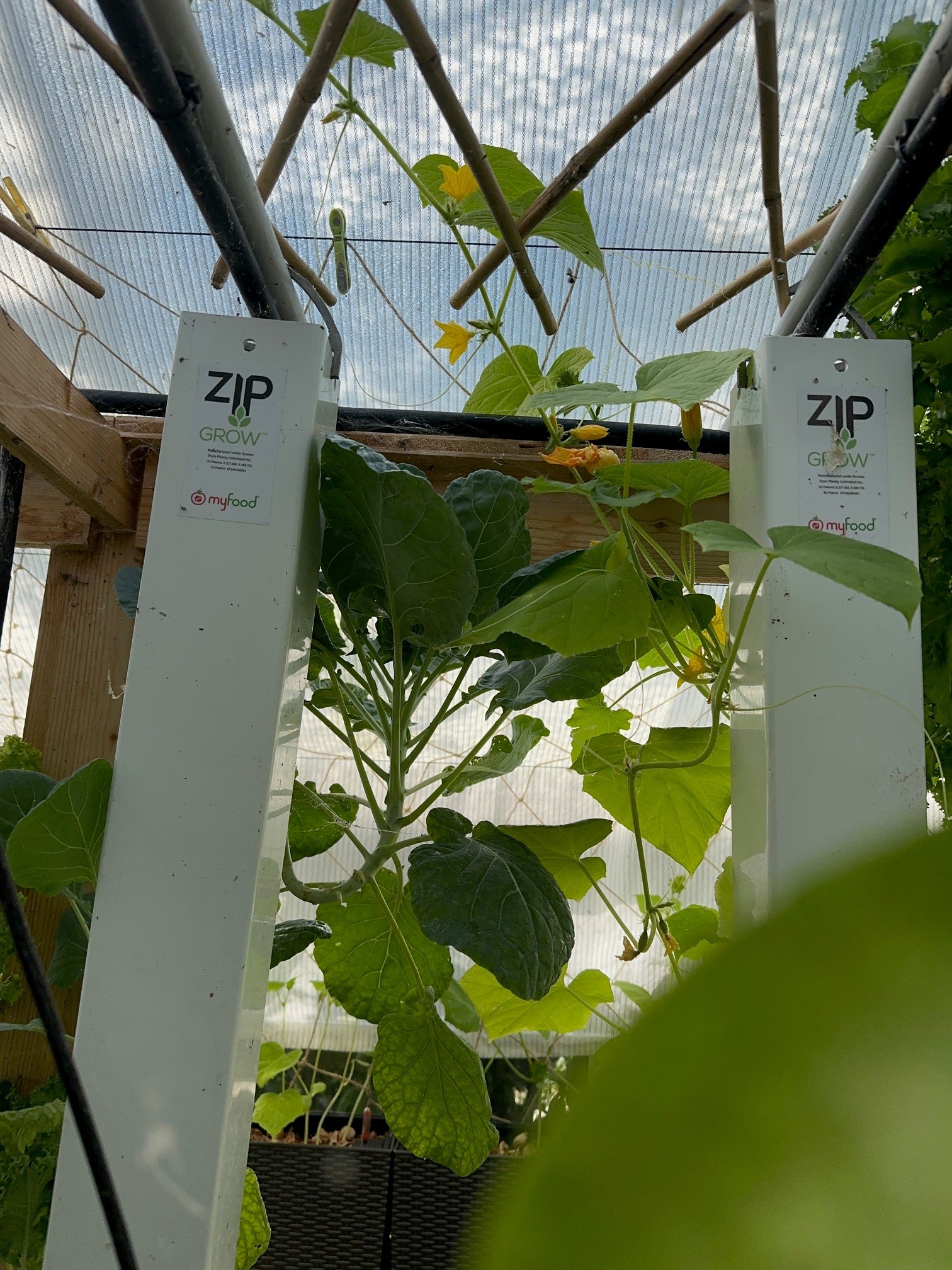
Staking plants with crossed bamboo canes