
gestion-de-la-lumiere
In a greenhouse or indoors, you must manage it throughout the season to avoid excesses and deficits and ensure optimal plant growth.
Summer - Shading in the greenhouse
1. Why?
In summer, light intensity is too strong and plants then suffer from excess heat and too much energy flow. The normal functioning of plants is then blocked.
In fact, the stomata (pores on the surface of leaves in particular) remain closed to prevent the plant from drying out too quickly, but at the same time it stops working (producing reserve sugars).
In addition, there is a risk of scorching on leaves and fruit.
2. Reduce light radiation
To limit these effects, you must reduce the entry of light radiation into the greenhouse, especially the short-wave infrared rays responsible for the temperature increase caused by the greenhouse effect. To do this, you can use:
- A shade cloth that prevents light rays from hitting the plants directly
- A specific coating sprayed onto the outside of the glass that lets through the light rays active in photosynthesis but significantly reduces the entry of short-wave infrared.
- A shading paint such as Blanc de Medon, to be applied to the inside glazed surface of the greenhouse.
Generally, one of the shading techniques is typically put in place in May.
The protective coating is removed at the beginning of October using a specific cleaning product (Top Clear) to spray on and rinse off with clean water. The shade cloth is folded away.
Winter – Photosynthetic LED lighting
In winter, the lack of light (reduced intensity and photoperiod) is the main factor limiting plant growth, especially in Northern Europe. The amount of natural light is not enough to meet plant needs.
To optimize greenhouse production, it is possible to increase the amount of light energy received by plants with LED lighting.
Thanks to lighting, it is possible to extend the growing period and therefore occupy the greenhouse for longer with vegetables that have higher light requirements (tomatoes, peppers, etc.). Lighting ensures a good rate of plant growth and development.
1. Use of LED lighting
LED lighting is advantageous in several ways. Thanks to the long service life of LEDs, it is possible to improve productivity during the autumn and winter period from October to the end of March.
In addition, the energy efficiency of LEDs is very good, allowing major energy savings. Another major advantage is the low heat emission when the LEDs are operating.
There is no impact on the greenhouse climate, which means the indoor temperature is not changed.
1.1. Choice of spectrum
White LED covers the photosynthetically active spectrum of plants. White light contains all the colours visible to the eye. Below, the Mc Cree curve (= plant sensitivity curve to wavelengths) shows that all colours play a role in photosynthesis and plant responses. White light is therefore more effective for metabolic balance and plant growth.

The McCree curve shows that all the colours in the white light spectrum play a role in photosynthesis and plant responses. (Source: Plant Physiology in Greenhouses)
1.2. Lighting performance in vertical growing
Lighting makes plants much more active, so they transpire and consume water and nutrients. These additional water and nutrient needs are covered by the programmed irrigation in ZipGrow towers as well as in the Aerospring vertical garden.
In addition, fruit quality and colouring improve, as does sugar content. Plant tissues are of very high quality. Plants are compact, healthy and balanced.
In lit crops, planting density can be increased. Optimized photosynthesis increases yields.
1.3. Setting the lighting
Total global radiation is considered to be below the critical threshold for plant needs during the period from October to March. December is the darkest month. Photosynthetic supplementation with LED lighting can represent more than 50% of the amount of light received by the plant over a day.
When the photoperiod and light intensity increase with the return of fine weather (at the end of winter), this proportion falls to less than 10% of the total daily global radiation sum.
Lighting duration mainly depends on the time of year. The recommended lighting durations are shown below:
| Month | Lighting duration (hours) |
|---|---|
| October | 6 |
| November | 12 |
| December | 16 |
| January | 12 |
| February | 8 |
| March | 4 |
There are two basic rules to follow so that plants properly assimilate LED lighting:
- The change in lighting from 16 to 4 hours is done gradually. The change in photoperiod duration is progressive, at 30 minutes per day.
- The photoperiod must remain identical for one week.
For a long photoperiod, switch-on should ideally take place at midnight and switch-off at 16 hours to allow bumblebees to return naturally to the hive before sunset. These are ideal conditions for plant growth if you want to optimize production. Light nuisance for nearby residents should be taken into account.
Adjust brightness with the horticultural LED kitThe new horticultural LED kit operates with a twilight sensor.
It is available for the aquaponics or bioponics growing system and for permaculture beds.
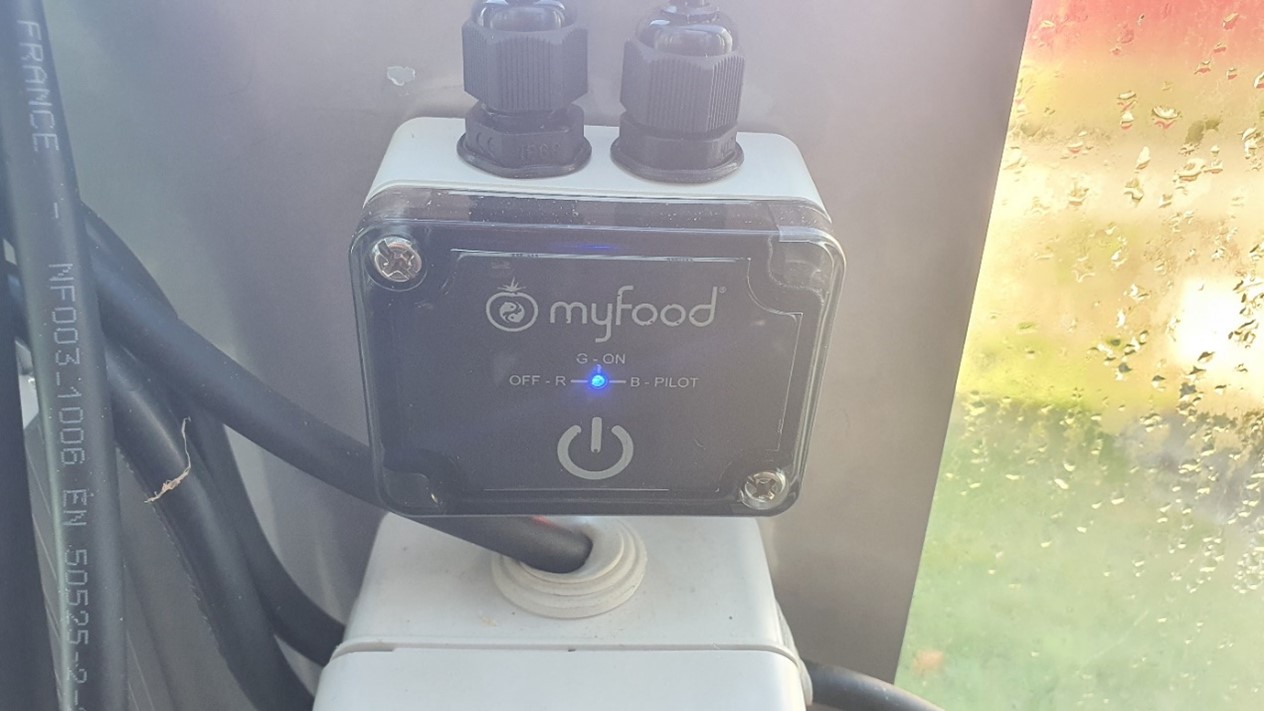
Photo of the horticultural LED lighting control device.
| LED lighting operating modes | ||
|---|---|---|
| ON | Green LED | Lighting is on at maximum. |
| OFF | Red LED | Lighting is off. |
| PILOT | Blue LED | Lighting is managed automatically by the device according to the brightness in the greenhouse during the day. |
How PILOT mode works
- If the temperature drops below 8°C, the lighting switches off because the plants are then dormant.
- If the temperature is above 8°C, the system manages the lighting variation according to the light intensity in the greenhouse.
1.4. Temperature management
Heat emissions from LEDs are very low. Plants are therefore in comfortable growing conditions, without temperature gradients that disrupt proper physiological functioning between the different parts of the plant (for example between the top of the plant and the roots...).
In winter, the outdoor temperature is very low. To maintain heat inside the greenhouse, it is possible to deploy the thermal screen to limit heat loss. LED lighting compensates for the reduction in natural light penetration, while saving heating energy.
In spring, there may be hot days, but with LED lighting there will be no heat build-up. Because if the daily temperature is too high, the plant burns too many sugars and the added light is not optimized.
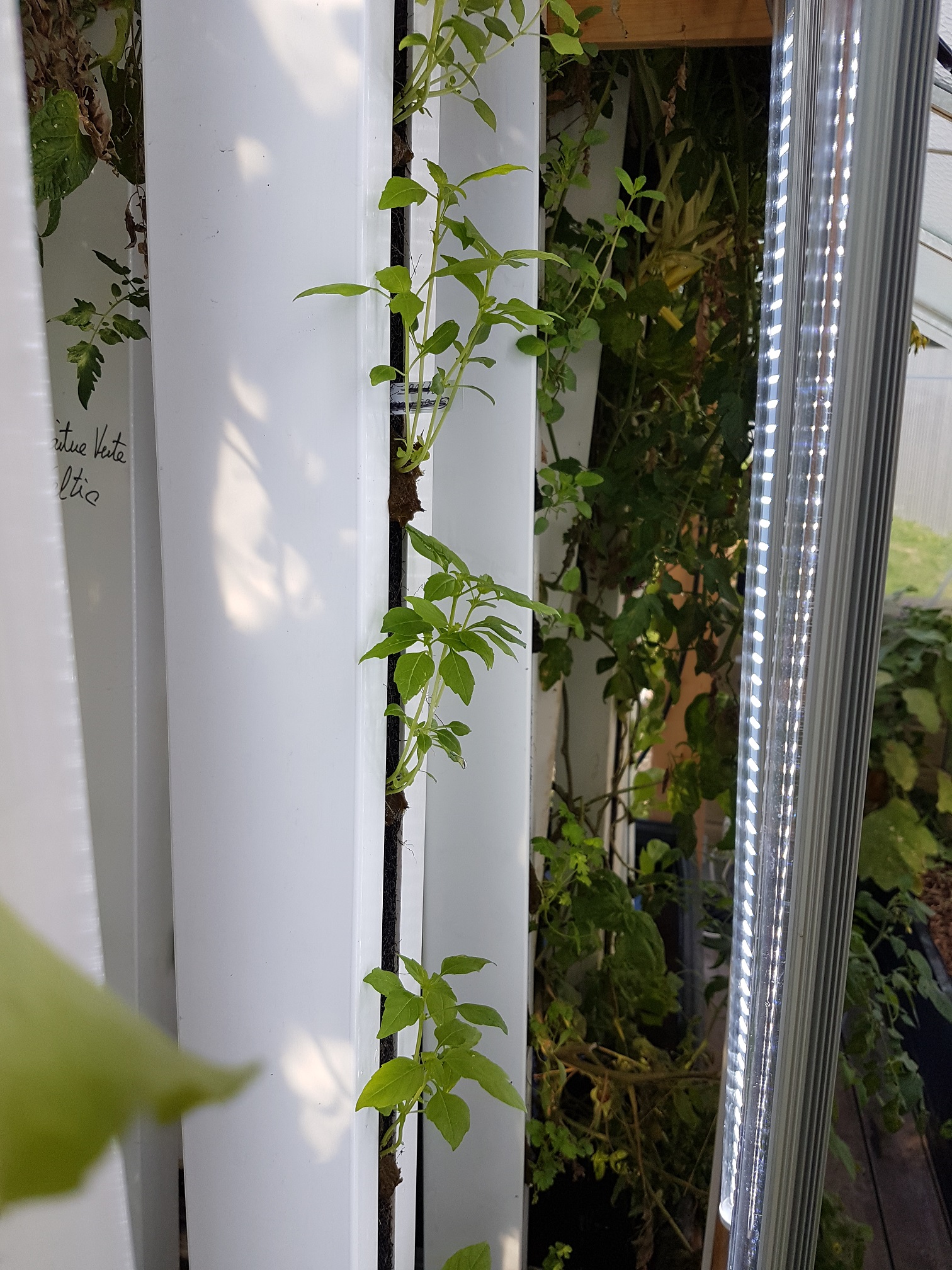
Positioned vertically, the strips of white LEDs improve crop growth and development over the full height of ZipGrow towers. The integration of the lighting does not hinder deployment of the thermal screen, which is very useful in winter.