
Use your Perma trays
A concentration of innovation to make your vegetable garden a success every time.
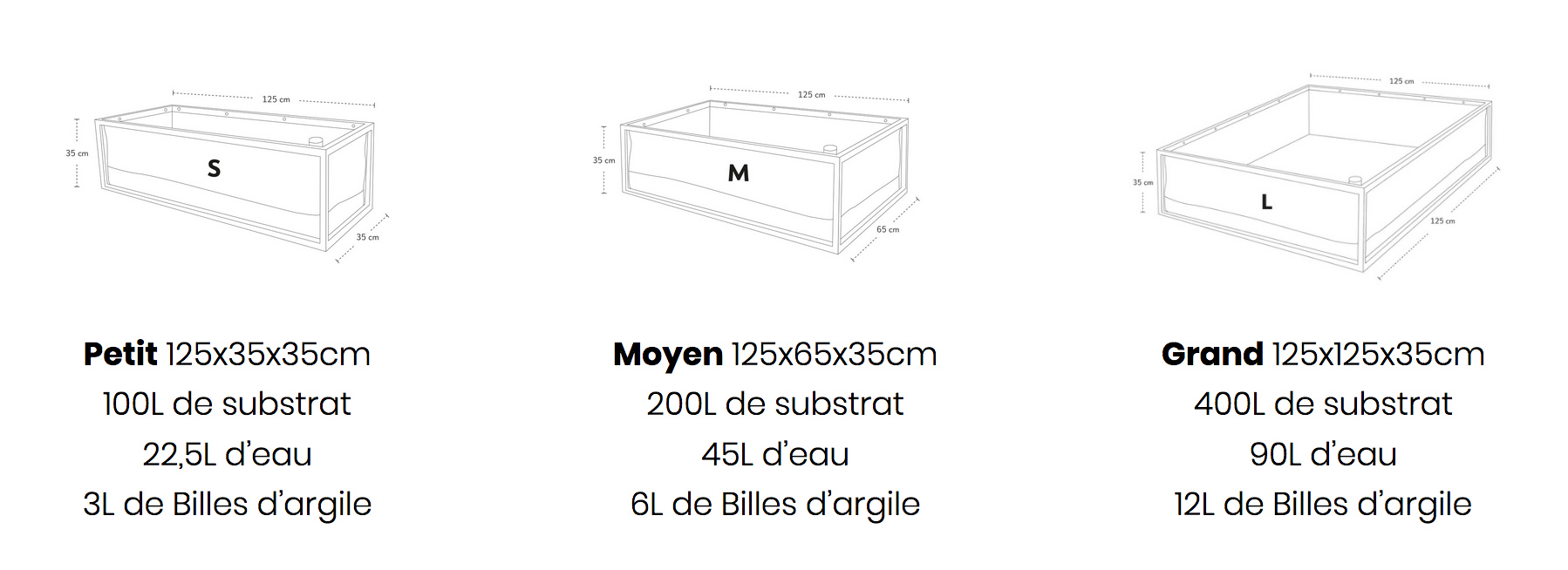
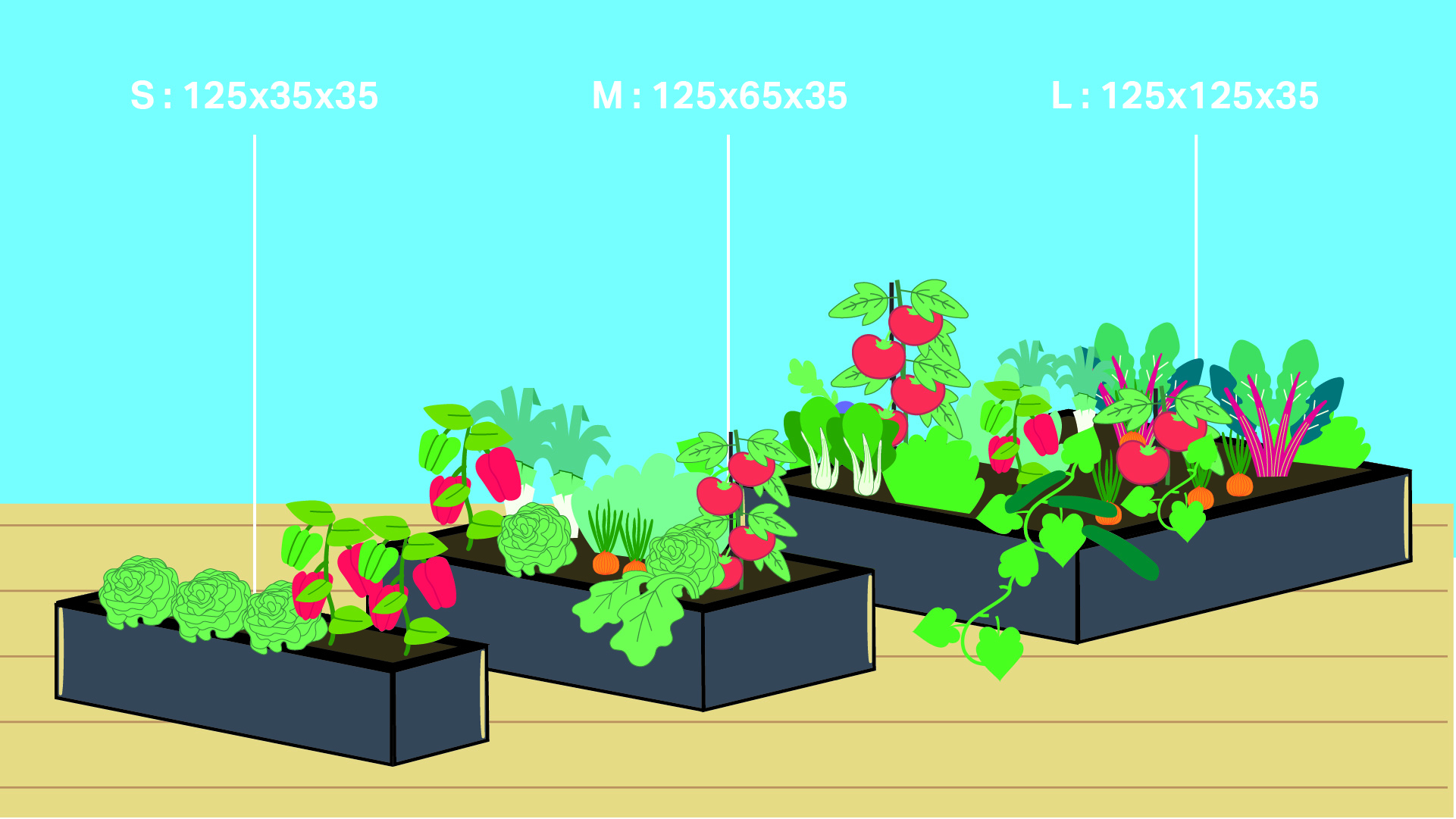
1. Dimensions
2. Where should you install your permaculture bed?
You can install your permaculture beds in your greenhouse, but also outdoors. The permaculture bed can also be installed on a terrace, in a garden, in town or in the countryside.
The ideal location is somewhere with good sunlight during the day, sheltered from the wind and easy to access. Remember that to grow vegetables, at least 25cm of potting soil depth is required and each plant needs 15cm of spacing to develop properly.
3. Which substrate?
Plants need nutrients to grow and produce fruit and vegetables. In general, it is the soil that provides them with essential elements: minerals, trace elements and water. This is why choosing the right substrate plays a crucial role in the success of your crops.
Why is a good substrate essential?
Using simple horticultural potting soil does allow good initial plant growth, but this type of substrate often lacks enough nutrients to support the full growth cycle. The result: plants tend to stop progressing after a few weeks.
To avoid this and ensure continuous, vigorous growth, it is essential to choose a rich and balanced substrate.
Our recommendations:
- Homemade mix
If you prepare your substrate yourself, we recommend a mix of:
- Horticultural potting soil: for structure and water retention.
- Vermicompost: rich in organic matter, it stimulates biological activity and provides natural nutrients for your plants.
- Recommended professional substrate
If you are looking for a ready-to-use solution, we recommend our organic peat enriched with plant compost.
A bit of background: why choose organic peat enriched with plant compost?This professional substrate is specially designed to guarantee optimal plant growth throughout their cycle, thanks to a rich and balanced composition:
- Blonde peat (fibrous and light structure):
Produced by the slow decomposition of plant matter in a low-oxygen environment, blonde peat has a low density and an airy structure. It improves:
- Water retention thanks to its absorption capacity,
- Root aeration, which is essential to avoid root suffocation.
- Its naturally acidic pH promotes optimal nutrient absorption for seedlings / young plants.
- Black peat (compact and nutritious structure):
Older and more decomposed than blonde peat, it is rich in stable organic matter (humus). It plays a key role in:
- Improving soil structure,
- Storing and gradually releasing nutrients.
- The combination of blonde and black peat provides a substrate balanced between lightness and nutrient capacity.
- Wood fibres:
Wood fibres, obtained from selected wood, have several functions:
- They lighten the substrate, improving its porosity for better air and water circulation.
- They make rewetting* easier, allowing the substrate to absorb water better after drying out.
- Their lignocellulosic structure contributes to slow decomposition, which improves substrate stability over time.
- Plant compost (source of living organic matter):
Plant compost comes from the controlled decomposition of plant residues. It is a real driver of soil fertility:
- It promotes nutrient mineralization, making them directly available to plants.
- It stimulates natural microbial activity, creating dynamic, living soil.
- It provides essential trace elements for healthy growth.
- Organic fertilizer (NPK 10:4:5):
This substrate is enriched with a complete organic fertilizer that complies with the principles of organic farming:
- Nitrogen (N): Promotes vegetative growth (leaves and stems) for vigorous plants.
- Phosphorus (P): Stimulates root development and improves plant resistance.
- Potassium (K): Optimizes flower and fruit formation while strengthening natural defenses against disease.
- The NPK 10:4:5 index guarantees a balanced supply of nutrients, essential to support your plants throughout their cycle.
- The benefits for your permaculture beds:
🌱 Continuous growth: Complete nutrition for your plants' entire cycle.
💧 Optimal retention : A perfect balance between water retention and aeration.
🌿 Stimulated biological activity : Thanks to plant compost, your soil becomes living and fertile.
🌍 Compatible with organic farming : Approved by ECOCERT Inputs for environmentally friendly use.
🔬 Proven performance : Up to +70 % harvested mass for lettuce and +60 % yield for tomatoes.
*RewettingThis is the process by which a dry substrate regains its ability to absorb and retain water. This allows the soil or potting soil to rehydrate effectively after a period of drying out, making water easier for plant roots to access.
Where can you find organic peat?To order this substrate, discover it now on the online store.
Preparing the potting soil/vermicompost mixWatch our video tutorial on preparing your permaculture beds.
Find the quantities of each component to add according to the size of your bed here.
4. How should you water?
There is now one parameter left to manage: watering.
A water reservoir is integrated into each permaculture bed. The sub-irrigation principle guarantees constant hydration of the substrate and the plants.
This compartment is filled through a tube that comes up to the surface of the bed using tap water, rainwater, etc. An overflow outlet indicates when the reservoir is full.
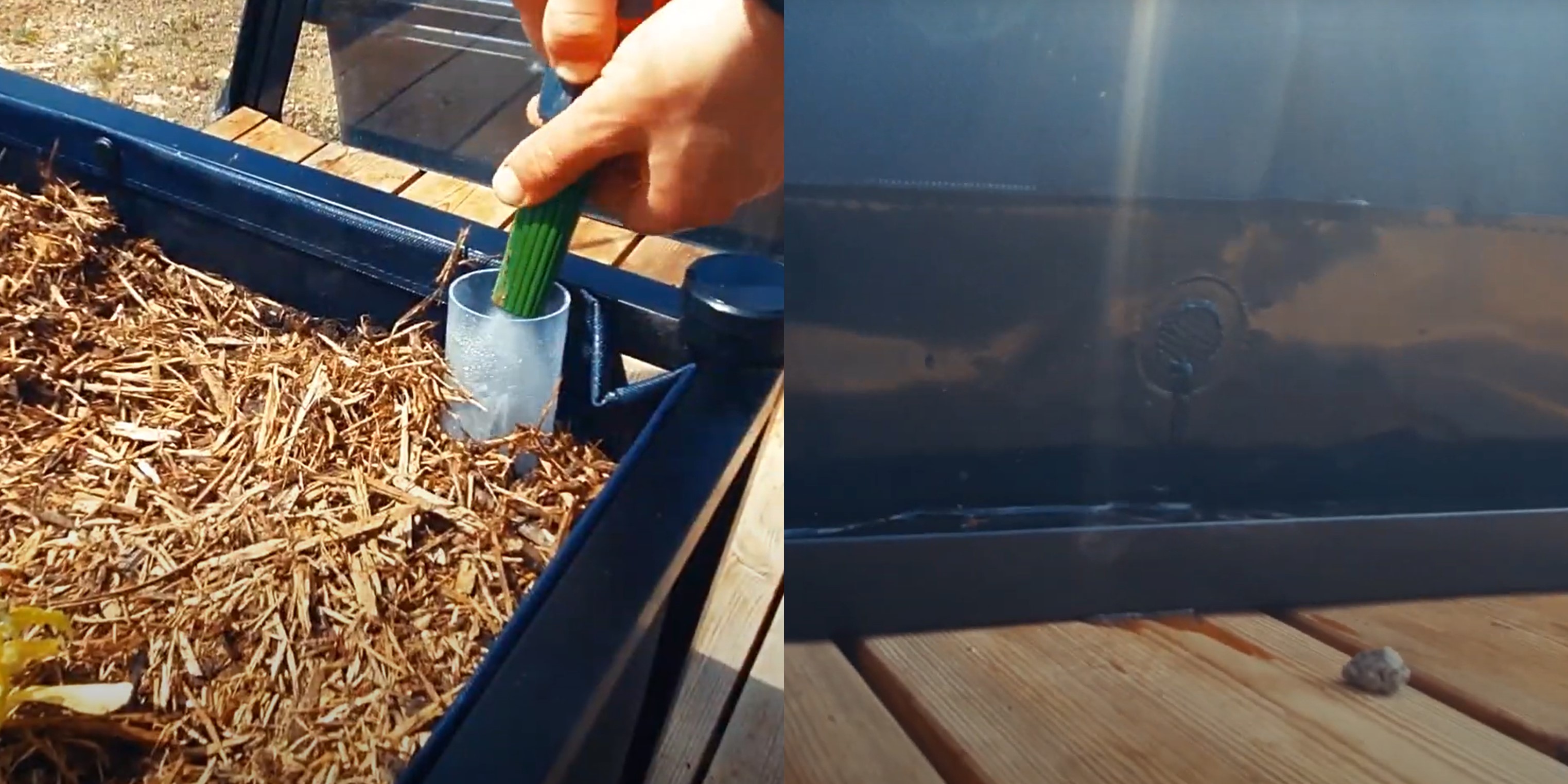
On the left, reservoir filling tube; on the right, overflow grommet
Refill and watering frequencyRefill frequency depends on the season: 1 time per week at the hottest point of summer versus 1 time per month during winter.
It is still necessary to water the substrate and the plants from above.
Water from aboveAlthough the beds are self-watering, it is necessary to water from above. When, and how often?
- As soon as you fill the reservoir,
- When you have made new plantings so that the plants establish properly,
- Every 2-3 days in summer depending on the temperature.
Add root activator to stimulate the plantsTo help plants establish well at planting time and keep them healthy, do not hesitate to water your plants with root activator once or twice a month.
Dilute one teaspoon in a 10L watering can.
5. Planting and direct sowing
Number of planting spots per bed
Below, you will find the planting capacity of the permaculture beds:
| Small size | Medium size | Large size |
|---|---|---|
| 8 to 12 plants | 12 to 18 plants | 25 to 36 plants |
The data mentioned above is given for information only; it is possible to plant more or fewer than these capacities depending on the type of plants. This is the optimal capacity according to the dimensions of the structure.
- To optimize planting space and avoid spatial interference, plant in a staggered pattern.
Direct sowing
In your permaculture beds, you can:
- Transplant your sowing done in advance in the seed propagator
- Sow the seeds directly into the substrate (at 5 cm depth)
Carrot, radish, turnip, etc.: remember to thin outCarrot, radish, turnip and beetroot sowing (and other bulb vegetables) is done directly in the soil (in a permaculture bed or outdoors). They are sown in rows, with rows spaced 15-20 cm apart.
Once the seeds have germinated and the plants reach 5 cm, it is essential to thin them out so that the bulbs form properly. This step consists of leaving only one shoot every 4-5 cm in the soil on each row. This way, each vegetable will have enough space to develop to maturity.
Please note: if you do not thin them out, you will only get foliage and the bulbs will make "threads" instead of forming.
6. How do you maintain the beds?
- Monitor the water level in the reservoir: in summer, it may need to be refilled more frequently.
- Renew the mulch every 3 to 6 months to protect the soil.
- Enrich the substrate:
When moving from one season to the next, it is important to remove the plants completely (including the roots). These plant movements cause the substrate level to drop and the soil tends to settle/compact.
The quantity of potting soil/vermicompost/biochar mix tends to decrease gradually. It is essential to top up the beds at least once a year to enrich and aerate the substrate.
How do you top up a permaculture bed?
- Set aside the BRF layer.
- Add one full bag of organic peat enriched with plant compost.
- Put the BRF layer back in place and add new BRF if needed, which is strongly recommended to create a good insulating layer.
Make good use of your compostDo not hesitate to replace part of the potting soil/vermicompost with your own compost.
7. Examples of planting combinations in a permaculture bed
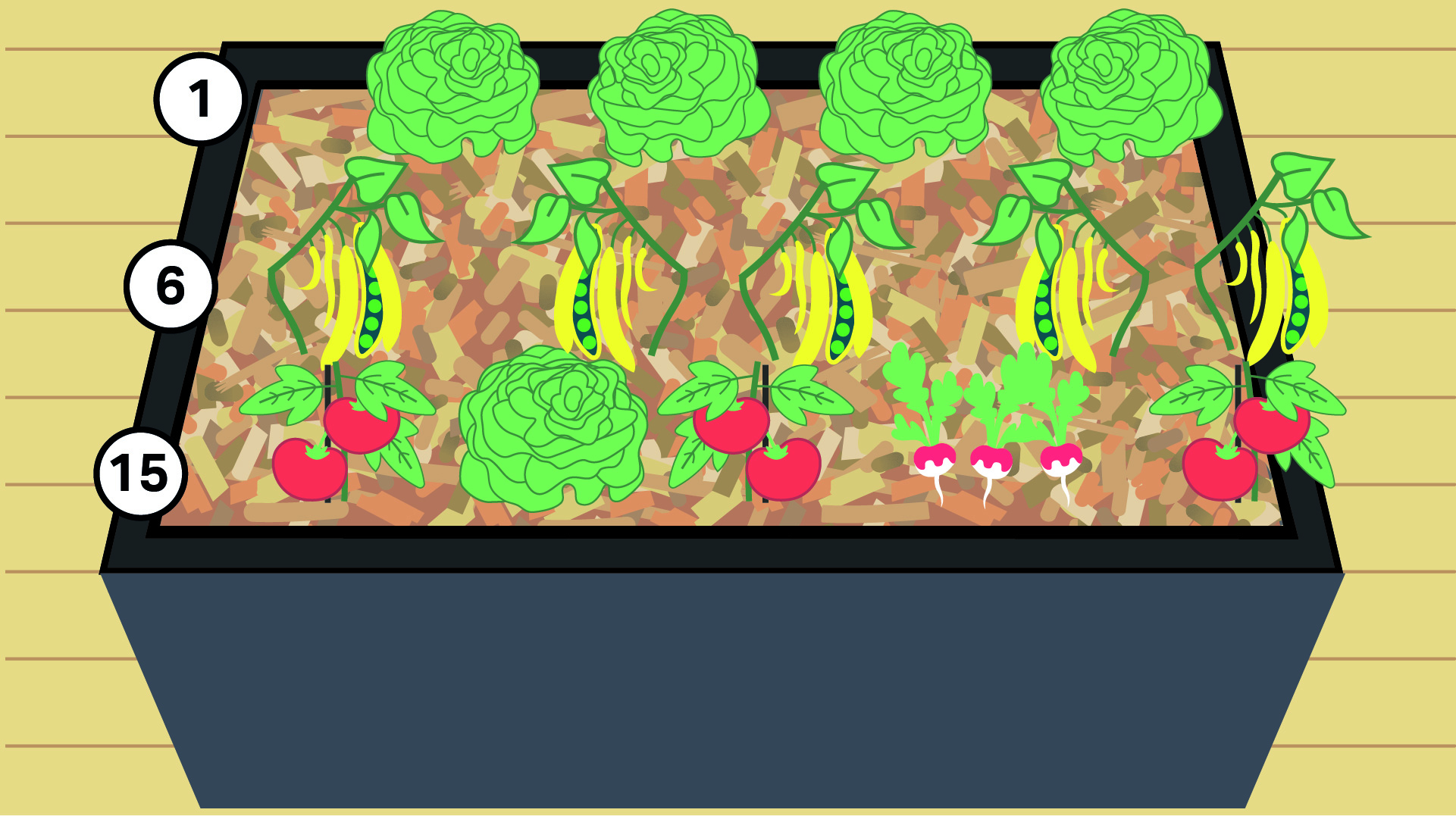
Combination A
1 - Lettuce ; 6 - Bean ; 15 - Tomato
Benefit of combination A:
- Nitrogen contribution to the soil thanks to the beans.
- Optimization of space by using the different plant sizes: radish < lettuce < beans < tomato
- Variation of crop cycles: the radishes will be harvested to leave room for the tomato plants to grow.
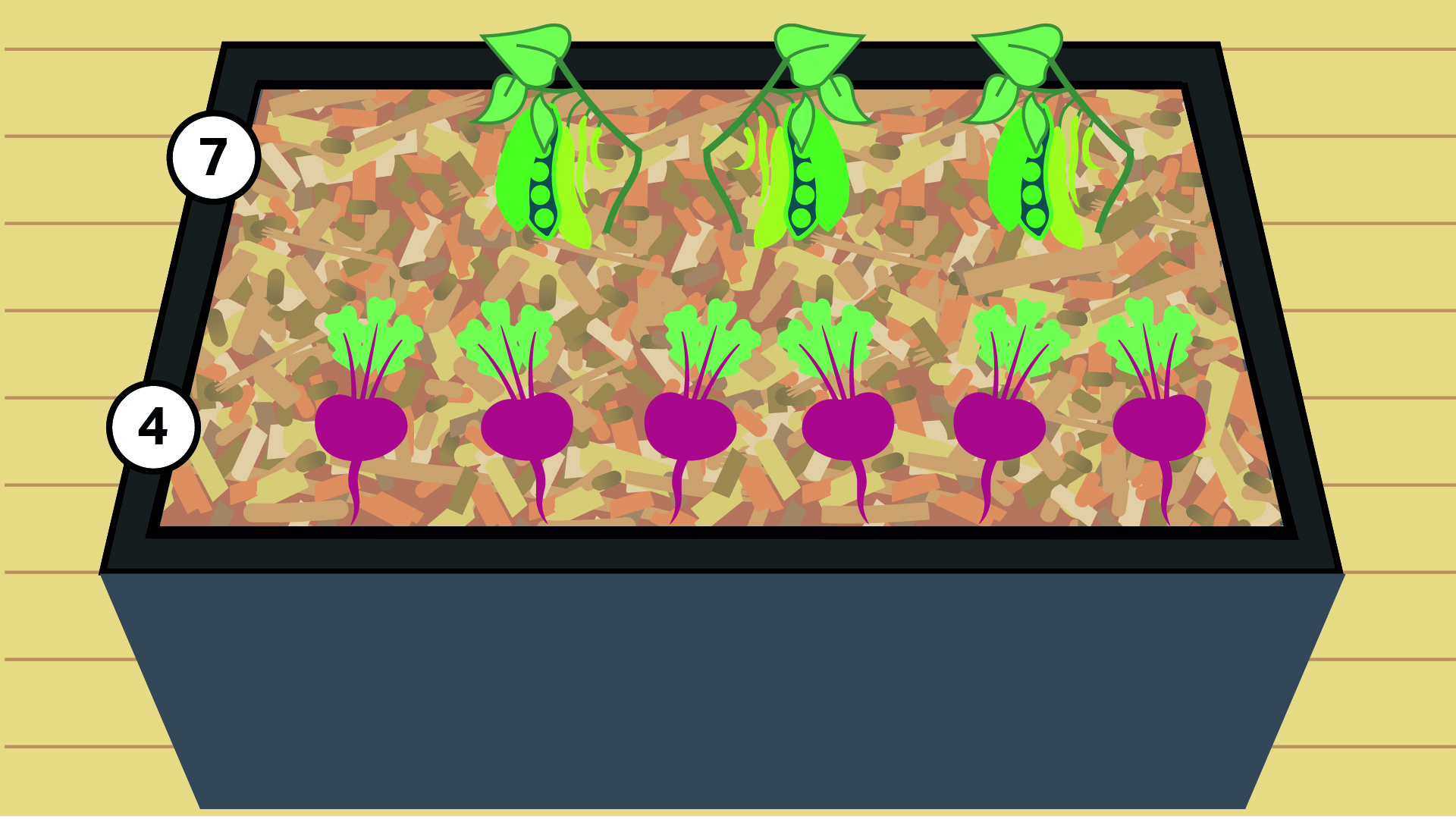
Combination B
7- Bean or broad bean ; 4 - Beetroot
Benefit of combination B:
- Nitrogen contribution to the soil thanks to legumes (beans or broad beans).
- Optimization of space by using the different plant sizes: above-ground growth for beans, deep growth for beetroot.
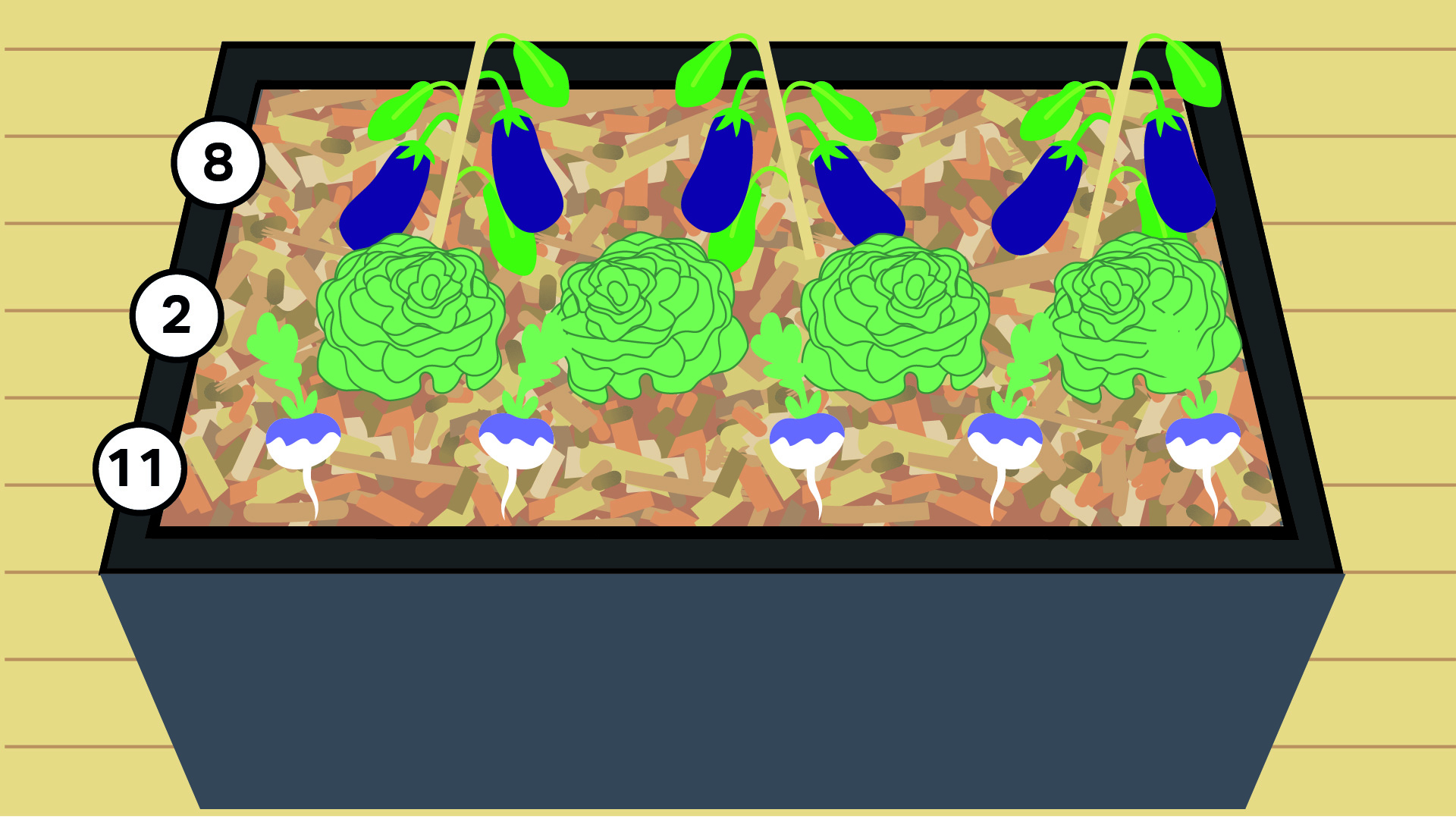
Combination C
8 - Eggplant ; 2 - Lettuce ; 11- Turnip (parsnip or black radish also possible)
Benefit of combination C:
- Optimization of space by using the different plant sizes: height for eggplants, depth for turnips.
- Variation of crop cycles: the lettuces will mature quickly and free up space for the growth of eggplants and turnips.
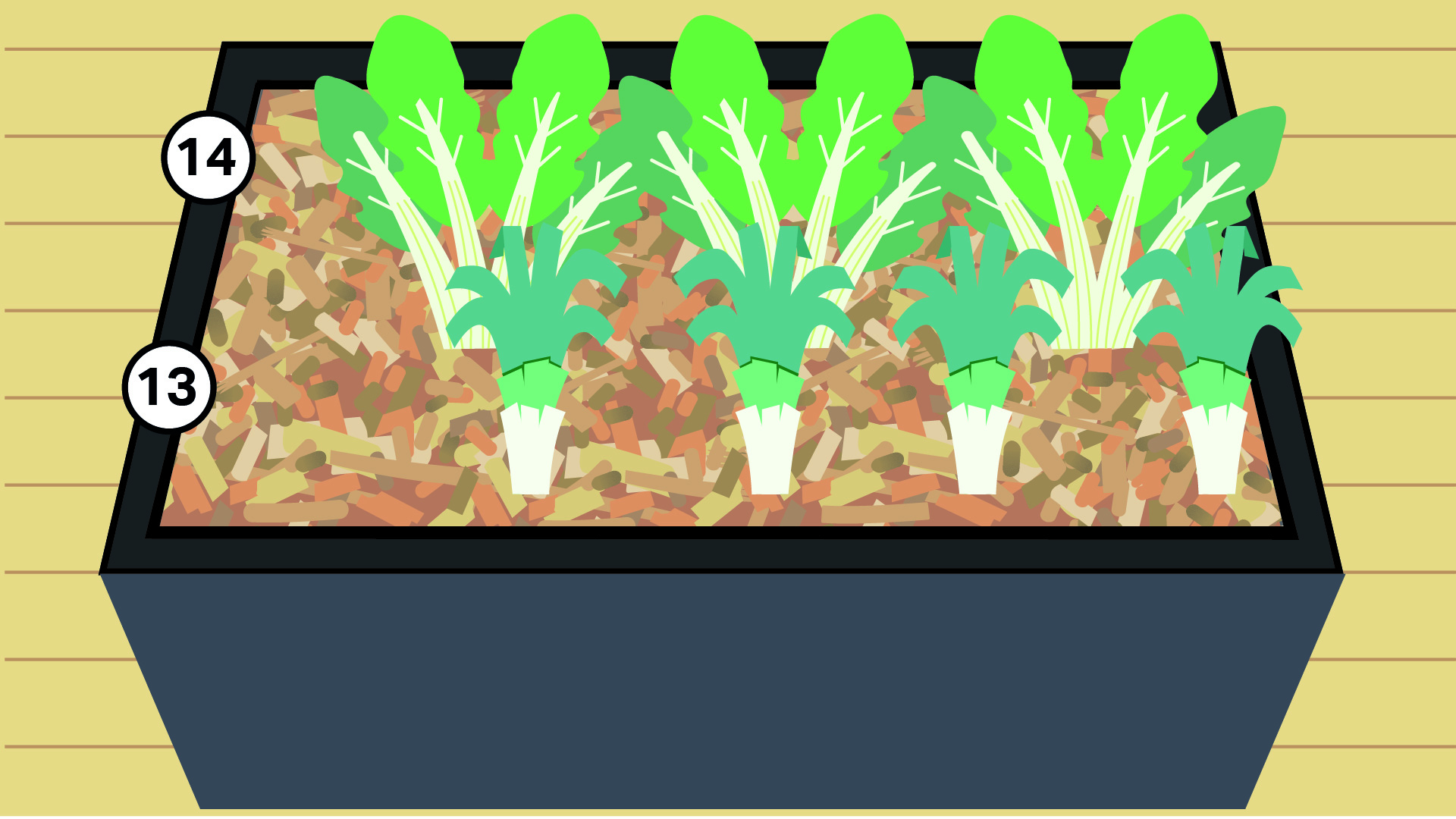
Combination D
13 - Leek ; 14 - Chard
Benefit of combination D:
- Optimization of space by using the different plant sizes: height for chard, depth for leeks.
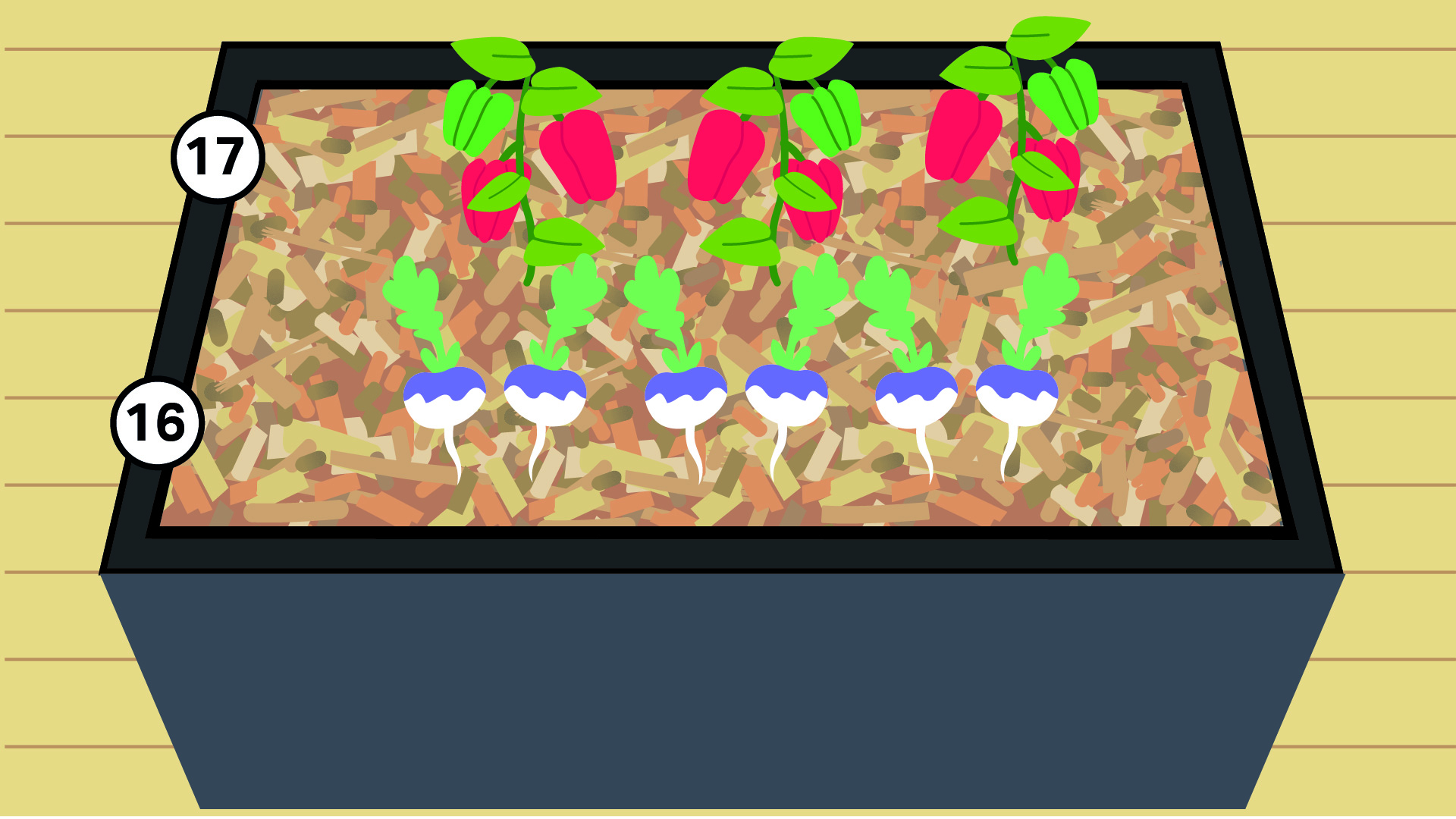
Combination E
16 - Pepper ; 17 - Turnip (parsnip or black radish also possible)
Benefit of combination E:
- Optimization of space by using the different plant sizes: height for peppers, depth for turnips.
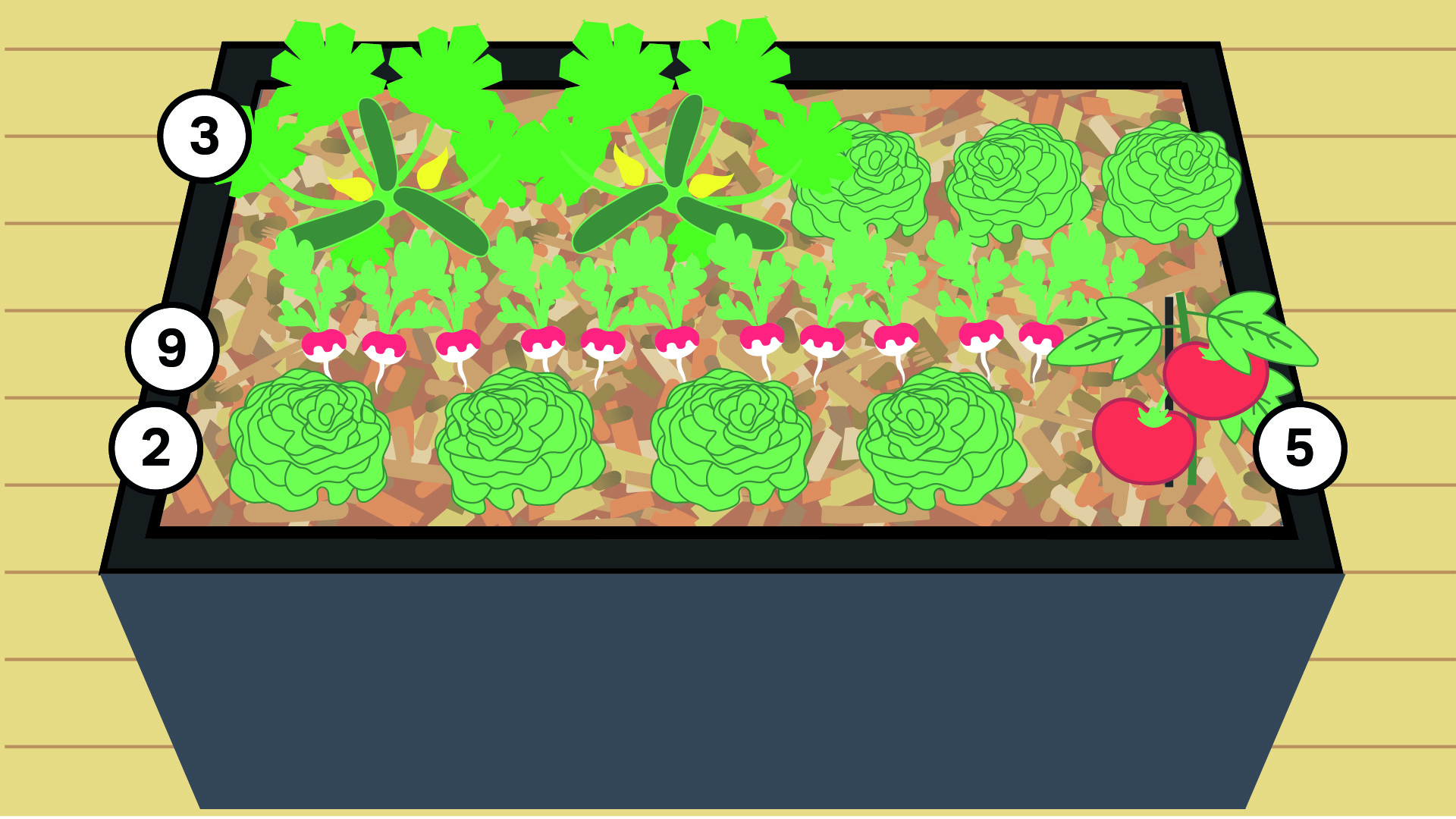
Combination F
3 - Zucchini ; 9 - Radish ; 5 - Tomato ; 2 - Lettuce
Benefit of combination F:
- Optimization of space by using the different plant sizes: radish < lettuce < tomato < zucchini
- Variation of crop cycles: lettuces and radishes will mature quickly and can be renewed. The growth cycle is longer for zucchini and tomato, but the latter will provide fruit throughout the season.
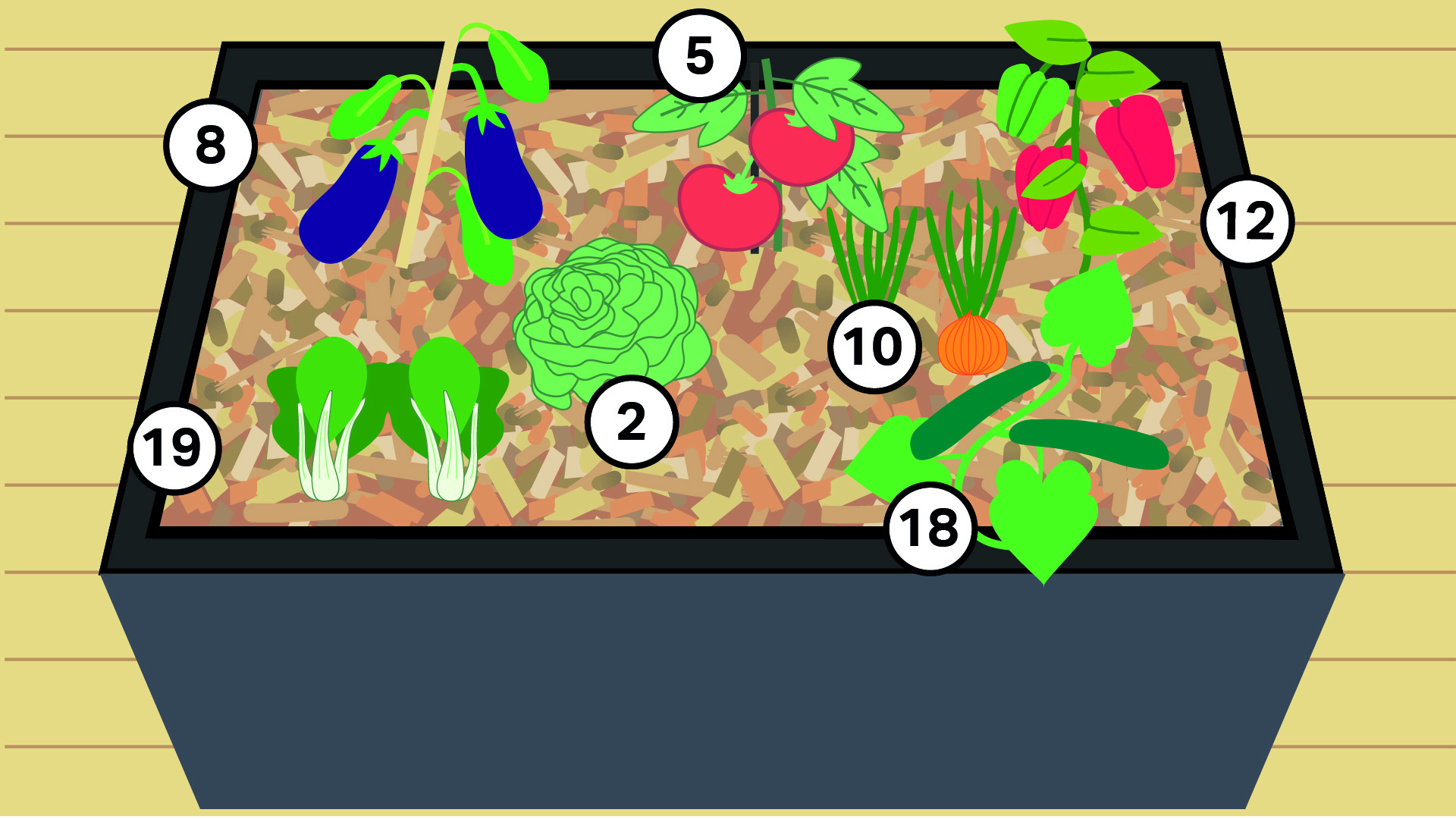
Combination G
8 - Eggplant ; 5 - Tomato ; 12 - Pepper ; 19 - Chard ; 2 - Lettuce ; 10 - Onion ; 18 - Cucumber
Benefit of combination G:
- Optimization of space by using the different plant sizes: onion < lettuce < chard < eggplant < tomato < cucumber
- Variation of crop cycles: continuous productivity of the bed throughout the season.