
cultiver-automne-hiver
Food self-sufficiency objective
- Depending on your geographical location, we recommend using the stove and horticultural lighting together to produce species suited to each season.
- This equipment will help you move toward food self-sufficiency from your 2nd or 3rd year of experience with the greenhouse.
From October to March, in Northern Europe, outdoor temperatures and the length of daily sunshine decrease. As a result, plant growth slows down or is even limited. It is important to choose plant species suited to this season. Thanks to the greenhouse, it is possible to continue production in the growing systems under certain conditions.
Essential parameters for plant growth in winter in the greenhouse1) Light (light intensity and radiation).
Plants need a minimum photoperiod of 10h of light each day with sufficient intensity to carry out photosynthesis.
In winter, in Europe, the daily length of daylight can drop to 8h with low intensity. Naturally, plants go dormant until spring.
To compensate for this reduction in light (quantity and intensity), supplemental photosynthetic LED lighting can cover up to 90% of daily needs.2) Air and fish tank water temperature.
Plants need a minimum temperature of 7-8°C to activate their metabolism. Below this threshold, root and plant development stagnates.
The water temperature must be kept above 0°C for the well-being of the fish and for the proper operation of the pump.
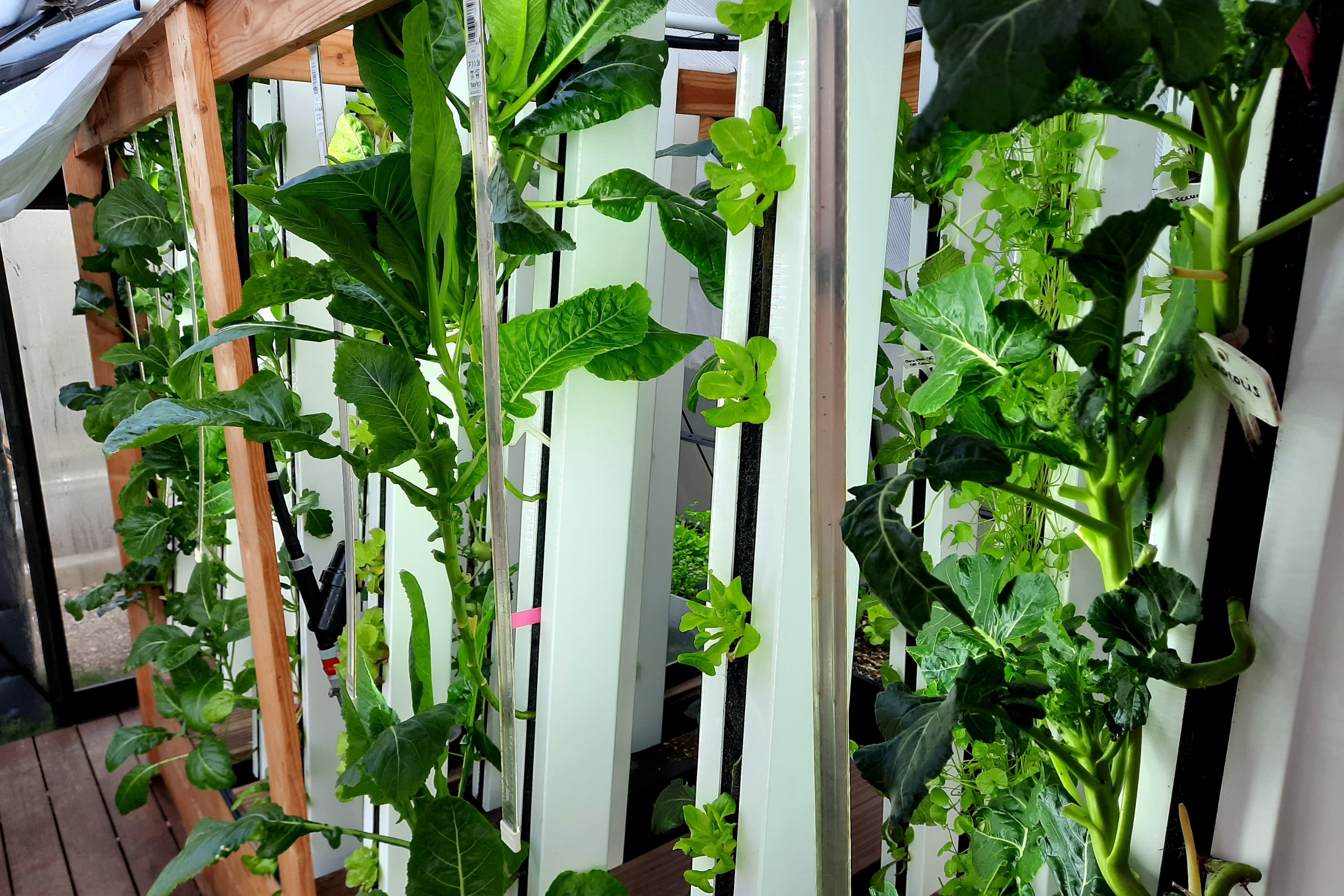
Tips for growing with peace of mind during the cold period
- Schedule the horticultural LED lighting.
- Start your heating equipment (infrared heater or stove), and place the insulating panels.
- Adjust the water flow rate of the towers and program the heating elements.
- Grow species suited to the winter season.
- Adjust fish tank fertilization.
- Reduce the amount of food distributed to the fish.
If you do not want to grow during winter, it is advisable to winterize your greenhouse.
Light management in autumn-winter
Temperature management in autumn-winter
Water management in autumn-winter
Winter adaptations
Winterizing the greenhouse: currently being written