
Plant a growing tower
Essential steps for vertical growing.
Important
- Check that the roots are securely sandwiched
- Do not let the water retention strip (white felt) stick out at the front of the tower, otherwise water may run onto the leaves
- Tilt the plant at 45° upward and let the root ball protrude by 2-3 mm.
- Make sure the dripper is correctly positioned toward the back of the tower
- Make sure the water jet at the top of the tower falls correctly onto the water retention strip
All types of substrate are compatible with vertical growing: soil/potting soil, rockwool, coconut fibre, peat, etc.
1. The steps
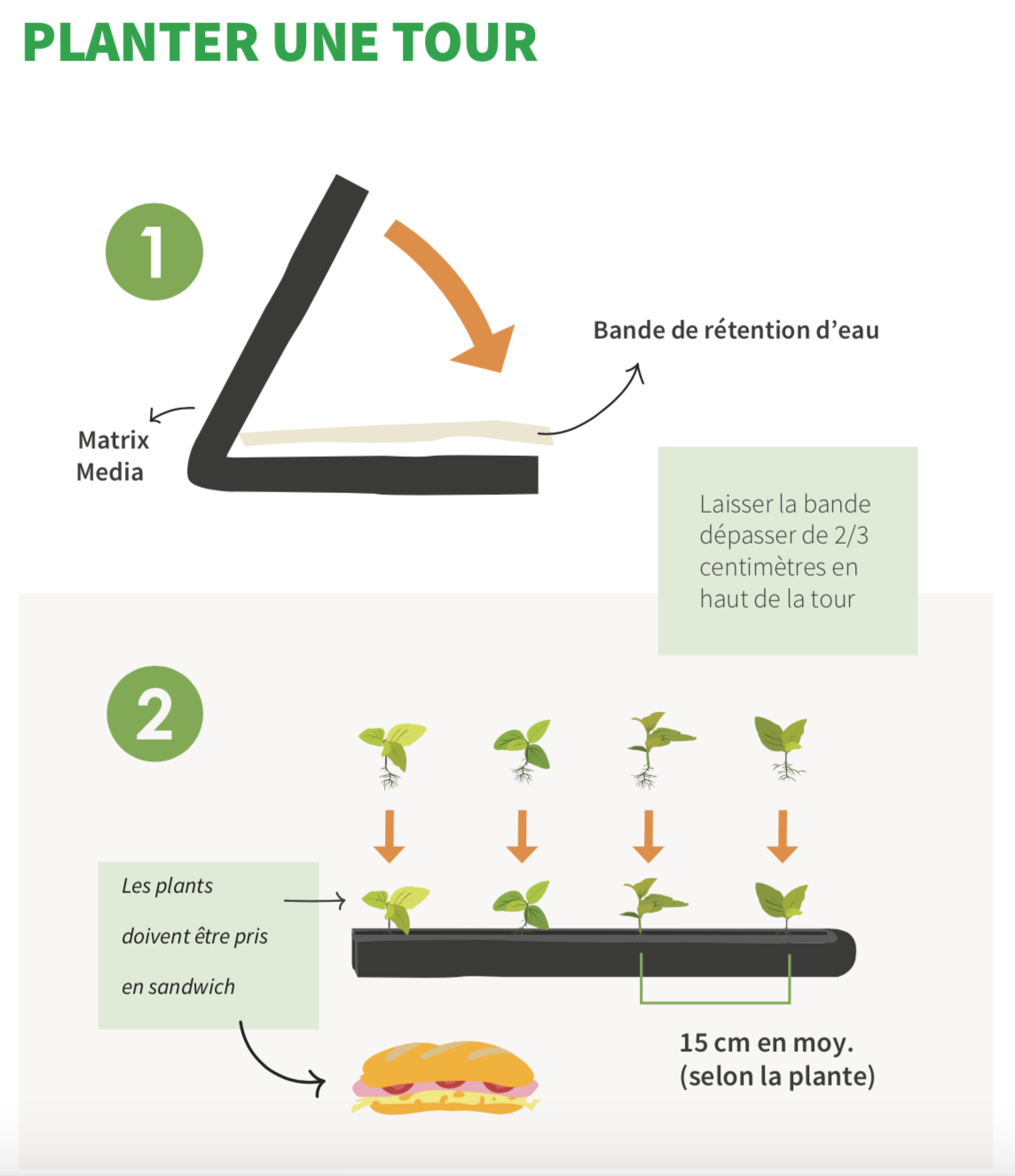
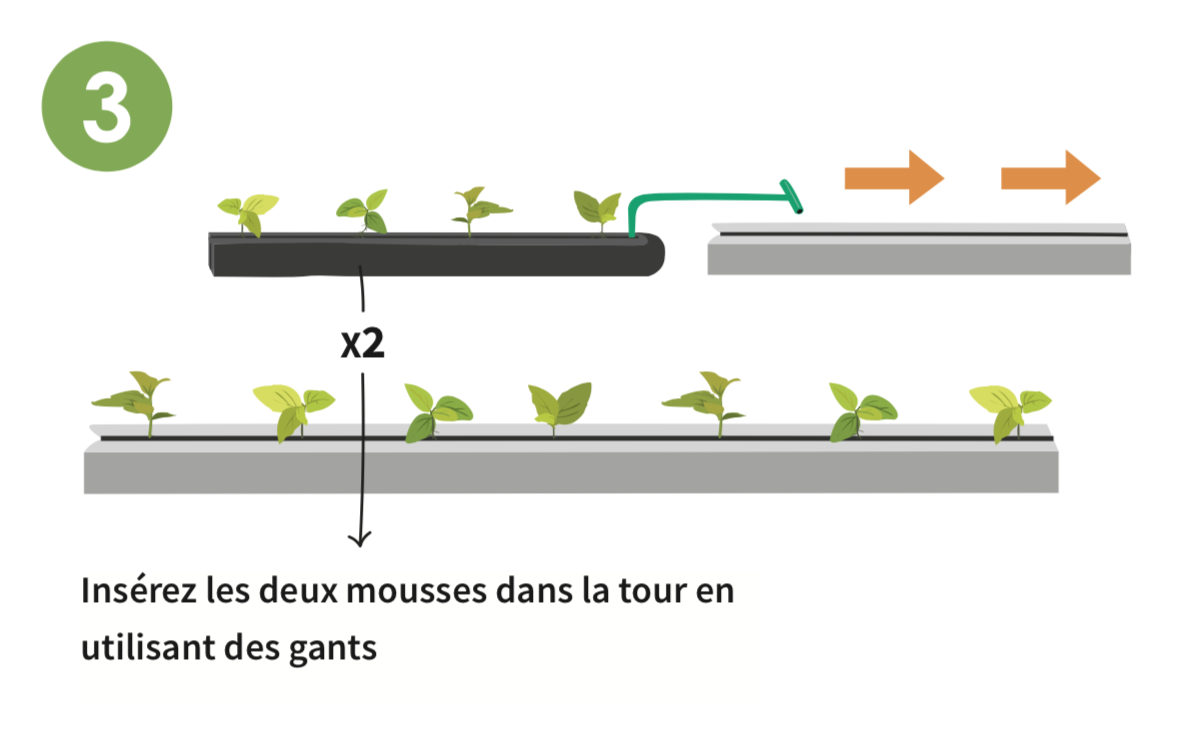
2. Number of plants per tower
Summer vegetables: 3 plants per tower
- Solanaceae: aubergine, pepper, chilli pepper, tomato
- Cucurbits: cucumber, gherkin, courgette, melon, watermelon
- Others: artichoke
1 in the top matrix and 2 in the bottom matrix
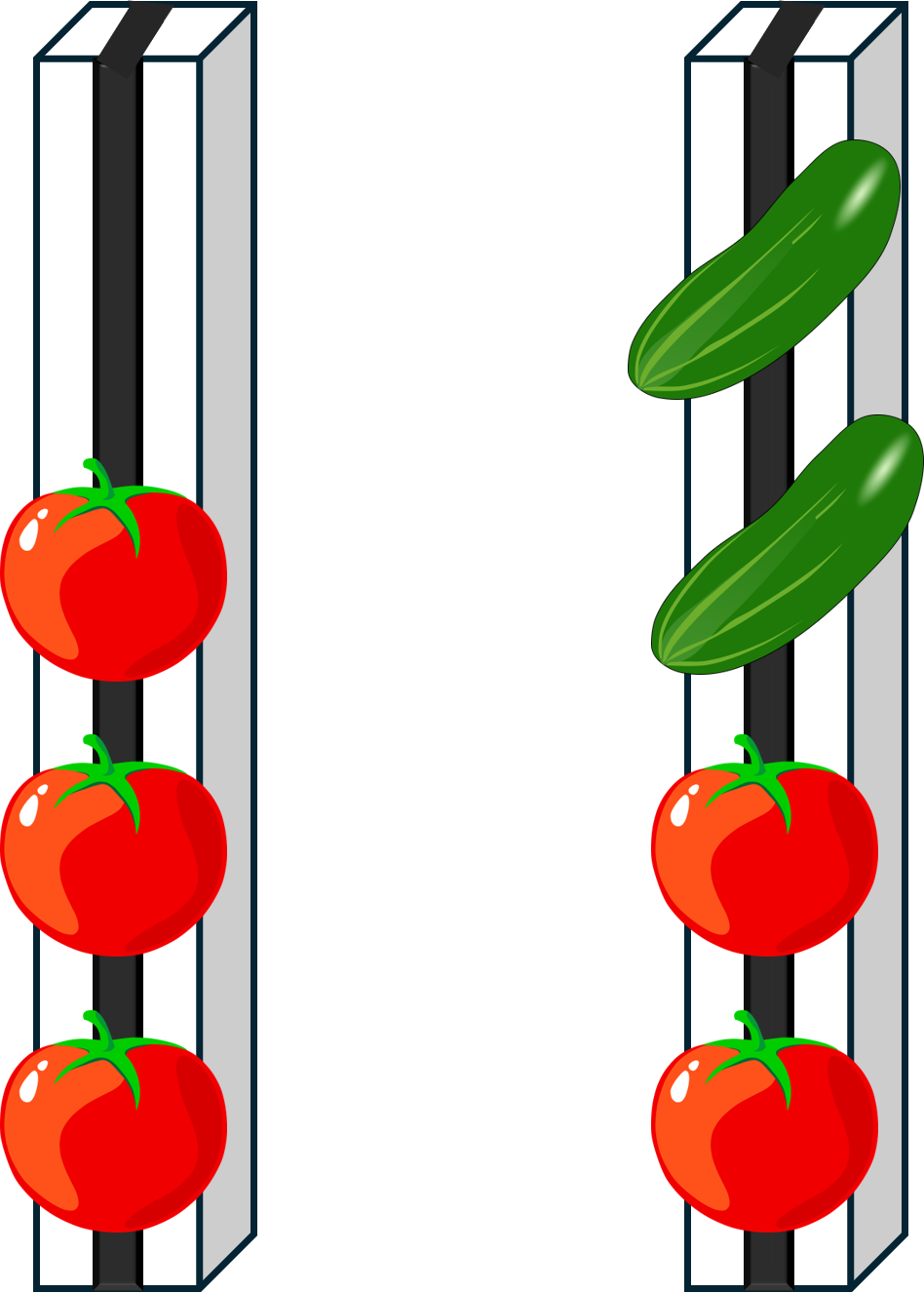
Illustration of planting summer vegetables in a tower: the last tomato plant must absolutely be placed at the bottom of the top matrix. Otherwise, it can be replaced by Cucurbits.
Leafy vegetables: 6 plants per tower
- Cabbages: pointed, curly, broccoli, Chinese, kale, cauliflower
- Swiss chard, celery
Lettuces, baby greens and others: 8 plants per tower
- Lettuces: batavia, oak leaf, salanova, head lettuce, romaine, etc.
- Chicories
- Baby greens: lamb's lettuce, mesclun, rocket, watercress, sorrel, purslane
- Others: kohlrabi, fennel, spring onions, spinach, broad bean, bean,
- Herbs: basil, dill, parsley, coriander, etc. .
Small plants such as lamb's lettuce or onions can be planted up to 20 over the full height of the tower.
No root vegetables in towersIt is not possible to grow certain vegetables in towers: potato, sweet potato, Jerusalem artichoke, carrot, turnip.
Growing radishes in towers is possible.
3. Positioning the towers
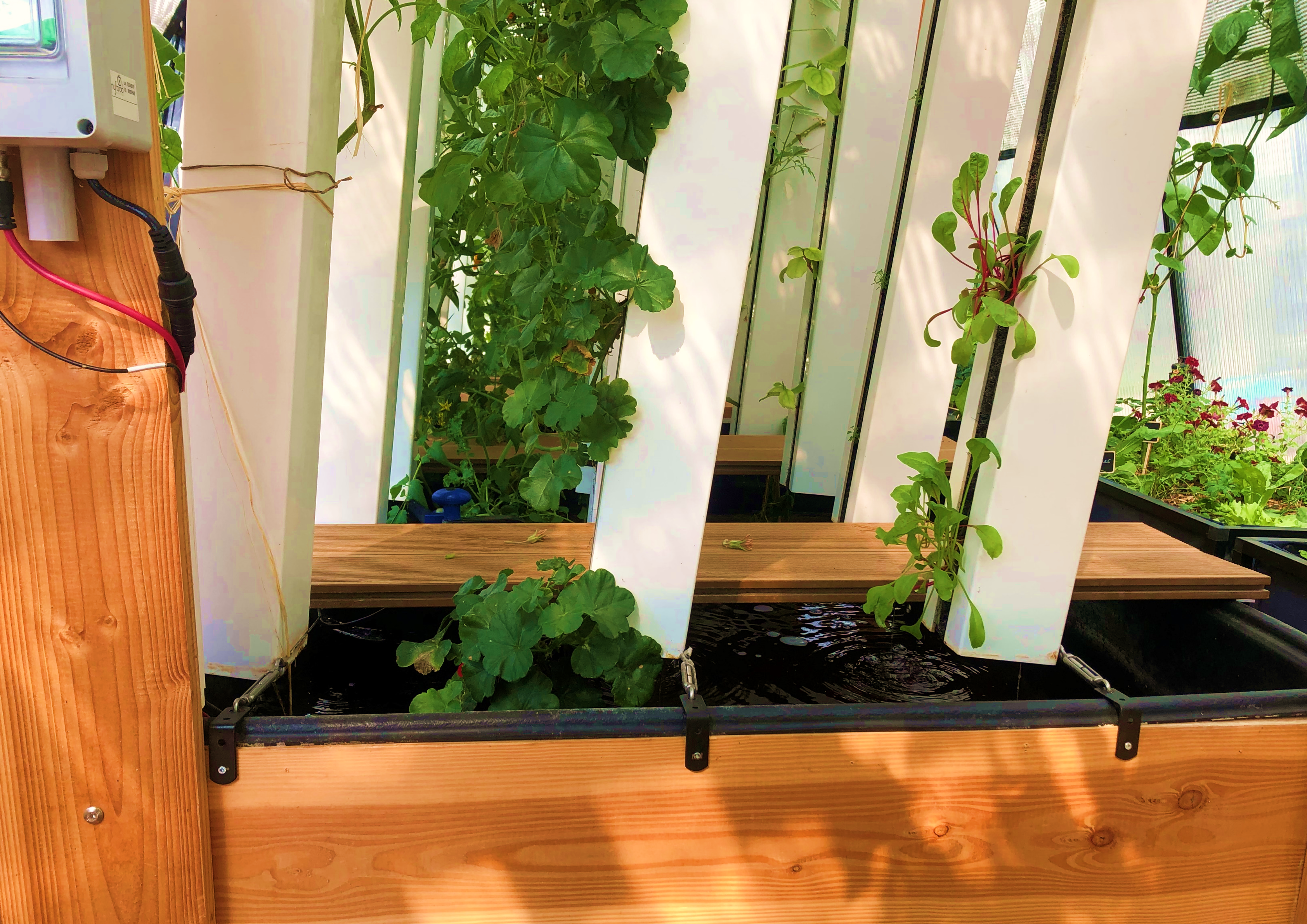
For optimal irrigation of the plants during cultivation, make sure each tower is slightly tilted. The base of the tower is positioned slightly forward while the top is positioned further back.
4. Plants not to place in towers
The plants not to place in towers are:
- Peas
- Squashes: these plants need a dry spell to form fruit
- Courgettes: these plants have a hollow stem. The stem will struggle to support the weight
- Certain tomato plants, especially those that produce large fruits,
- Purple kohlrabi is temperamental (green kohlrabi works in towers)
- Large cabbages (cauliflower, Brussels sprouts, Savoy cabbage,)
- Herbs such as thyme, tarragon, mint etc. It is difficult to recover the matrices afterwards
- What about strawberry plants: not all varieties work. The continuous presence of water in the towers can cause the roots to turn brown.