Temperature management
From October to March, keep producing with peace of mind.
The greenhouse is designed to produce fruit and vegetables all year round. Nevertheless, air temperature is an important factor in ensuring satisfactory production in winter. Depending on the greenhouse orientation and the desired crop yield level, it is recommended to install a heating system.
1. Program your heating equipment
Minimum daytime temperature = 7°CTo ensure growth during winter, plants need light and a minimum air temperature of 7°C in the greenhouse.
It is not necessary to maintain a temperature of 7°C at night. It is recommended to heat occasionally at night to prevent the air temperature from dropping below 0°C.
The objective of the heater is to heat optimally to avoid excessive electricity consumption.
1. 1. The infrared heater
This long-wave infrared heater works by emitting targeted heat, directly absorbed by surfaces and plants, without primarily heating the surrounding air. It is controlled by an integrated electronic thermostat. The set temperature and heating power can be adjusted via an infrared remote control, allowing precise control of the air temperature in the greenhouse.
To ensure optimal efficiency, it is recommended to configure it at maximum power, in order to compensate for the heat losses inherent to a glazed structure, particularly during cold nights.
We recommend setting the heater temperature to 12°C at all times (without time programming). The integrated electronic thermostat stops heating when the temperature exceeds 12°C, thus optimizing energy consumption.
The heater's large surface remains warm for some time after it is switched off.
1. 2. The heating elements
Heating elements are useful when starting cycling in winter, to support the development of bacteria. This will not occur when temperatures are below 10°C.
When the water is heated, mineral uptake is improved.
In aquaponics, it also helps maintain higher fish activity and therefore promotes waste production and nitrogen release.
It is possible, and strongly recommended, to put the heating elements on a timer to avoid excessive electricity consumption.
| Temperatures | Programming of the heating elements at 20°C |
|---|---|
| Air temperature between 7° and 10°C at night | 0h to 6h |
| Air temperature between 3 and 7°C at night | 17h to 8h |
| Zero temperature* | Continuous |
Extreme coldDuring periods of extreme cold, it is preferable to suspend use of the greenhouse to avoid additional energy costs. It is important to set up seasonal, cold-resistant crops to benefit from vegetable production from the greenhouse during cold periods.
2. Install the removable insulating panels
More info about the composition of the panels on our dedicated page.
Insulation on the north side of the greenhouse is improved through the use of polycarbonate insulating panels. These panels are not thermal conductors. Heat loss is drastically reduced.
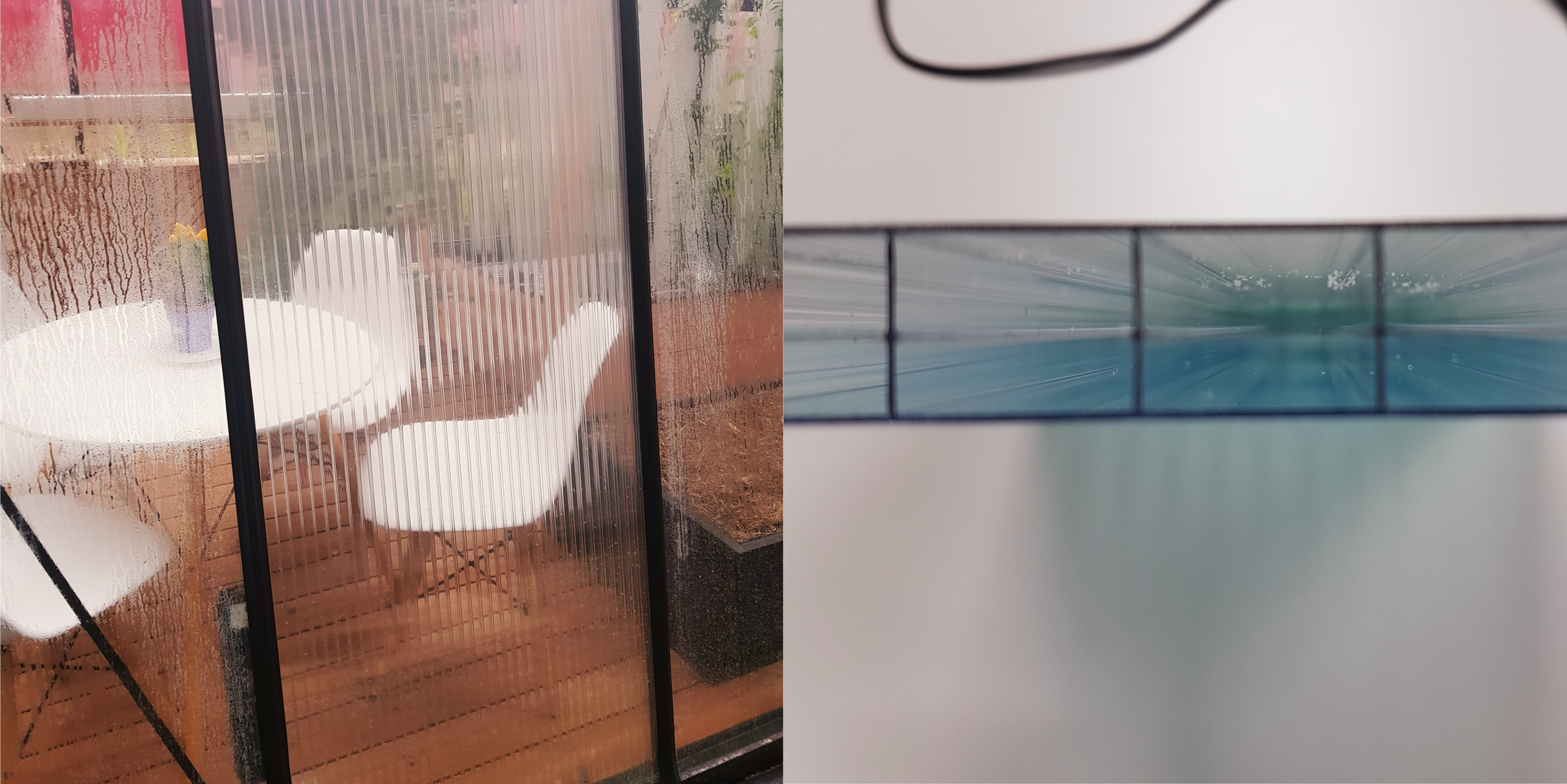
A gauche : installation d'une plaque isolante. A droite : plaque isolante de profil
Install the insulating panelsThe panels have the same dimensions as the panes on the side faces of the greenhouse. They are inserted underneath the glass panes.
How to install them in 20 min flat:
- Remove the seals around each glass pane to be insulated
- Using a suction cup, remove the pane
- Insert the insulating panel into the slot
- Reposition the pane and the seals
Once installed, the panels remain in place until spring, then are stored until autumn.
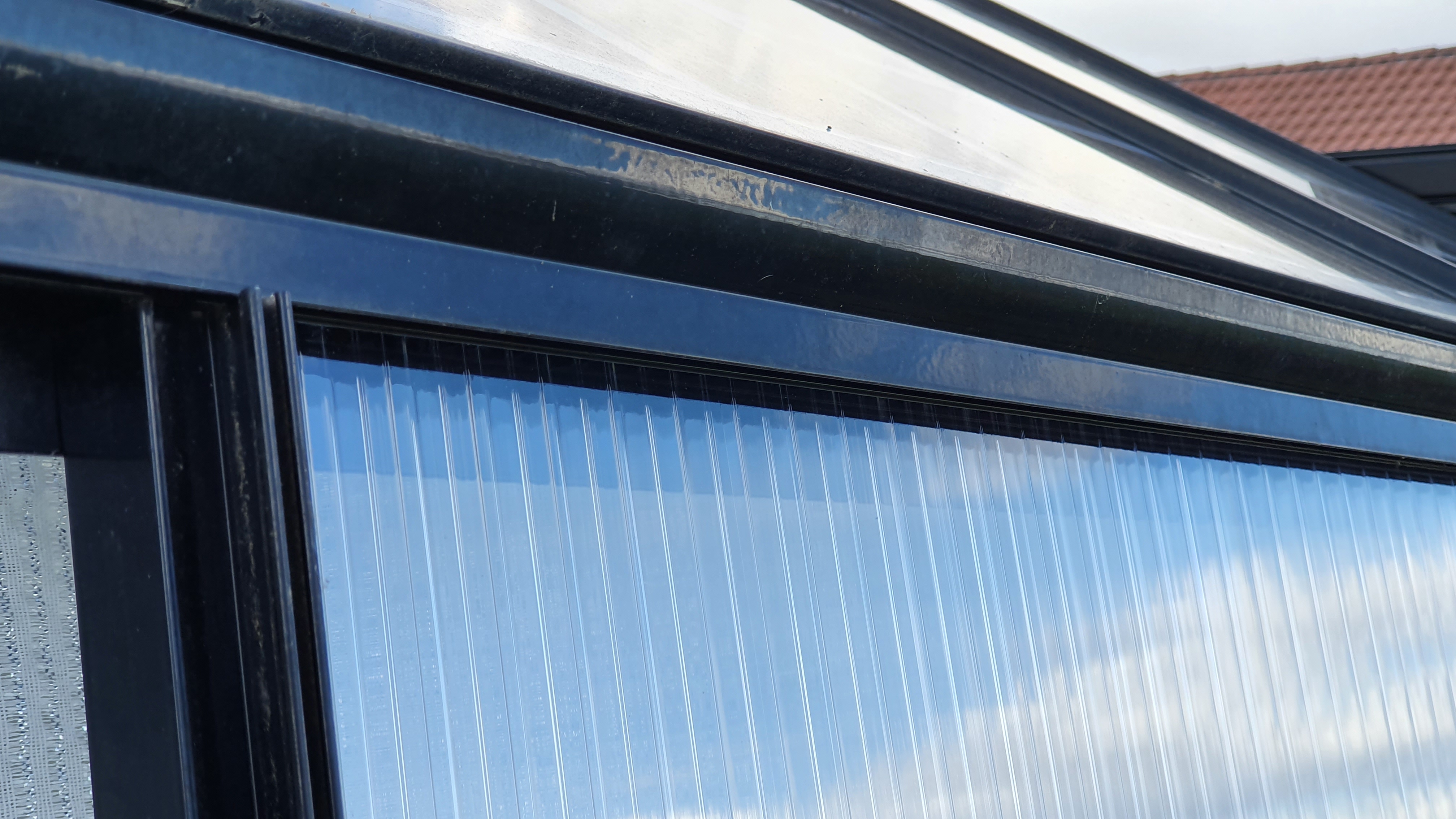
Point 3) Insérer la plaque isolante dans l'emplacement
3. Reduce heat leaks
The greenhouse is an insulated environment, but it is not 100% airtight. In the middle of winter, if temperatures drop below -10°C, it is advisable to seal the openings with bubble wrap in order to protect your equipment if you are growing.
It is recommended to check that all leakage points are properly fitted in place: doors, vents. A simple step to help you save energy.
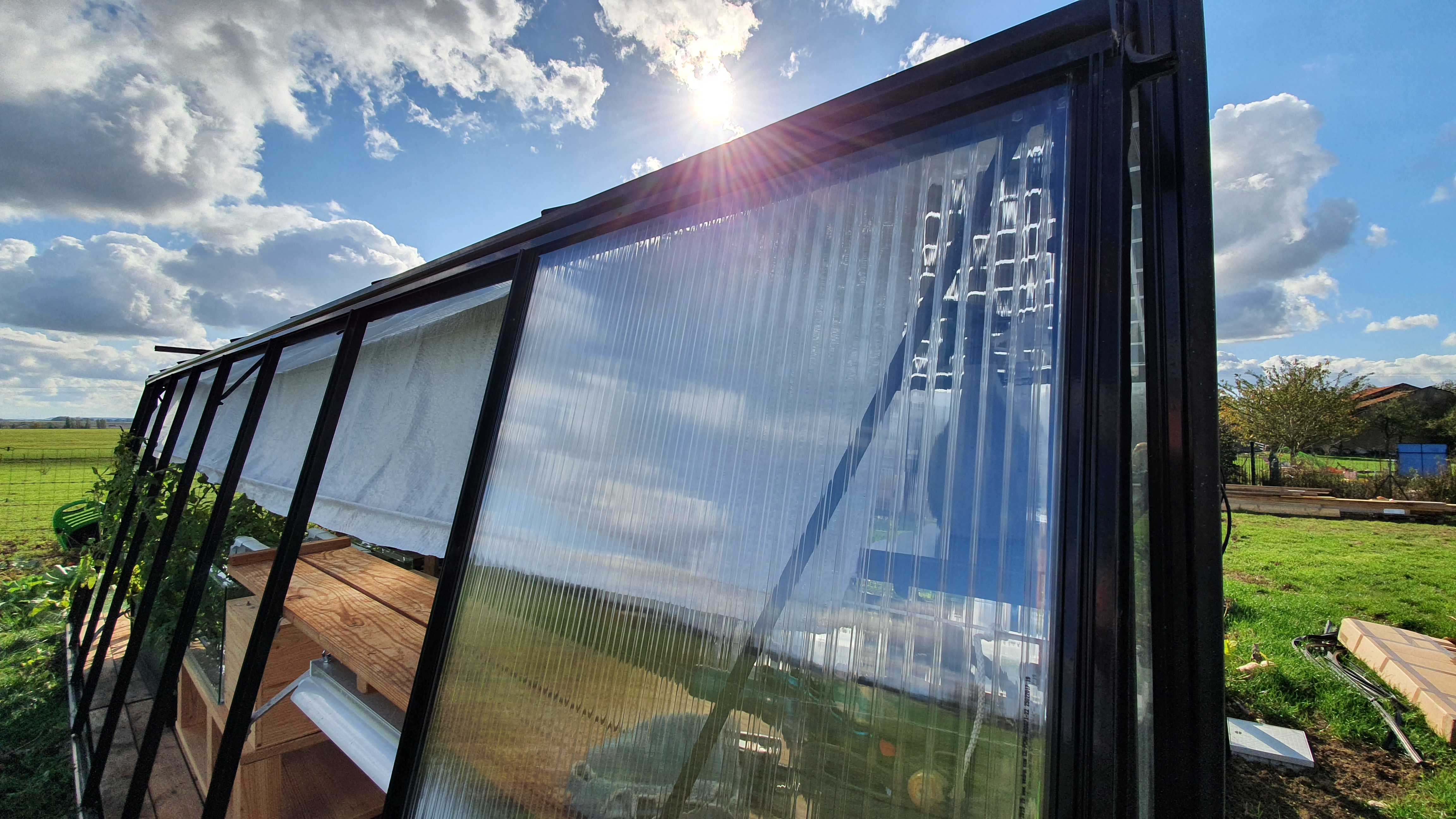
Is the greenhouse equipped with the stove? You need to deploy the thermal screen!It is recommended to deploy the shade cloth in the greenhouse in winter. Here are the advantages:
- Reduce the total volume of the greenhouse.
- Limit heat loss through the top of the structure.
- Protect crops from frost
- The reduction in light will be compensated by the horticultural LED lighting.
- Optimize the performance of the pellet stove.
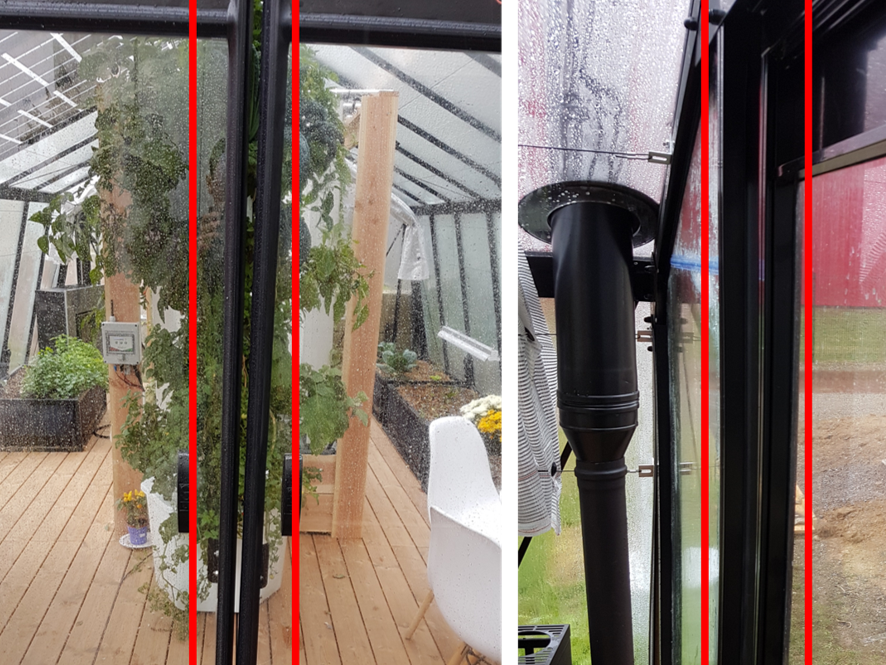
To avoid leaks, add expanding tape seals around the doors to limit heat loss.