
hiverner-la-serre
Winter is long and, in many places, very harsh. It is completely understandable if you do not want to heat your greenhouse in winter, whether for cost or energy-saving reasons. In this case, the greenhouse will not reach the temperatures needed to grow during the cold season. You can then pause it until spring.
The instructions to follow will not be the same depending on whether your greenhouse is in aquaponics, with fish, or in bioponics, without fish.
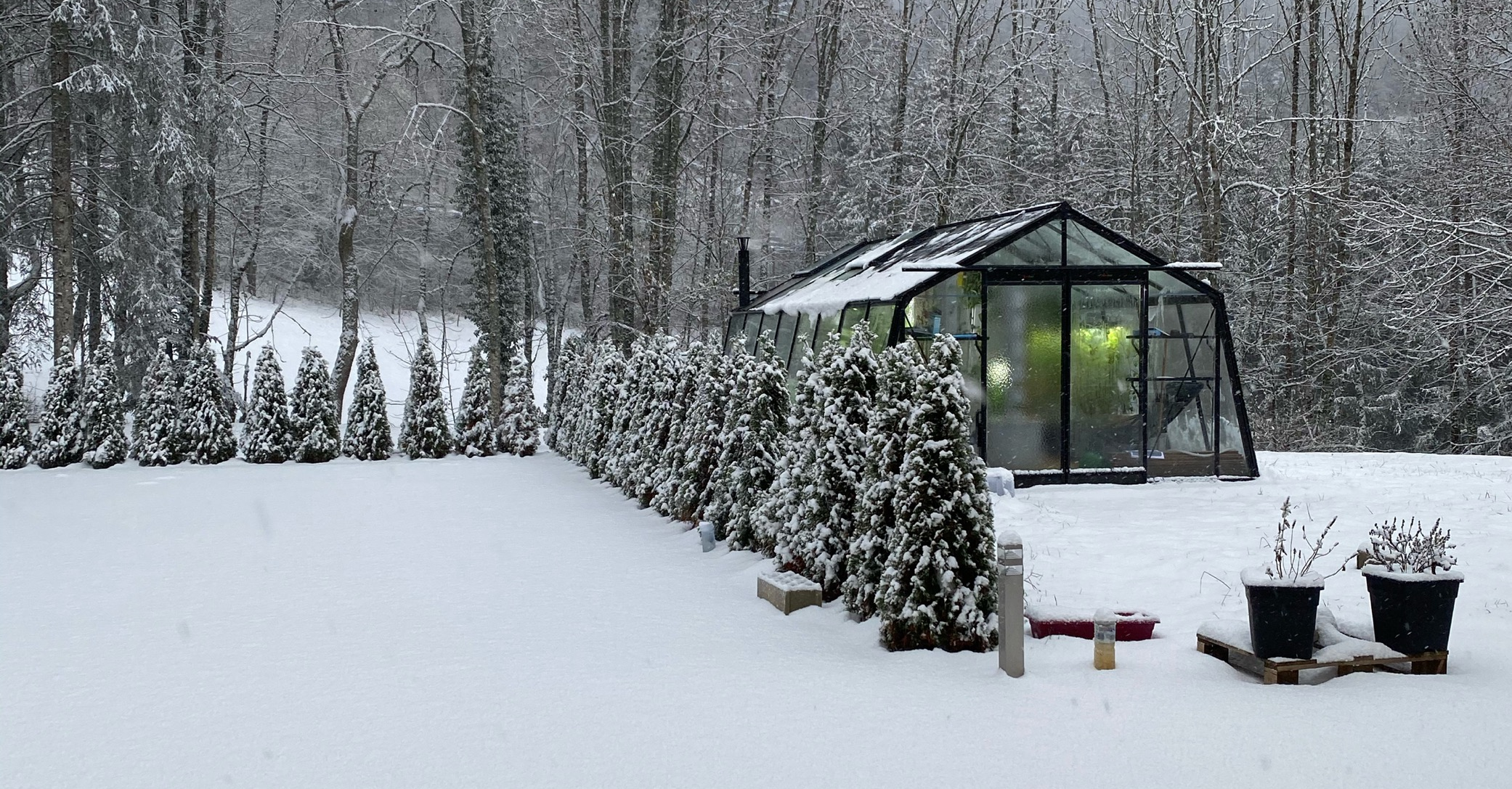
Get your greenhouse ready before winter
Just as you would put away your summer clothes when winter approaches, we recommend putting away and cleaning the greenhouse before a long period of non-use.
1. Empty the greenhouse: you can empty the vertical growing towers and the permaculture beds after your last harvest.
2. Storage and cleaning: this is easier when the greenhouse is empty. This helps you avoid unpleasant surprises and start again on a good footing when you want to resume growing in spring.
Good to knowTo clean your vertical growing towers and the structure, you can use a scouring sponge and white vinegar diluted in water, while protecting your hands with gloves, either latex or household gloves.
3. Rehang the vertical growing towers, with the matrices and the felt liners inside. If you are in bioponics, everything will be ready for your spring crops, and if you are in aquaponics, this will help filter the water for the fish.
4. Remove the shade cloth (if you have not already done so in autumn).
5. Remove the vent actuators: this will prevent even more cold from getting in.
6. Leave the shade boards in place: this helps prevent algae from developing.
7. Install insulating panels or bubble wrap on the panes if you want to insulate the greenhouse better.
The following steps depend on whether your greenhouse is in bioponics or aquaponics.
Aquaponics greenhouse
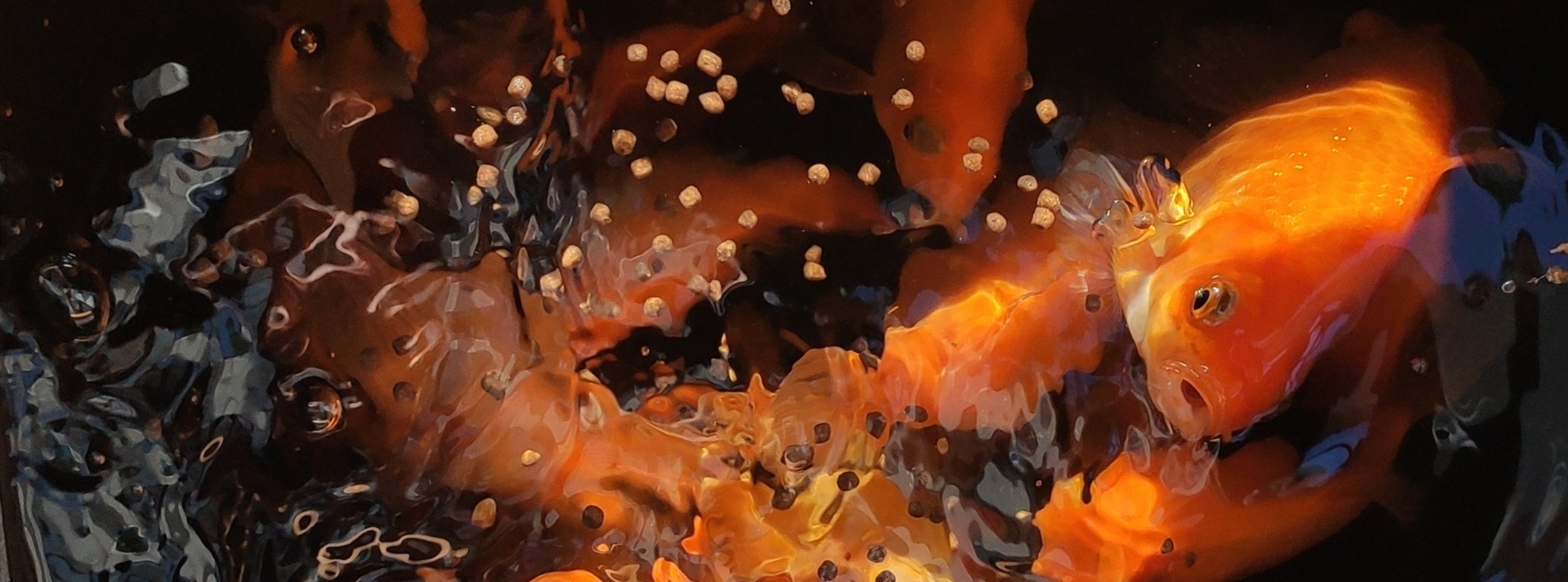
An aquaponics greenhouse means you also need to look after the well-being of the fish as well as your plants. Your fish will not hibernate. This means you must continue to monitor their health even during the cold season. It is therefore strongly recommended to:
1. Leave the pump and the air pump / aerator running: even if there are no more plants, this allows the water to be filtered through the matrices.
2. Install 300W aquarium heaters in the fish tanks: as stated in the WIKI article [Getting started with aquaponics], the water temperature must not drop below 2°C, for example for goldfish.
3. Gradually reduce the amount of fish food. As temperatures drop, fish need less energy.
- In September, reduce the portions per meal.
- In October, switch from 3 meals per day to 1 meal per day.
Example:
| Feeding times | August | September | October: first half | October: second half |
|---|---|---|---|---|
| 9 h | F01 | F01 | ||
| 14 h | F02 | F01 | F01 | F01 |
| 18 h | F02 | F01 | F01 |
Bioponics greenhouse
In bioponics, once all the plants have been removed, the tanks are no longer used for anything. You can then, if you wish, carry out the following steps:
1. Empty the tanks: this prevents the water from remaining stagnant all winter and algae from developing in it.
2. Clean the tanks: if you wish, you can take the opportunity to clean the tanks and remove any algae biofilm that may have built up on the edges.
If you do not want to empty your tanks, you can:
1. Leave the pump and the air pump / aerator running: this prevents the water from becoming stagnant.
2. Leave the valves open above the vertical growing towers so that the water circulates better.