
Growing tubers
Definition and characteristics
A tuber is a plant structure located on a root, a rhizome or a stem and considered a storage organ. Tubers are generally rich in carbohydrates such as starch, inulin, or sucrose.
There is a wide diversity of edible tubers used in the human diet. Among the best-known and most widely consumed tubers are:
- Root tubers such as carrots, parsnips, sweet potatoes, etc.;
- Stem tubers such as potatoes and Jerusalem artichokes;
- Hypocotyl tubers such as turnips, rutabagas, kohlrabi, etc.;
- Mixed tubers such as beetroot or radishes.
NoteThe potato is the most widely consumed tuber in the world. It is the most productive food crop. It is a source of carbohydrates, proteins and vitamins.
Growing potatoes
The key steps for growing potatoes:
1) Potato germination
Let the potatoes sprout in the light, in a dry and ventilated place. If a sprout is present, place it facing upward. Germination lasts between 2 and 4 weeks. The potatoes are ready to be planted as soon as the sprout measures about 2 cm.
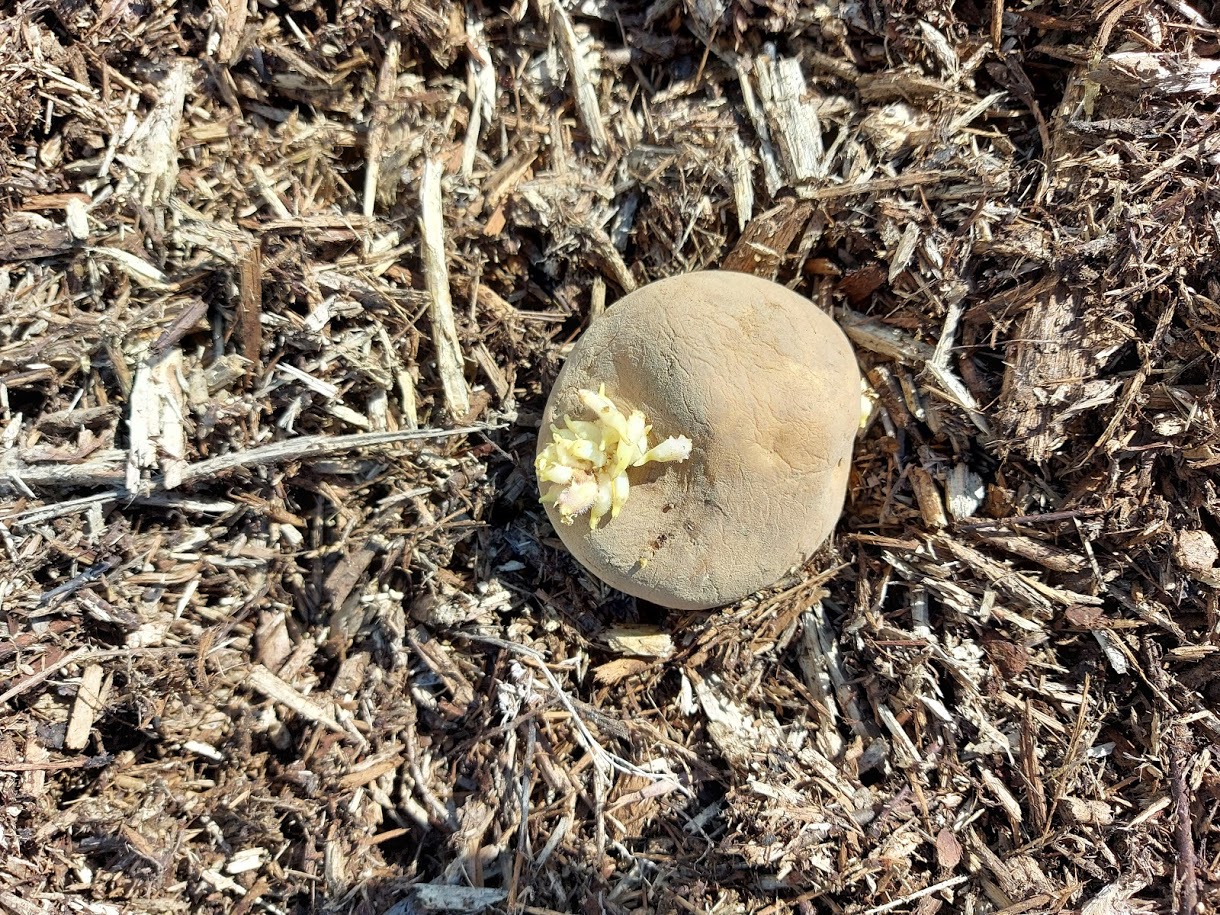
Sprouted potato tuber
Good to knowFor greater ease, you can place each tuber in an empty egg box or in a crate, without stacking them.
NotePotatoes are planted from March to April. The first leaves take a few weeks to appear. Once they emerge from the soil, they are sensitive to frost, which will delay growth. To reduce the risks, you can earth up the first leaves if temperatures drop too much.
2) Preparing the potato pot (optional)
If you have a potato pot, first place a layer of clay pebbles, then put the removable section back on top. Add vermicompost and potting soil up to the mark indicated by an arrow in the following photos. Mix.
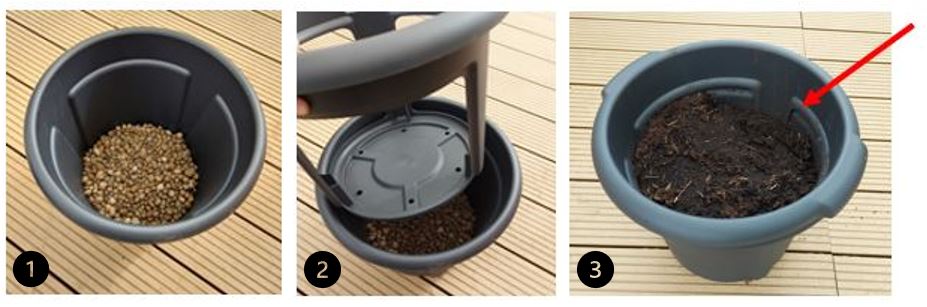
- Arranging the clay pebbles in the potato pot
- Installing the removable section
- Adding a mix of potting soil and vermicompost up to the mark
3) Placing the tubers
Dig two holes about ten centimetres deep in the bed, then place the tubers in these positions. Cover them with soil, then water.
Excess water is harmful to potatoesWater preferably in the evening, when the substrate becomes dry. Avoid wetting the leaves to limit the appearance of fungi.
Good to knowYou can water the plants with water from aquaponics filters for better yield.
4) Earthing up the potatoes
After a few weeks, the first leaves may appear. When the plant reaches about ten centimetres in height, use potting soil to earth up the base. This consists of bringing soil along the shoots to form a small mound.
NoteEarthing up helps keep the plant firmly in the soil. It also helps prevent frost risks if the crop is grown outdoors.
5) Harvesting potatoes
Harvest the potatoes when the foliage has completely yellowed, about 3 months after planting. This growing time may vary depending on the varieties used.
If you have a potato pot, lift the removable section and access the tubers directly.
6) Storage
Potatoes are best stored in a dry and ventilated place. As light activates the germination process, it is recommended to store them in the dark.