Pollination of summer vegetables
Ensure good yield
Helping fruit development
There are different types of sexuality in plants. Most plants are hermaphroditic, meaning they have bisexual flowers, both male and female. Asparagus and kiwis, for example, are dioecious, so the plants are either female or male. Female flowers are found only on female plants and male flowers only on male plants. Although a few wild cucurbit species are dioecious, most cultivated species are monoecious, such as cucumbers, gherkins, squash, courgettes, melons and watermelons. This means that one plant bears both male and female flowers, which is the case for the cucurbits supplied in the kits available on the shop.
For fruit to form, the female flowers must be pollinated. In nature, pollinating insects such as bees, bumblebees, etc. take care of this work. However, in greenhouses these insects are less present than outdoors because it is a partially enclosed environment.
Recognizing male flowers and female flowers
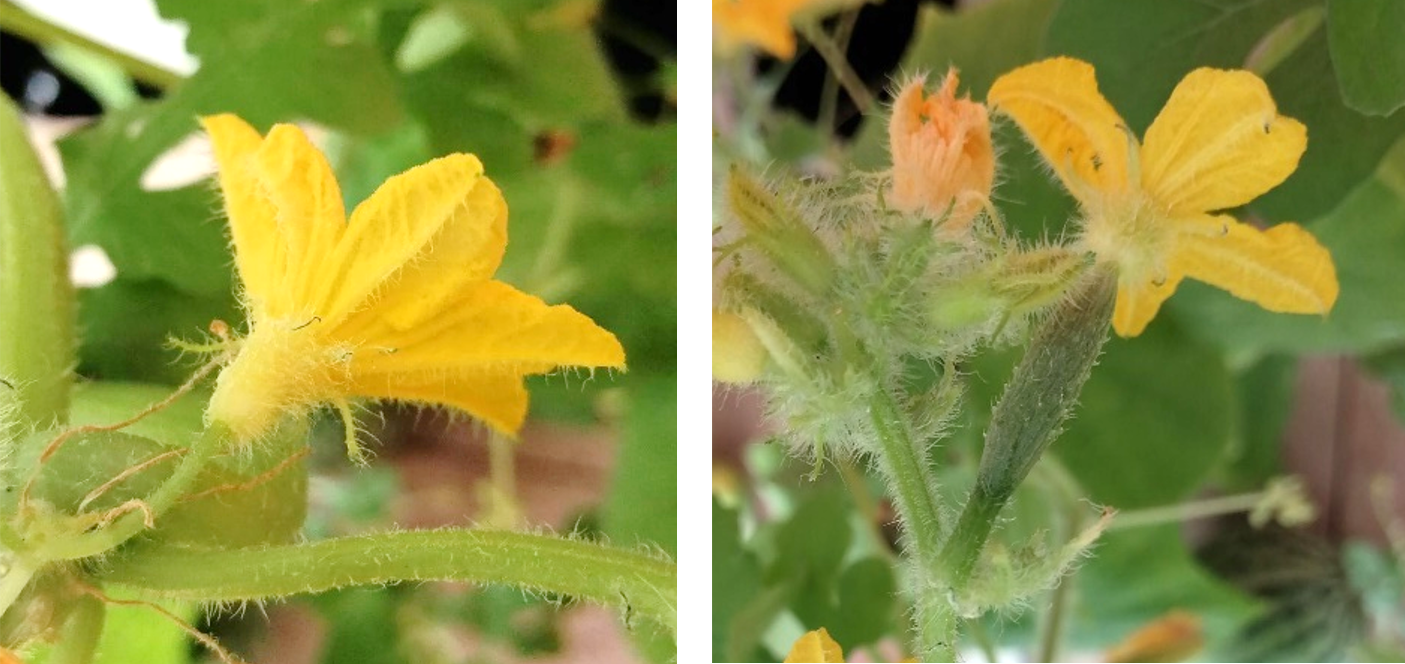
Figure 1: Cucumber / gherkin flowers. On the left, a male flower and on the right, a female flower.
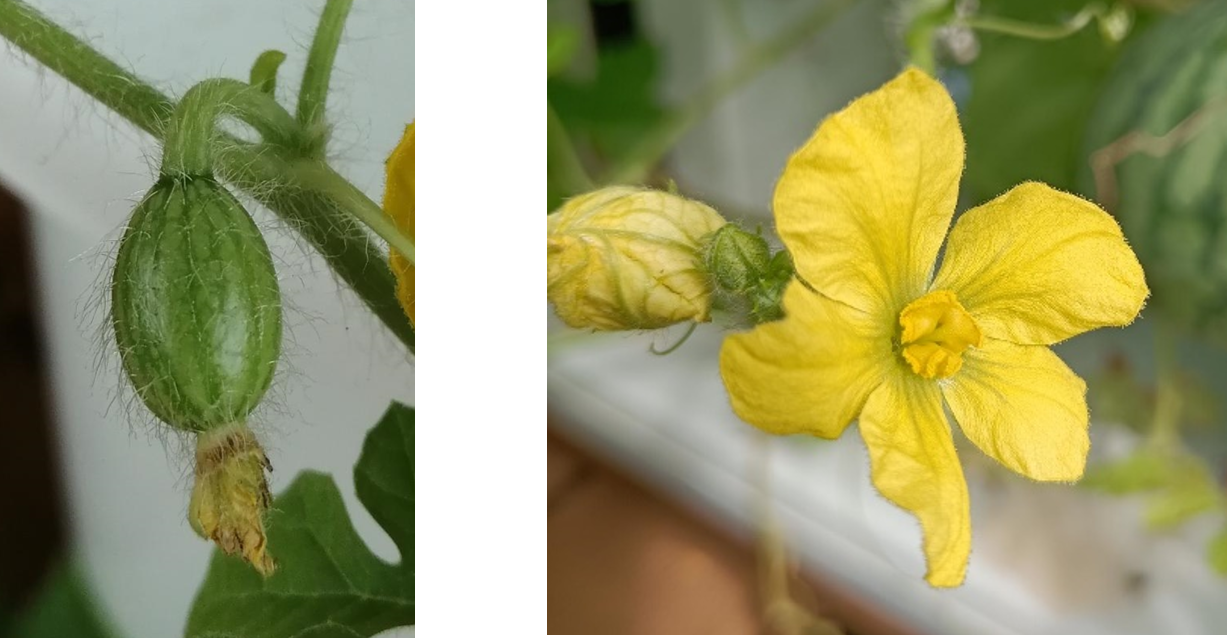
Figure 2: Watermelon flowers. On the left, a female flower that has already been pollinated, the fruit has started to develop and, on the right, an open male flower.
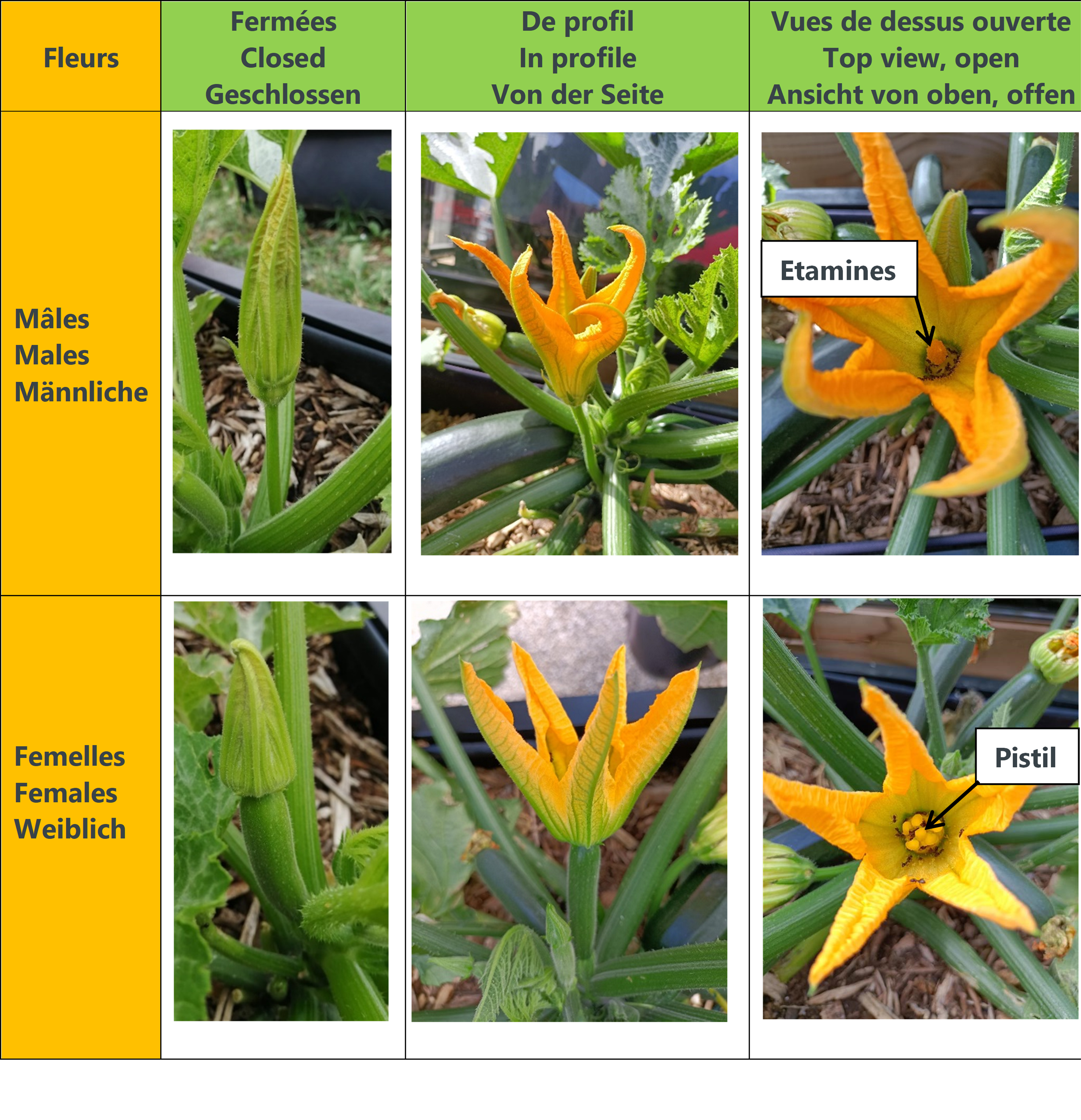
Figure 3: Photos of courgette flowers.
Timeline of flower appearanceMale flowers generally appear first, then there is an alternation of female and male flowers, and after that female flowers become predominant.
For melons, the male flowers are located on the main stem and the female flowers grow only on the secondary stems. Near these female flowers, several male flowers also develop.
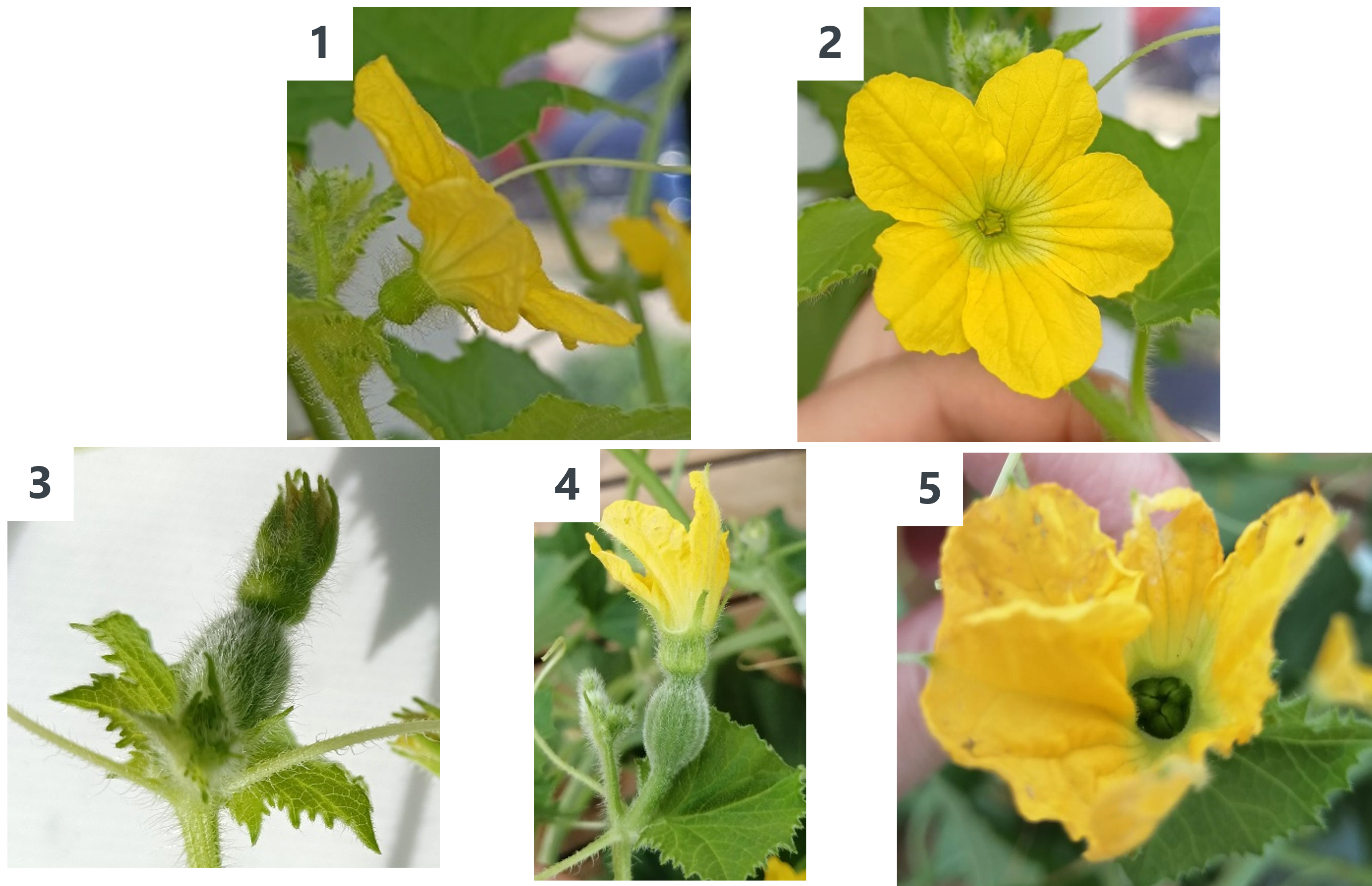
Figure 4: Melon flowers. 1. Male flower seen from the side; 2. Male flower seen from above; 3. Female flower seen from the side, not yet open; 4. Female flower seen from the side, open 5. Female flower seen from above.
Manual pollination
Courgettes, melons, watermelons and squash in general are the main plants for which manual pollination is most important if you want to improve your harvest yields.
-
Identify the male flowers and the female flowers.
Male flowers are attached to the plant by a thin stem, whereas female flowers have a thicker stem that already looks like a small fruit. -
Cut off the male flower with scissors or by pulling on the stem.
-
Remove the petals to make access to the pollen easier.
-
Rub the male flower onto the pistil of the female flower to deposit the pollen there.
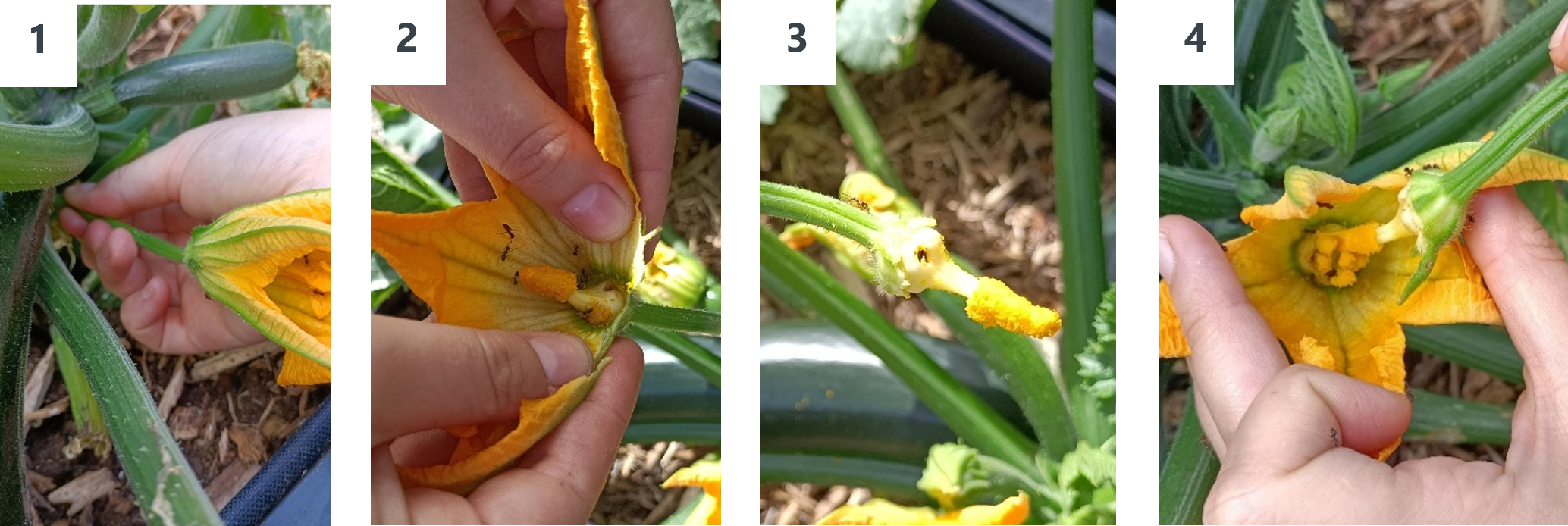
Figure 5: The 4 steps for pollinating a courgette flower. 1. Cut off the male flower; 2. Remove the petals from the male flower; 3. Male flower without petals; 4. Rub the male flower onto the pistil of the female flower, preferably from another plant.
Optimal yieldIt is preferable to pollinate female flowers with male flowers from a different plant but of the same species in order to maximize the chances of fruit development.
For melons, it will be easier to pollinate the female flowers if the male flowers are cut at the stem / branch junction. Be sure to remove the entire petal corolla to make access to the pollen easier.
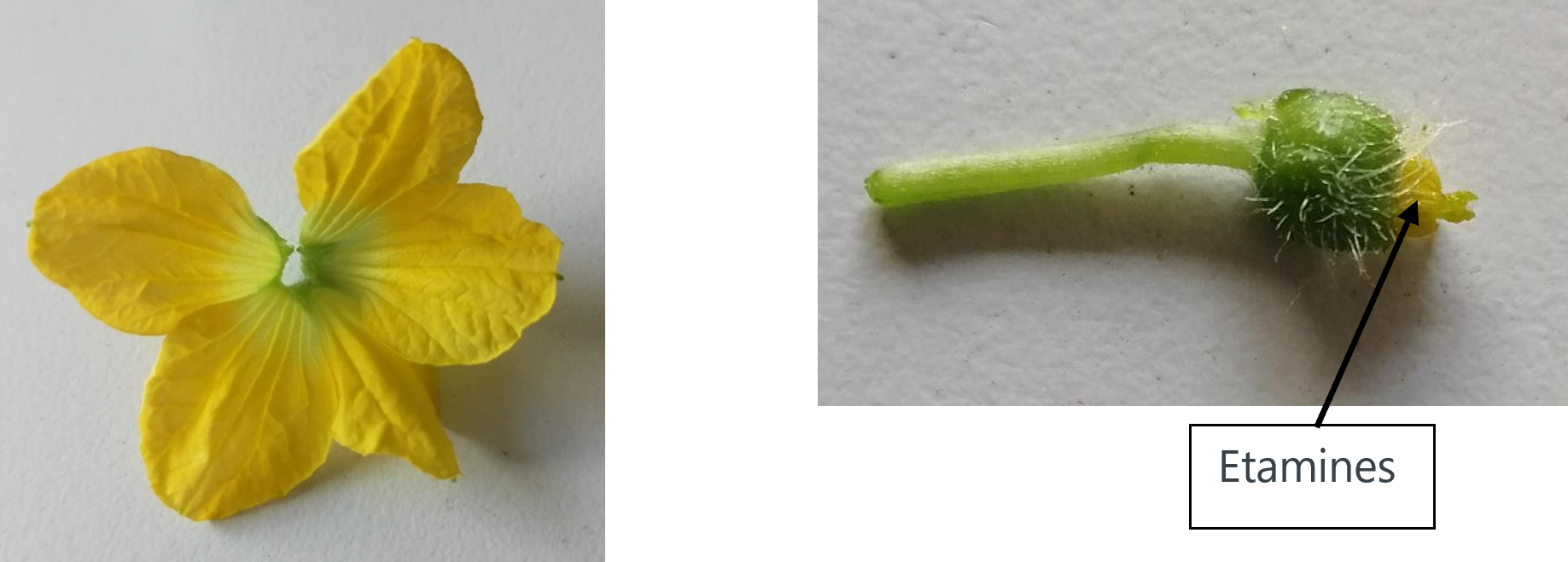
Figure 6: On the left, the petal corolla to remove from the male flower and, on the right, the male flower without petals, with pollen-covered stamens.
Self-pollination
The pollination of cucumbers and gherkins generally happens naturally, but you can follow the same steps as for the manual pollination of squash, courgettes, melons and watermelons to improve your harvest yield.
Not all plants need to be pollinated.Tomatoes, peppers and aubergines self-pollinate naturally with the wind and pollinating insects. You can still further increase the chances of pollination by gently shaking the flowers so that the pollen is properly transferred onto the pistil.
After pollination
The small fruit under the female flower will start to grow some time after manual pollination. If the flower was poorly pollinated, the fruit will have an unusual, irregular shape and will have more difficulty growing.
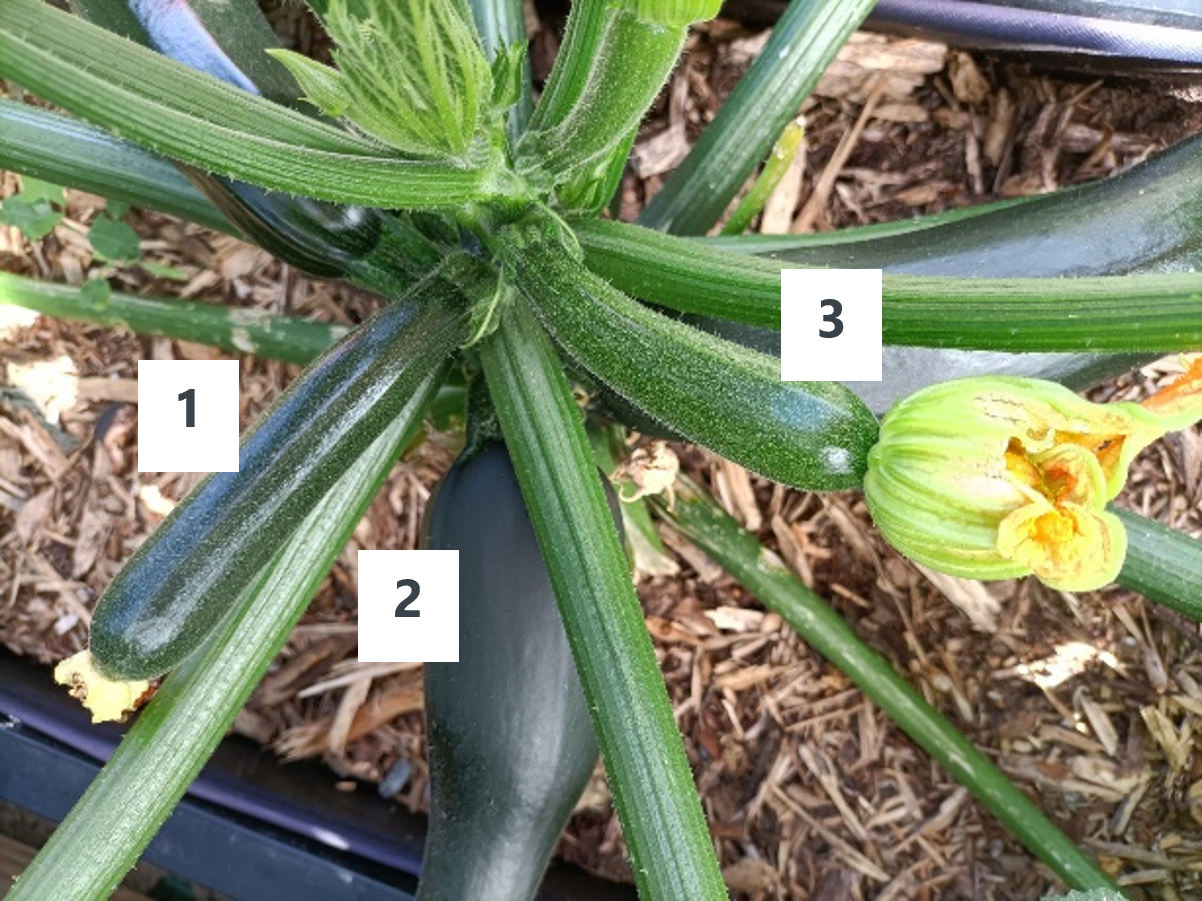
Figure 8:
- Courgette pollinated a short time ago, the flower has already wilted and the fruit has started to grow;
- Poorly pollinated courgette, irregular fruit and softer tip of the fruit;
- Courgette flower just pollinated, the flower is only just starting to wilt and the fruit is starting to grow.
If the flower has been pollinated but not fertilized, the fruit will not develop, which gives what is shown in the following photos:
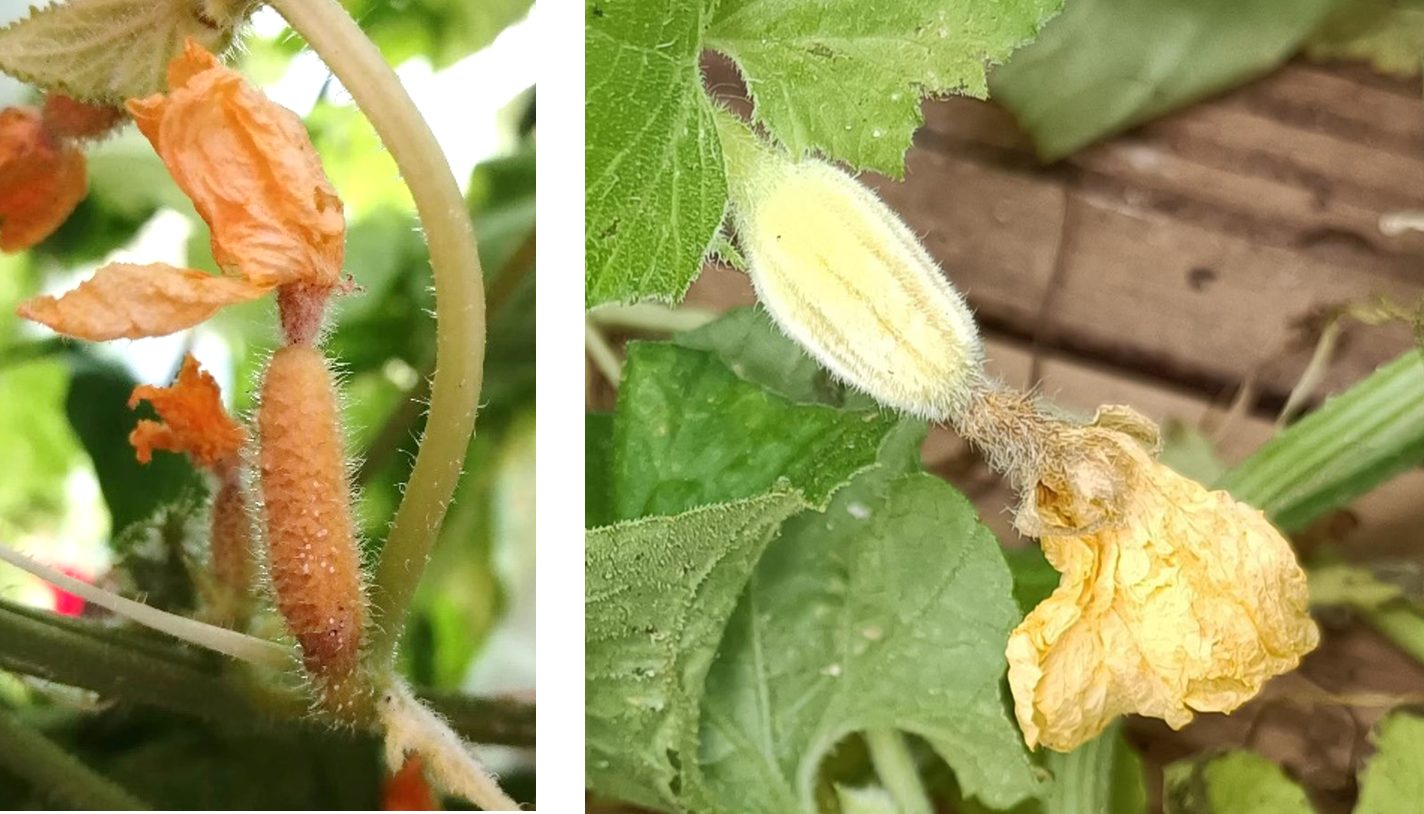
Figure 7: On the left, a cucumber / gherkin flower and, on the right, a melon flower that were not pollinated. They will therefore not produce fruit.
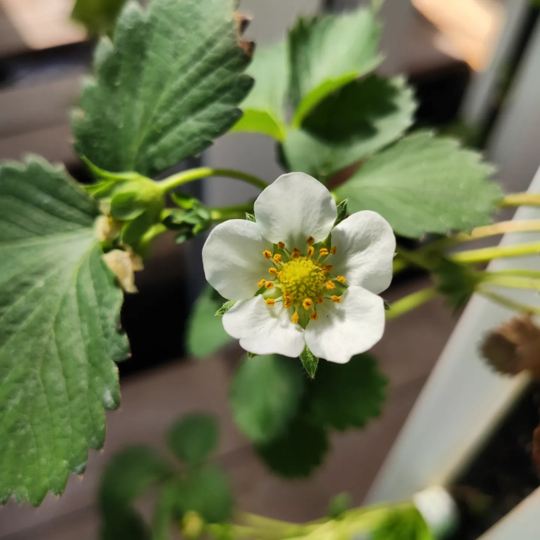
Special case of strawberries
To get beautiful, tasty fruit, there are a few points to pay attention to for strawberry plants.
- Carry out manual pollination: place pollen from the stamens in the center of the flower.
- Add calcium: +50ml / addition
- Place the plants in shaded areas
- Reduce the water flow rate
- Plant 6 plants per tower